
Reviewed · LAMA TEMPLE TOURS
Beijing: Lama Temple (Yonghe Temple) Admission Ticket
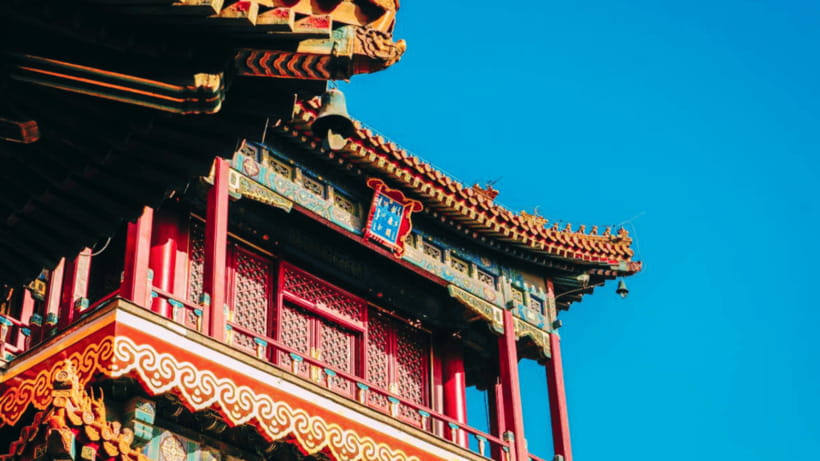
A calm corner of Beijing still feels fully alive. I like the way this admission ticket lets you explore Yonghe Temple, also called the Lama Temple, at your own pace, and I like that it covers the major temple buildings and exhibitions for about $10. The complex gives you both impressive imperial architecture and a working Buddhist place where people come to pray, light incense, and make offerings.
The main drawback is that the ticket is not completely instant. You must send your full passport name and passport number before the booking can be completed, and the supplied GetYourGuide QR code is not itself valid for entry. Security checks also remain ahead, so fast-track ticket access does not mean you walk straight through every queue.
In This Review
- Key points before you book
- Why the Lama Temple matters in Beijing
- Entering through the three archways
- Yonghe Gate and the first temple courtyards
- Yonghe Palace Hall and the sacred atmosphere
- The Four Learning Halls
- Three exhibition rooms and the objects inside
- The 18-meter sandalwood Maitreya Buddha
- What the $10 ticket is really worth
- Timing, crowds, and entry rules
- How the booking and ticket delivery work
- Who will enjoy Yonghe Temple most?
- Should you book the Lama Temple ticket?
- FAQ
- How much does admission to Beijing’s Lama Temple cost?
- Is the GetYourGuide QR code valid for entry?
- Do I need to provide passport details?
- Does the ticket skip the security check?
- Are guided tours or audio guides included?
- What time can I enter?
- Can I cancel for a refund?
Key points before you book
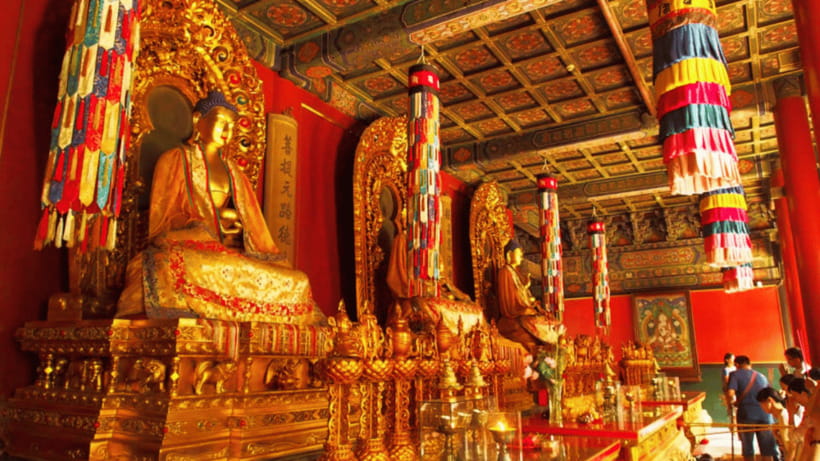
- See an 18-meter sandalwood Buddha: The giant Maitreya figure is carved from one piece of sandalwood and has held a Guinness World Records title since 1990.
- Explore four architectural traditions: Han, Manchu, Tibetan, and Mongolian influences appear across the temple complex.
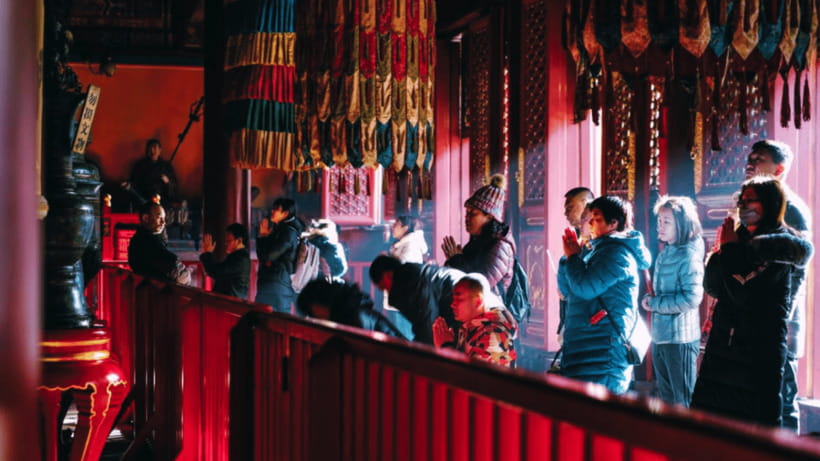
- Visit an active place of worship: People still burn incense and pray here, giving the courtyards a genuine spiritual purpose.
- Use the ticket as a self-guided visit: Guided tours and audio guides are not included, but a small electronic guide may be sent by WhatsApp.
- Plan around strict closing rules: Final entry is one hour before closing, and everyone must leave 30 minutes before closing.
- Bring your passport: Real-name booking is required, and the name and passport number must match your identification.
Why the Lama Temple matters in Beijing
Yonghe Temple is not simply a colorful religious building preserved for sightseeing. It carries an unusual imperial past. Construction began in 1694, during the 33rd year of Emperor Kangxi’s reign, and the site first served as the residence of the future Emperor Yongzheng.
In 1725, the complex became an imperial palace. Later, in 1744, Emperor Qianlong converted it into a Tibetan Buddhist temple. That change explains why the site feels different from a standard imperial palace or a small neighborhood shrine. Its buildings connect court life, Tibetan Buddhism, and several Chinese architectural traditions.
I find that background useful because it changes how you read the courtyards. The halls are not just a series of attractive roofs and painted doors. They reflect a place shaped by emperors, religion, and changing political needs.
The temple is also still used for worship. You may see people carrying incense, bowing before the halls, or praying through the smoke from the incense burners. That activity gives the visit a respectful tone. You are entering a sacred site first and a sightseeing attraction second.
More Lama Temple visits:
- Temple Heaven, Lama Temple, Summer Palace & Peking Duck Bus Tour
★ 5.0 · 377 reviews - Temple Heaven, Summer Palace, Lama Temple, Hutong Bus Tour
★ 4.7 · 319 reviews - Temple of Heaven, Summer Palace, Lama Temple, Hutong Tours
★ 5.0 · 311 reviews
Entering through the three archways
The approach begins with three carefully designed archways. These mark the transition into the temple grounds and set the tone for the visit. They also give you an early look at the blend of styles that appears throughout Yonghe Temple.
The ticket arrangement is useful here because your entry is organized in advance. You show the confirmed ticket at the designated entrance channel, then continue through security. The process is intended to bypass the regular ticket purchase line, which is especially helpful if you are trying to fit the temple between other Beijing sights.
Do not confuse this with a complete skip of all lines. Security checks are not bypassed. Sharp objects, weapons, explosive materials, and pets are not allowed, so pack with that restriction in mind.
Your passport is important from the start. Real-name ticketing is mandatory, and only genuine identification information is accepted at the gate. The booking provider needs your full name as written on the passport and your passport number. If you do not supply those details in time, the reservation can be canceled and a fee may apply.
One practical warning deserves repeating: the GetYourGuide QR code is not a valid admission ticket. Wait for the confirmation email or follow the WhatsApp instructions. Several bookings were handled by WhatsApp on the morning of the visit, and the electronic ticket was then sent with basic visiting information.
Yonghe Gate and the first temple courtyards
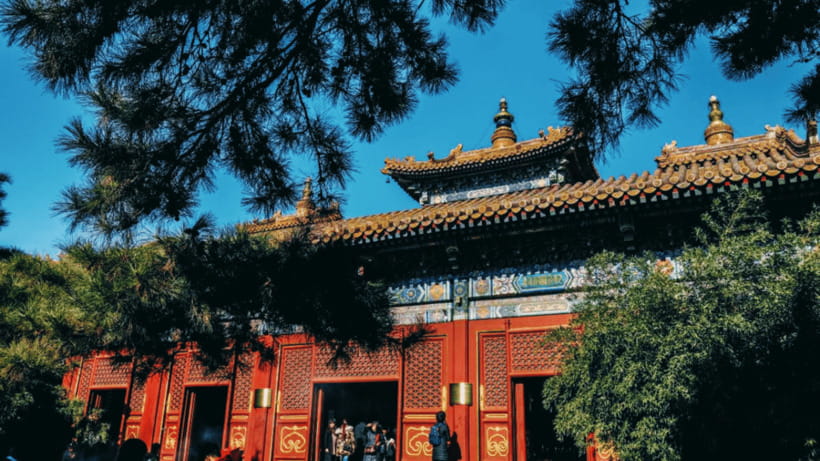
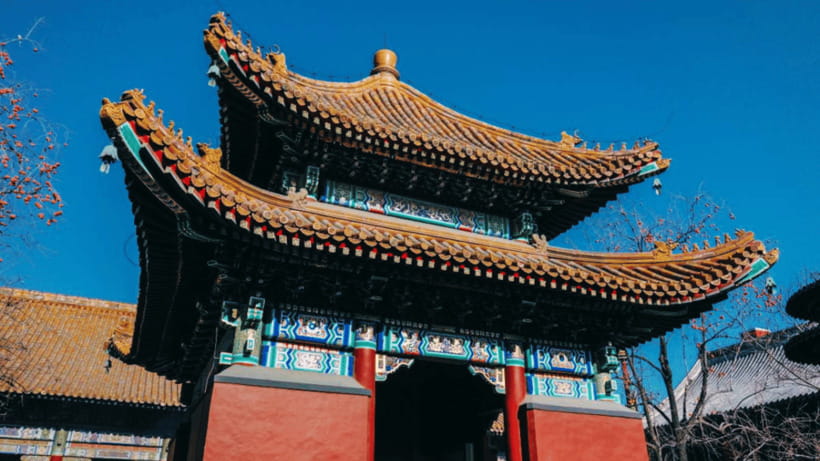
After entry, you move through the Yonghe Gate and into the main sequence of halls. The design encourages you to proceed from one courtyard to the next rather than treating the complex as a single building.
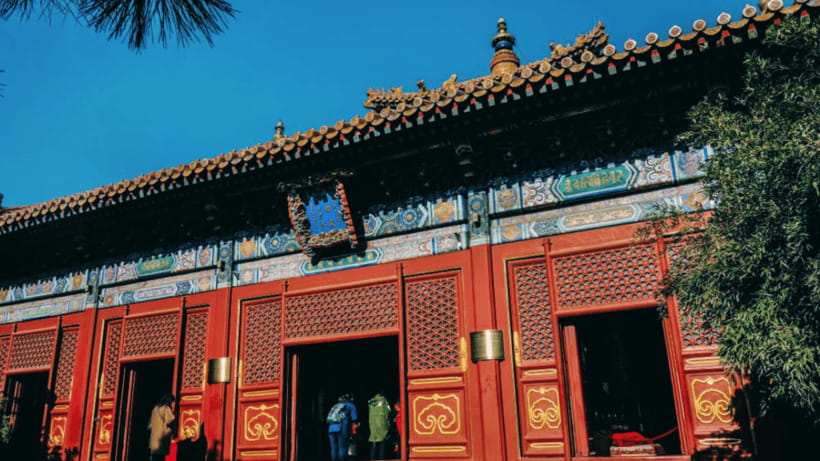
The courtyards help you notice changes in scale. Some areas feel open and formal, while the halls create a more enclosed and solemn mood. Painted details, carved elements, rooflines, and devotional objects reward a slower walk. You can easily rush through if you treat the visit as a quick photo stop, but the best parts come from pausing to look at how the buildings relate to one another.
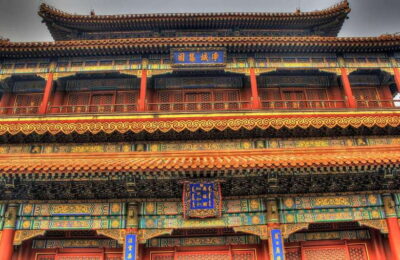
The architecture combines Han, Manchu, Tibetan, and Mongolian influences. You do not need specialist knowledge to appreciate the effect. The mixture appears in the building forms, decorative work, religious imagery, and overall arrangement.
I recommend looking for the contrast between imperial order and Buddhist devotion. The complex has a grand, planned quality, yet the incense, prayers, and devotional statues keep it from feeling like a silent museum.
Yonghe Palace Hall and the sacred atmosphere
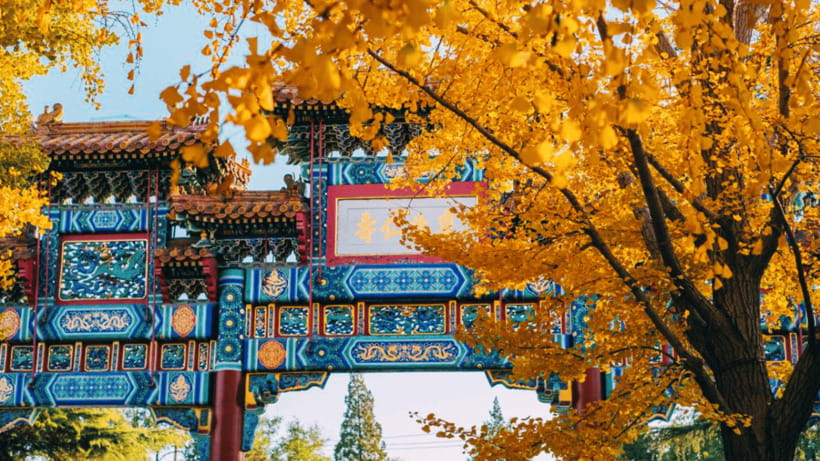
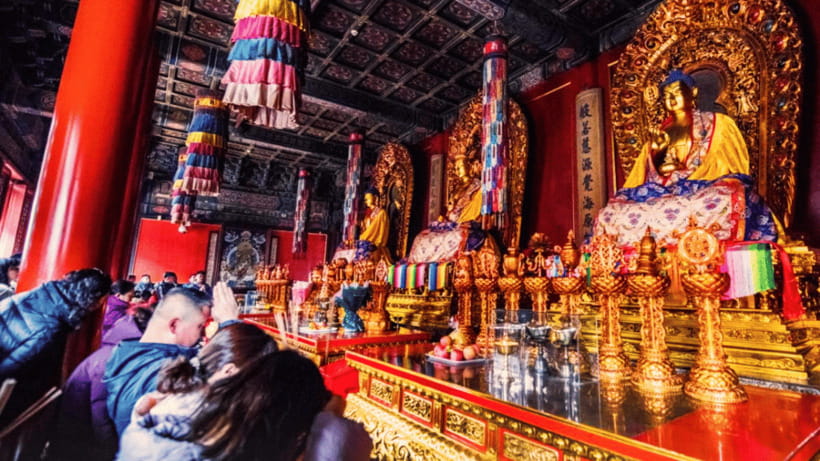
The Yonghe Palace Hall is one of the central points of the complex. Here, the architecture and religious purpose come together most clearly. You can expect halls filled with Buddha statues, thangkas, and other precious objects, with visitors moving quietly through the interior.
The atmosphere may change according to the day. On January 1, for example, the temple was reported to be very crowded because many people came to pray. That is not necessarily a problem, but it affects how long you can linger and how easily you can view the details inside.
A crowded worship day can also make the experience more meaningful. Instead of seeing a polished monument with no living purpose, you see the temple being used in daily religious practice. Incense smoke, prayer, and respectful movement are part of what makes Yonghe Temple different from a purely historic site.
You should follow the local tone. Keep your voice low in the halls, avoid blocking worshippers, and be careful with photography where restrictions apply. The supplied information does not specify every photography rule, so it is sensible to watch for signs and staff instructions.
A few more to weigh up in Beijing
- From Beijing: Mutianyu Great Wall Tours with Options
★ 4.9 · 9,216 reviews - Beijing: Forbidden City Tour(Group/Private)-Tickets Included
★ 4.8 · 7,974 reviews - Beijing: T-Square & Forbidden City Group or Private Tour
★ 4.8 · 4,446 reviews - All-Inclusive Tour: Tiananmen Square, Forbidden City, Great Wall
★ 5.0 · 2,873 reviews
The Four Learning Halls
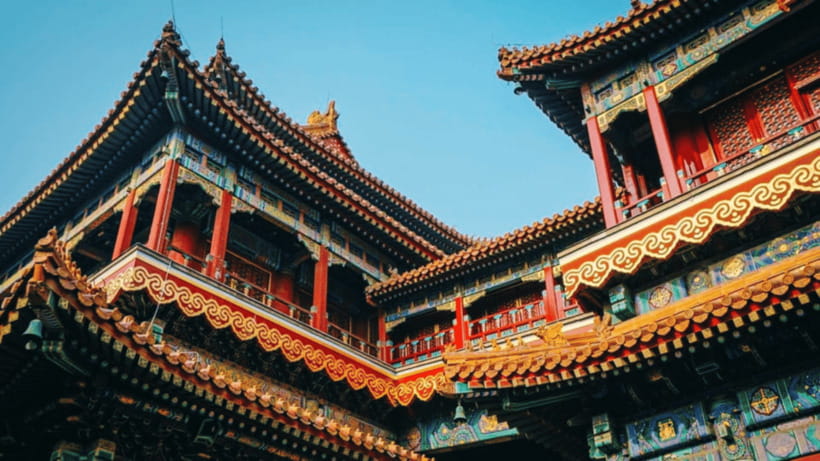
The temple complex includes four halls known as the Four Learning Halls:
- The Hall of Medicine Buddha
- The Mathematics Hall
- The Tantric Hall
- The Lecture Hall
Together, these spaces show the teaching and ritual side of Tibetan Buddhism. They also help break up the visit. Rather than seeing only grand ceremonial halls, you get a sense of the religious subjects and practices connected with the temple.
The names may be unfamiliar, and the ticket does not include a guide or audio commentary to explain them in depth. That is the main limitation of visiting independently. If you want a detailed explanation of Buddhist symbolism or the role of each hall, you will need to read in advance or use the small electronic guide that may be sent to you.
Still, self-guided access suits many people. You can spend more time with the statues that interest you and move more quickly through sections that do not. The temple is compact enough for an unhurried visit without requiring a full-day guided schedule.
Three exhibition rooms and the objects inside
Three exhibition rooms add context beyond the main religious buildings. They are included in the admission, along with access to the major halls.
The displays include Buddha statues, thangkas, and precious artifacts. Thangkas are traditional Buddhist paintings, often made on cloth, and they give you a different way to view the temple’s religious art. The objects are not merely decoration. They connect the architecture to the beliefs and ceremonies practiced inside it.
I would give the exhibitions proper attention rather than treating them as an optional add-on. The halls show you the grand setting, while the objects reveal the visual language of the faith. Without that second part, it is easy to remember only the colors and rooflines.
Because there is no included audio guide, you may find the exhibitions easier to appreciate if you have a little background before arriving. The electronic guide supplied by the booking service can help you get your bearings fast, but it should not be confused with a live expert tour.
The 18-meter sandalwood Maitreya Buddha
The most famous sight inside Yonghe Temple is the enormous 18-meter Buddha carved from a single piece of sandalwood. It is identified as a Maitreya Buddha, the future Buddha, and it has held a Guinness World Records title since 1990.
This is the moment when the scale of the temple’s religious art becomes clear. An 18-meter statue carved from one piece of wood is an extraordinary technical achievement, but the figure also carries strong spiritual meaning. Give yourself time to look upward and take in the full height. From close range, it can be difficult to judge the scale in one glance.
The statue is one reason the $10 admission feels fair. You are not paying only to walk through a historic courtyard. You are gaining access to a major work of Buddhist sculpture, several important halls, exhibitions, and an active religious site.
Crowds can gather around the best viewing areas, particularly on major prayer days. If the hall is busy, patience matters. This is a place where people have come to worship, so sightseeing should take second place to respectful movement.
What the $10 ticket is really worth
At about $10 per person, this is a reasonably priced independent visit. The admission includes fast-track access to the ticket channel, entry to the main temple buildings, the cultural exhibitions, and the reservation fee.
The value is greatest if you want flexibility. You do not pay for a guide you may not need, and you can explore at your own pace. The attraction is compact, so you are not committing to a long organized tour or a large group schedule.
The ticket is less ideal if you expect a full explanation on site. No guided tour and no official audio guide are included. You will see the major sights, but interpretation is limited unless you use the provided electronic guide or do your own preparation.
The booking service adds convenience rather than a richer tour. It handles the advance reservation, real-name details, and ticket delivery. That can be worthwhile for an international visitor who wants to avoid dealing with the entry process directly, particularly when tickets need to be arranged in advance.
Timing, crowds, and entry rules
The activity is listed as lasting one day, but that refers to the admission validity rather than a scheduled one-day tour. You choose an available starting time when booking, then visit within the stated rules.
Final entry is one hour before closing, and you must leave 30 minutes before closing. These details matter because a late arrival can leave you with a rushed visit or no entry at all. Check the current availability and closing time before setting out.
The temple can be crowded around public holidays and major prayer dates. January 1 was notably busy, with many people visiting to pray. If you prefer quieter conditions, avoid the busiest holiday periods when your schedule allows, though the exact quietest time is not provided.
The site is wheelchair accessible. That is useful for anyone who needs step-free access, although the listing does not provide a detailed route map or information about every interior surface. You can ask staff for help at the entrance if required.
How the booking and ticket delivery work
The reservation is not simply a matter of showing the first QR code you receive. Send your passport name and number as soon as requested. Make sure the spelling matches exactly.
Confirmation may arrive by email or WhatsApp. Some bookings received the ticket on the morning of the visit, along with a short guide and entry instructions. That timing worked well for many people, but I would not wait until the last minute to check your messages.
Save the confirmed ticket where you can access it easily. Then bring the same passport used for the booking. The name and passport number must match at the ticket gate because real-name entry is compulsory.
Free cancellation is available up to 24 hours before the visit for a full refund. If your passport information is missing and the booking is canceled because of that, a cancellation fee can apply, so the general cancellation rule should not be treated as protection against incomplete booking details.
Who will enjoy Yonghe Temple most?
I would recommend this visit to anyone interested in religious architecture, Buddhist art, imperial Beijing, or local worship. It also works well for first-time visitors who want a major cultural stop without signing up for a guided group.
Families with older children may find the huge sandalwood Buddha and ornate halls memorable. Visitors who like photography will have plenty of architectural detail to study, though the temple’s religious function should guide how and where you take pictures.
This is not the best choice if you want a long historical lecture, a private guide, or a tightly planned sightseeing route. It is also less suited to anyone who dislikes crowds or cannot manage a visit with security procedures and strict closing times.
The experience is strongest when you slow down. Listen to the quiet movement in the halls, notice the incense, and remember that people are here for prayer. The temple’s appeal comes from the meeting of art, history, and present-day faith.
Should you book the Lama Temple ticket?
Yes, I think this is a good-value Beijing admission for an independent visit. The 18-meter sandalwood Buddha, the unusual imperial-to-Buddhist story, and the blend of Han, Manchu, Tibetan, and Mongolian design give the complex plenty to see for a modest price.
Book it if you want an organized entry process and are comfortable exploring without a live guide. Send your passport details promptly, wait for the valid confirmation rather than relying on the initial QR code, and allow extra time for security.
Skip it only if you need detailed commentary at every hall or if your schedule falls close to closing time. For most visitors, Yonghe Temple offers a memorable look at Beijing’s religious life without the cost or structure of a full guided tour.
FAQ
How much does admission to Beijing’s Lama Temple cost?
The listed price is $10 per person. It includes fast-track access to the ticket line, entry to the major temple buildings and cultural exhibitions, and the reservation fee.
Is the GetYourGuide QR code valid for entry?
No. The GetYourGuide QR code is not a valid ticket. You must wait for the confirmation email or follow the WhatsApp communication to receive the valid admission information.
Do I need to provide passport details?
Yes. Real-name booking is required. You must send your full name as it appears on your passport and your passport number, and the information must match your identification at the entrance.
Does the ticket skip the security check?
No. The ticket skips the regular ticket line, but security checks are still required before you enter the temple grounds.
Are guided tours or audio guides included?
No. Guided tours and audio guides are not included. A small electronic guide may be sent through WhatsApp with the ticket information.
What time can I enter?
You can enter during the available time selected at booking. Final entry is one hour before closing, and you must leave the temple 30 minutes before closing.
Can I cancel for a refund?
Yes. You can cancel up to 24 hours in advance for a full refund. If the booking is canceled because required passport information was not submitted in time, a cancellation fee may apply.
Just added in Beijing
- Private Transfer to Mutianyu Great Wall with professional driver★ 5.0 · 19 reviews
- One day tour to downtown Tianjin from Beijing by high speed train★ 5.0 · 3 reviews
- ZANBUS: Trip to the Jinshanling Great Wall Departing at 7:30 AM★ 5.0 · 5 reviews
- camp on the Great Wall overnight with sunrise and sunset on the wall★ 5.0 · 11 reviews
- Yuxiandu Chinese Royal Cuisine Museum with Show and Royal Banquet★ 5.0 · 4 reviews
- Wild Great Wall Hikes★ 5.0 · 10 reviews
- BusDa:Ancient Great Wall &Badaling Great Wall Full-day Bus Tour★ 4.5 · 6 reviews
- Wild Great Wall Huanghuacheng Half Day Tour★ 5.0 · 15 reviews
Lama Temple Tours, compared.
Temple Heaven, Lama Temple, Summer Palace & Peking Duck Bus Tour
Read our review →
Temple Heaven, Summer Palace, Lama Temple, Hutong Bus Tour
Read our review →
Temple of Heaven, Summer Palace, Lama Temple, Hutong Tours
Read our review →
Beijing Historical Tour II including Summer Palace, Lama Temple & Panda Garden
Read our review →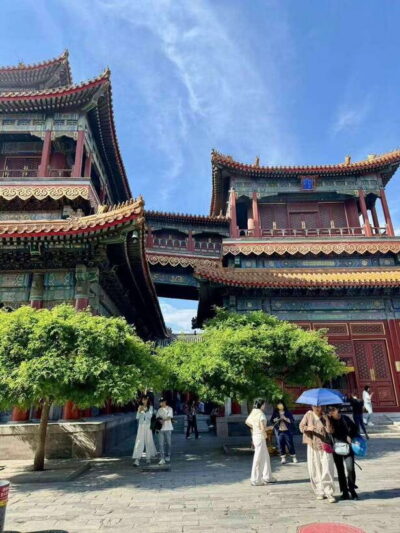
Beijing Lama temple ticket; #1 efficacious; limited Discount
Read our review →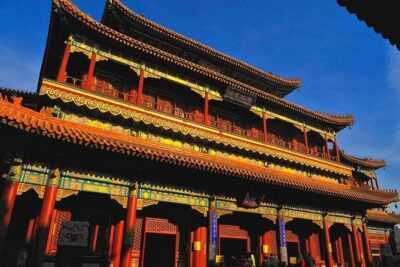
Panda House, Temple of Heaven, Lama Temple, Summer Palace & Lunch
Read our review →
Private Day Tour Forbidden City Lama Temple and Temple of Heaven
Read our review →Where else this tour turns up