
Reviewed · ACROBATIC SHOWS
Beijing Acrobatics Show At Red Theater
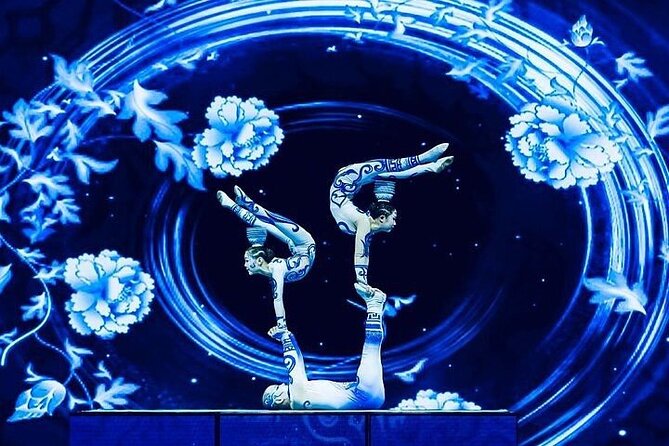
Acrobatics turn one hour into a quick thrill. Beijing’s Red Theatre show packs plate spinning, high-chair stunts, partner tricks, and other Chinese performance traditions into a family-friendly 60-minute program. I like the short format, which fits neatly into a busy Beijing day, and the simple passport entry, which avoids the fuss of collecting a paper ticket.
The main caution is quality. The show has received strong praise for its polite staff and highly trained performers, but one sharply negative assessment found the routines under-rehearsed and the choreography weak. I would book this for a convenient introduction to Chinese acrobatics, not as a guaranteed top-tier production.
In This Review
- Key points before you book
- What the Red Theatre Show Is Like
- The Opening Acts: Pagoda Bowls and Jujitsu
- Partner Stunts and the High-Chair Test
- Ball Games, Shoulder Ballet, and Universal
- Why the 60-Minute Length Matters
- Getting to No. 44 Xingfu Avenue
- Timing: Confirm the Start Before You Go
- The Strongest Reason to Go
- Who Will Enjoy This Most
- Should You Book the Red Theatre Acrobatics Show?
- FAQ
- Where is the Red Theatre Acrobatics Show held?
- How long does the acrobatics show last?
- What time does the show start?
- How early should I arrive?
- What do I need to enter the theatre?
- Is the ticket included in the price?
- Are food and drinks included?
- Is hotel pickup or drop-off provided?
- Is the show suitable for children?
- Can I cancel for a full refund?
Key points before you book
- Two listed start times: Performances are scheduled at 4:20pm and 5:30pm each day, but the exact time can change, so confirm it when you reserve.
- A compact 60-minute show: You get a complete evening performance without giving up half a day of sightseeing.
- Passport entry: Once your booking is issued, take your passport to the theatre on the performance day.
- A central Beijing address: Red Theatre is at No. 44 Xingfu Avenue in Dongcheng District, near public transportation.
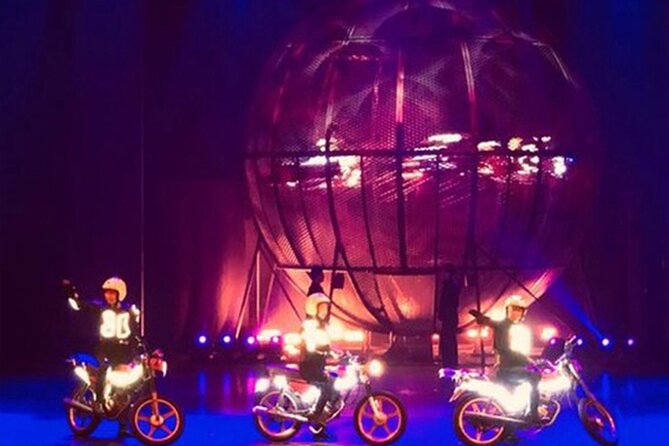
- Several classic acts: Expect plate spinning with pagoda bowls, jujitsu, partner stunts, high-chair balancing, ball games, shoulder ballet, and a finale called Universal.
- No hotel transfers: Pickup, drop-off, food, drinks, and personal expenses are not included.
What the Red Theatre Show Is Like
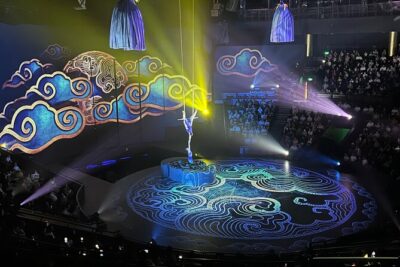
The Red Theatre presents a fast-moving acrobatics program built around traditional Chinese stage skills. It is aimed at both children and adults, and the one-hour length makes it an easy addition to a day spent visiting temples, markets, or historic sights in Beijing.
I like the basic idea here. You do not need to commit to a long evening of theatre, and the acts offer a visual break from museums and monuments. Acrobatics also crosses the language barrier well. Even if you do not understand spoken Chinese, the action is clear.
The performance has reportedly entertained more than two million people over the years. That number suggests a well-established show rather than a temporary attraction. Still, a long run does not guarantee that every act will suit every audience member. One rating of the experience was highly critical, describing the production as fun mainly for people new to acrobatics and calling for stronger practice and choreography.
That mixed response is useful. If you have watched major circus productions with elaborate staging, you may find parts of this show modest. If you want a straightforward cultural performance with recognizable physical skills, the program may be a good fit.
More Acrobatic Shows in Beijing
- Red Theatre Beijing Acrobatic Show Tickets
★ 4.9 · 461 reviews - Red Theatre Beijing Acrobatic Show Tickets Official Booking
★ 5.0 · 218 reviews - Red Theatre Beijing Acrobatics Show Ticket
★ 5.0 · 141 reviews
The Opening Acts: Pagoda Bowls and Jujitsu
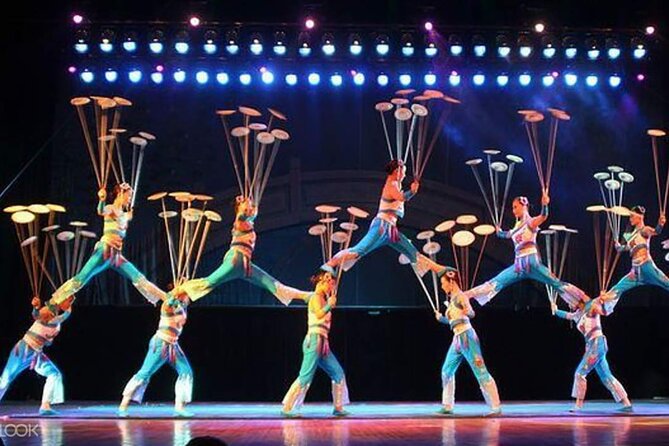
The show begins with plate spinning and pagoda bowls. This is a classic acrobatic combination, and it gives the audience an immediate sense of the performers’ balance and control.
The pagoda bowls are not just ordinary dishes placed on a table. The act centers on handling stacked or spinning objects while maintaining a steady rhythm. I would pay attention to the small movements here. Acrobatics often looks effortless from a distance, but the appeal comes from seeing how carefully the performer manages weight, timing, and balance.
Jujitsu follows in the listed program. This section brings a different kind of energy, with physical control and close contact replacing the quieter concentration of spinning objects. The change keeps the opening from feeling repetitive.
For children, these first acts can be especially easy to understand. There is no need to follow a story or know a cultural reference. You simply watch an object spin, a body move, and a difficult task either succeed or come close to failing.
The main limitation is that the available information does not give a detailed running order beyond the listed acts. The exact transitions, music, costumes, and stage design may vary. I would treat the published sequence as a guide rather than a promise of every small detail.
Partner Stunts and the High-Chair Test
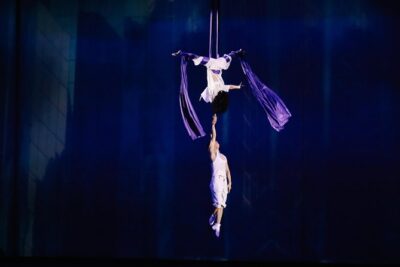
Partner stunt work shifts the focus from individual skill to trust and timing. These routines depend on performers moving together, supporting one another, and completing a sequence without breaking rhythm.
This part can be more exciting than a solo act because the risk appears shared. You are watching several bodies coordinate at once, and even a simple-looking lift can require considerable control. I like this kind of act for families because it gives children an easy visual question: how are they doing that without falling?
The high-chair act raises the tension again. A chair becomes a balancing tool, and height changes the way the audience reads the performance. The act is likely to appeal to people who enjoy suspense more than comic staging.
You should keep your expectations measured. The show is presented as a traditional acrobatics performance, not as a large-scale international circus production with complex theatrical effects. The appeal is the physical skill itself. If you value polished choreography and elaborate production design above all else, the Red Theatre may feel basic.
Still, the one-hour schedule helps here. Even if one routine does not land for you, the performance moves on before the evening becomes tiring. That is a real advantage in Beijing, where a packed sightseeing day can leave you ready for a chair of your own.
Ball Games, Shoulder Ballet, and Universal
The later sections include a ball game, shoulder ballet, and Universal. These titles suggest a mix of object handling, group balance, and a final general showcase of acrobatic abilities.
The ball game should provide a lighter change of pace after the higher-risk partner and chair routines. Ball-based acts depend on timing and hand-eye coordination, and they are often easy for a mixed-age audience to follow.
Shoulder ballet sounds more focused on group balance and controlled movement. The name points to performers using shoulders as part of the act, which can create unusual shapes and formations on stage. I would expect this segment to work best when you watch the performers as a group rather than focusing on one person.
Universal is listed at the end of the program. Since no detailed description is provided, you should not assume it has a particular story or special effect. It is safest to think of it as a concluding acrobatics segment that brings the show toward its finish.
Together, these acts give the program variety. You are not watching an hour of one repeated trick. Instead, the show moves between spinning objects, martial movement, partner work, balancing, balls, and group presentation.
A completely different sort of day out:
- From Beijing: Mutianyu Great Wall Tours with Options
★ 4.9 · 9,216 reviews - Beijing: Forbidden City Tour(Group/Private)-Tickets Included
★ 4.8 · 7,974 reviews - Beijing: T-Square & Forbidden City Group or Private Tour
★ 4.8 · 4,446 reviews - All-Inclusive Tour: Tiananmen Square, Forbidden City, Great Wall
★ 5.0 · 2,873 reviews
Why the 60-Minute Length Matters
A one-hour show is short by theatre standards, but that is part of its value. At $39 per person, the admission works out to roughly $39 for an hour of live entertainment. That is not a bargain basement ticket, but the price can make sense if you want a reserved cultural activity with a fixed start and finish.
The length also makes this a sensible choice for families. Young children may enjoy the spectacle but lose patience with a much longer production. Adults can fit the performance around dinner or another evening plan.
The short duration has a downside. If you are looking for an expansive night of theatre, the ticket may feel expensive for the time involved. You are paying for access to a dedicated performance, not for a full evening with food, transport, or other activities included.
I would compare the ticket with your schedule rather than judging the price alone. If you already plan to be in the Dongcheng District and can reach the theatre easily, $39 may be reasonable. If you need a long taxi ride from the other side of Beijing, the total cost and effort become less attractive because transfers are not included.
Getting to No. 44 Xingfu Avenue
The Red Theatre is located at No. 44 Xingfu Avenue in Beijing’s Dongcheng District. The address is also provided in Mandarin as 北京东城区幸福大街44号, which is useful if you need to show the location to a driver or ask for directions.
The theatre is described as being near public transportation. That helps, but no specific subway station, bus route, or walking time is supplied. I would not plan around a precise connection until you check a current map and confirm the venue location.
Plan to arrive 20 minutes before the show. This matters because the listed start times are 4:20pm and 5:30pm, and a late arrival could mean missing the opening act or dealing with entry after the performance has begun.
The booking uses a mobile ticket arrangement. Once the reservation is processed, your ticket is issued, and you enter with your passport. Keep the passport used for the booking with you. The entry instructions specifically identify it as the document required on the day.
There is no hotel pickup or drop-off. You are responsible for reaching the Red Theatre, and food and drinks are also your responsibility. I would eat beforehand or make a separate plan nearby rather than expecting a theatre meal to be part of the experience.
Timing: Confirm the Start Before You Go
The schedule lists performances every day at 4:20pm and 5:30pm. However, the time may change, and you are advised to contact the provider when making the reservation to confirm the exact start.
This is one of the most important practical points. Do not build a tight Beijing itinerary around one of the listed times until the time is confirmed. A changed start could affect dinner, transport, or another ticketed sight.
The show lasts about 60 minutes. Add the recommended 20-minute early arrival, plus the time needed to reach the theatre. In practical terms, a 4:20pm performance will take more of your late afternoon than the headline duration suggests.
The experience provider is Happy Dragon Tours. Confirmation is received at booking, and the tour requires a minimum number of participants. If that minimum is not met, you are offered another date or experience, or a full refund.
The cancellation policy allows a full refund when you cancel at least 24 hours before the start time. Changes or cancellations made within 24 hours are not accepted for a refund. The stated policy also refers to poor weather, even though this is an indoor theatre show, so check the provider’s instructions if weather affects your plans.
The Strongest Reason to Go
The best reason to book is convenience paired with clear visual entertainment. You receive a one-hour ticket, a central Beijing venue, and a performance that can work for adults and children alike.
I also like that the program gives you a glimpse of Chinese acrobatic traditions without asking you to spend an entire day at a cultural attraction. The acts require no translation, and the physical skills are easy to appreciate at once.
A five-star assessment praised every part of the show and singled out the performers as highly trained. It also praised the staff as polite and helpful. That is encouraging, especially if you are arranging an evening activity in an unfamiliar city.
The strongest reason to hesitate is artistic polish. A two-star assessment called the show disappointing and said the routines needed more practice and better choreography. You should take that criticism seriously if you have already seen famous acrobatics productions or expect a highly polished stage event.
The ratings average 4.4 out of 5 from five ratings, which points to a generally positive response but a small sample. I would not treat that score as a guarantee. Use it as a sign that the show works very well for some audiences and poorly for others.
Who Will Enjoy This Most
I would recommend the Red Theatre show to families, first-time visitors to Beijing, and anyone who wants a short evening activity with minimal planning.
It is also a sensible pick if you like physical performance more than spoken theatre. The listed acts rely on movement and skill, so language should not be a major barrier to enjoyment.
This may suit you if:
- You want a 60-minute cultural show.
- You are visiting with children or a mixed-age group.
- You prefer a fixed attraction near public transportation.
- You have never watched a Chinese acrobatics program.
- You can confirm the show time and reach the venue independently.
I would be more cautious if you are an experienced circus fan seeking world-class production design. The negative feedback suggests that the performance may feel ordinary or underdeveloped to someone with high expectations.
Should You Book the Red Theatre Acrobatics Show?
Book it if you want a compact and accessible introduction to Chinese acrobatics, especially if the 4:20pm or 5:30pm schedule fits your day. The passport entry, mobile ticket, central address, and one-hour format make the logistics fairly simple.
Skip it if you expect a lavish theatre production or have already seen much stronger acrobatics elsewhere. At $39, the show offers fair value when convenience and family appeal matter, but the price is harder to justify if performance polish is your main concern.
My practical advice is to confirm the exact start time before paying, arrive 20 minutes early, carry the booking passport, and keep your expectations focused on traditional physical skills rather than elaborate spectacle.
FAQ
Where is the Red Theatre Acrobatics Show held?
The show is held at Red Theatre, No. 44 Xingfu Avenue, Dongcheng District, Beijing. The Mandarin address is 北京东城区幸福大街44号.
How long does the acrobatics show last?
The performance lasts approximately 60 minutes.
What time does the show start?
The listed performance times are 4:20pm and 5:30pm every day. The time may change, so confirm the exact schedule when making your reservation.
How early should I arrive?
You should arrive 20 minutes before the show begins.
What do I need to enter the theatre?
Take your passport to the theatre on the day of the performance. Your ticket is issued after the booking is received.
Is the ticket included in the price?
Yes. Admission to the show is included.
Are food and drinks included?
No. Food and drinks are not included in the experience.
Is hotel pickup or drop-off provided?
No. Pickup and drop-off are not included. You must make your own way to the theatre.
Is the show suitable for children?
The performance is described as suitable for both kids and adults. Most travelers can participate, although the experience is a seated show rather than a hands-on activity.
Can I cancel for a full refund?
Yes, if you cancel at least 24 hours before the experience start time. Cancellations or changes made less than 24 hours before the start are not refunded.
Just added in Beijing
- Private Transfer to Mutianyu Great Wall with professional driver★ 5.0 · 19 reviews
- One day tour to downtown Tianjin from Beijing by high speed train★ 5.0 · 3 reviews
- ZANBUS: Trip to the Jinshanling Great Wall Departing at 7:30 AM★ 5.0 · 5 reviews
- Yuxiandu Chinese Royal Cuisine Museum with Show and Royal Banquet★ 5.0 · 4 reviews
- camp on the Great Wall overnight with sunrise and sunset on the wall★ 5.0 · 11 reviews
- Wild Great Wall Hikes★ 5.0 · 10 reviews
- BusDa:Ancient Great Wall &Badaling Great Wall Full-day Bus Tour★ 4.5 · 6 reviews
- Wild Great Wall Huanghuacheng Half Day Tour★ 5.0 · 15 reviews
Acrobatic Shows, compared.
Shanghai Circus World: ERA2 Intersection of Time Acrobatics Show
Read our review →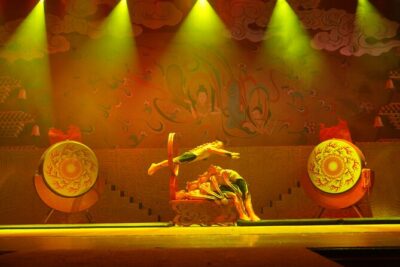
Red Theatre Beijing Acrobatic Show Tickets Official Booking
Read our review →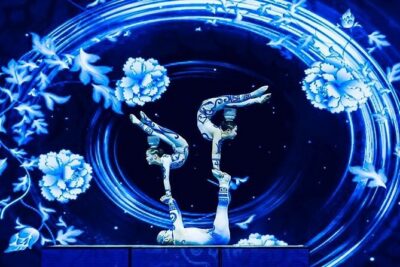
Shanghai Circus World ERA Theatre Acrobatics Ticket
Read our review →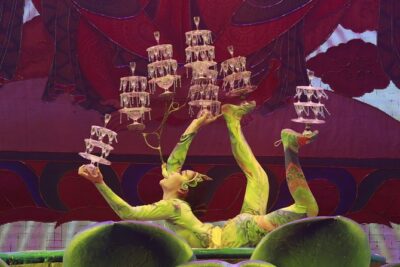
Beijing Roast Duck Banquet and Acrobatics Show with VIP Seats Evening Tour
Read our review →Where else this tour turns up