
Reviewed · MARKETS
6-Hour Private Beijing Tour: Flower and Fish Market, Panjiayuan Antique Market and 798 Art Zone
Beijing shows its character in the places tourists often skip. This six-hour private tour links the colorful Shilihe flower, fish, and insect market with Panjiayuan Antique Market and the creative 798 Art Zone, giving you a useful look at the city’s shopping culture, collecting habits, and modern art scene. I especially like the private guide and the included hotel pickup, transport, bottled water, and meal. You do not have to work out how to reach three spread-out areas on your own.
I also like the range of the day. You move from flowers, fish, insects, stones, and plants to old furniture, calligraphy, ceramics, and Buddha statues, then finish among galleries, boutiques, cafés, bars, and restaurants. The main drawback is time: one hour is listed for each stop, and Panjiayuan or 798 can easily deserve longer. The tour works best if you want an introduction rather than a slow, thorough shopping day.
In This Review
- Key points at a glance
- Why this tour offers a different Beijing
- Starting at Shilihe’s flowers, fish, and insects
- Sorting through Panjiayuan’s antiques and crafts
- Changing pace at the 798 Art Zone
- Lunch or dinner built into the day
- What the private format really changes
- Price, timing, and overall value
- Who should book this Beijing experience
- Should you book the markets and 798 tour?
- FAQ
- How long does the Beijing markets and 798 Art Zone tour last?
- What pickup times are available?
- Is hotel pickup and drop-off included?
- Is this a private tour?
- What attractions are included?
- Is food included?
- Is transport included?
- Can children join the tour?
- Can I cancel for a full refund?
Key points at a glance
- Shilihe is a sensory start: Expect colorful flowers, plants, fish, insects, and precious stones in a local market setting.
- Panjiayuan changes by day: Weekend visits tend to have more stalls and a livelier selection of antiques, crafts, clothing, and memorabilia.
- 798 brings a sharp change of mood: Galleries, boutiques, coffee shops, bars, and restaurants replace the market stalls.
- Your guide shapes the day: Guides including Ranee, Alice, Lucy, Linda, Miko, and Sherry have been praised for clear English, local context, and flexibility.
- Meals and transport add value: Hotel pickup and drop-off, a private vehicle, bottled water, and lunch or dinner are included.
- This is private, not a fixed group outing: Your guide can offer shopping advice and adjust the pace when one market catches your interest.
Why this tour offers a different Beijing
Beijing is famous for grand imperial sights, but this outing takes you into a more everyday and alternative side of the city. You see what people buy, collect, grow, display, and create. That gives the day a more personal feel than simply moving from one major monument to the next.
The three stops also make a sensible contrast. Shilihe is about color and trade. Panjiayuan is about objects with age, stories, and uncertain authenticity. 798 is about new ideas, design, and contemporary art. You get a quick lesson in how old and new Beijing exist side by side.
The tour is described as a full-day experience, yet the stated duration is about six hours. That matters. With roughly one hour assigned to each main stop, plus driving and a meal, you should not expect to inspect every stall or gallery. Think of this as a guided sampler with private transport, not a long buying expedition.
More Market Tours in Beijing
- Private Beijing Markets Tour with Tea Tasting at Hongqiao Pearl Market
★ 5.0 · 18 reviews - Beijing: Dumpling-Making Class with wet Market visit
★ 5.0 · 9 reviews - Night Market Haggling Adventure with an English Guide!
★ 4.8 · 7 reviews
Starting at Shilihe’s flowers, fish, and insects
Your guide collects you from your Beijing hotel at the start time selected at booking. Available pickup times are 9am, 11am, 12pm, or 1pm, so the meal and order of the stops depend on when you begin.
The first market is referred to as Shilihe Culture and is known for flowers, fish, insects, and precious stones. It is a strong opening because it gives you plenty to look at right away. You might find large displays of flowers and plants, colorful fish, unusual species, and stalls devoted to small creatures or decorative objects.
This is not a polished museum visit. The appeal is the ordinary commercial setting and the sheer variety of goods. You can ask your guide what you are seeing, how particular items are used, and which purchases make sense as souvenirs. That context is useful, especially if you do not read Chinese or know the difference between a serious specialty stall and a shop aimed at casual buyers.
The market also provides some of the clearest sensory moments of the day. Flowers and plants bring color and scent, while fish tanks add movement. The selection of insects and precious stones gives the stop an unusual edge. It is a better choice for curious shoppers and photographers than for someone seeking a quiet cultural monument.
The listed time is one hour, which should give you a broad look. If you stop often to examine plants, fish, or stones, the visit can feel short. I would tell your guide early if you care more about one section than another.
Sorting through Panjiayuan’s antiques and crafts
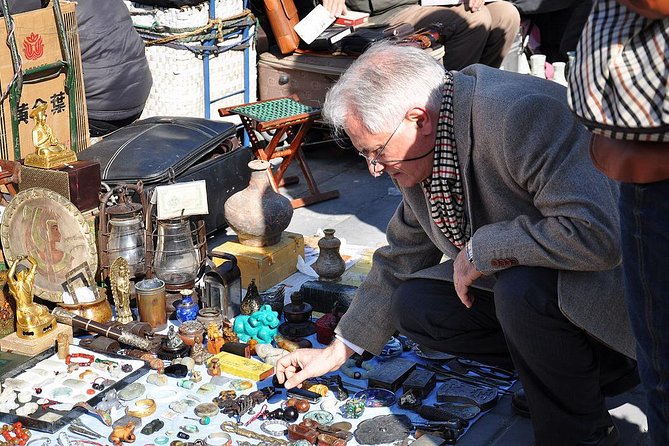
Panjiayuan Antique Market is the most important stop for shoppers. It draws sellers from across China and offers a wide mix of objects, from handmade crafts and artwork to jewelry, ceramics, calligraphy, teapots, ethnic clothing, Buddha statues, paper lanterns, Cultural Revolution memorabilia, and furniture associated with the Ming and Qing periods.
That list tells you what kind of market this is. You are not walking into a single elegant antiques shop with neatly labeled pieces. You are moving among many stalls where the fun comes from looking closely and asking questions. Some objects may be old, some may be newer, and the distinction is not always obvious. Treat the market as a place to browse, compare, and enjoy the hunt rather than a guaranteed source of authenticated antiques.
Timing matters here. The information for the tour notes that Panjiayuan is open during the weekend, while the stop description says sellers gather daily and that weekends tend to be livelier. Since those details do not fully match, confirm the market schedule for your chosen date before booking, especially if this stop is your main reason for taking the tour.
Your private guide can make shopping less confusing. You can explain that you want a small souvenir, a piece of calligraphy, a teapot, jewelry, or simply a look at the objects. The guide can then offer practical advice and help you ask questions. That is a real benefit in a market where price, age, and quality may require discussion.
One guide, Miko, was described as flexible when the antique market took more time than planned. That is exactly the kind of adjustment a private tour can sometimes provide. Still, do not assume the schedule can expand without limit. The day includes 798, a meal, and the return to your hotel, so ask how much time is available before you settle into a long negotiation.
Panjiayuan is also the stop most likely to tempt your luggage. Jewelry and small crafts are easy to carry. Furniture and larger decorative pieces are another matter. I would set a spending limit before arriving, compare several stalls, and avoid buying anything simply because a seller presents it as old or rare. The pleasure is in seeing the range and learning how the market works.
Changing pace at the 798 Art Zone
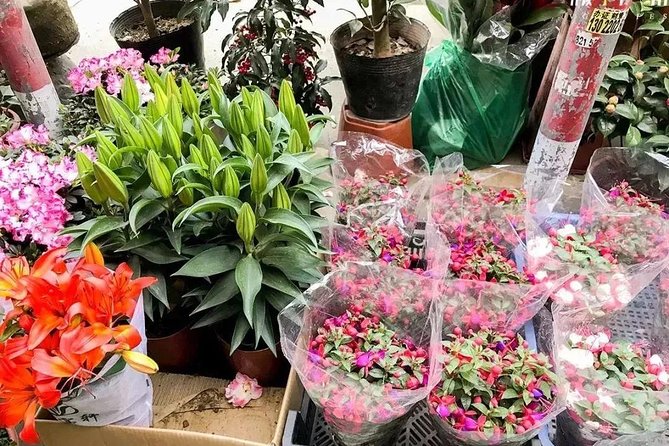
After the markets, 798 feels like a completely different Beijing. The art zone is home to contemporary art galleries, boutiques, coffee shops, bars, and restaurants. Its value is not only the art itself. It gives you a sense of the city’s current creative side after several hours of traditional objects and local commerce.
You might find gallery spaces, unusual designs, art-related shops, and places to stop for a drink or meal. The exact selection can change, so the guide’s local knowledge matters. A good guide can point out places that suit your interests rather than simply marching you through the first gallery.
This is the stop that deserves the most protection from a rushed schedule. One person wished for more time to walk around 798, and that is easy to understand. A gallery can take longer than expected, and the area invites unplanned turns. If contemporary art and independent shops are your main interests, tell your guide at the start so the pace can reflect that.
The art zone is also a good fit for people who want a less traditional activity. It is not a substitute for Beijing’s historic sights, but it adds a modern note to your trip. You see a city interested in design, art, food, and new forms of expression, not only palaces and temples.
The name can cause some confusion because one description refers to the area as 798, while one translated comment calls it the 708 Art Gallery area. The intended stop is the 798 Art Zone listed for this experience. Use that name when confirming the tour.
More Shopping Tours in Beijing
- Beijing Exclusive Private Shopping Tour: Curated Just for You
★ 5.0 · 12 reviews - Private Full Day Beijing Shopping Tour
★ 5.0 · 7 reviews - Private Tour to Pearl Market Acrobatic Show & Peking Duck Dinner
★ 5.0 · 5 reviews - Lama Temple, Hutong and Silk & Pearl Market Private Day Tour
★ 5.0 · 5 reviews
Lunch or dinner built into the day
Morning departures include a Chinese lunch after the market visits and before or around the 798 portion of the day. Afternoon departures include dinner at a local restaurant. This keeps you from having to interrupt the tour to search for food, and it makes the experience easier to manage in a city where ordering can sometimes be stressful for first-time visitors.
One guide, Alice, was praised for choosing a good lunch and for making an extra stop at the Silk Market. That additional stop is not part of the promised itinerary, so you should treat it as a possible bonus rather than something to count on. The same applies to any changes your guide may suggest.
Dietary requirements should be given at booking. The tour includes lunch, and the information specifically asks you to advise about food needs in advance. That is the sensible approach if you have allergies, avoid certain foods, or need a particular type of meal.
What the private format really changes
The private setup is one of the strongest reasons to consider this tour. Only your group participates, and transport is provided in a private vehicle. You avoid trying to connect three separate areas by public transport while carrying purchases and keeping track of time.
A private guide also gives you someone to ask about the details that make markets more rewarding. Ranee was praised for explaining the markets and galleries in a way that helped people understand what they were seeing. Lucy was described as friendly and helpful when the markets were difficult to manage alone. Linda was appreciated for answering questions in fluent English, and Sherry and driver Zhang received praise for a punctual pickup and a welcoming start.
These individual guides may not be available on every date, so you should not book on the assumption that you will receive one particular person. The useful point is the pattern of service: clear communication, shopping help, local explanation, and some willingness to adjust.
The private format is less important if you only want a quick ride between famous sights. It matters much more here because the attractions are spread out and the markets can be hard to interpret without help. You are paying for access, transport, translation, and judgment, not just entry to free markets.
Price, timing, and overall value
The listed price is $158 per person. That is not a bargain if you compare it with simply walking through a free market. The markets and 798 Art Zone do not require an admission ticket, so the cost is mainly for the private vehicle, guide, hotel transportation, meal, bottled water, and the convenience of arranging the whole day.
For a solo visitor, the price may feel high because private tours do not spread the guide and vehicle cost across a large group. For two or more people, the value improves, especially when you consider the time saved and the help with shopping and communication. Group discounts are offered, so check the final price for your party rather than judging only by the headline rate.
The booking pattern suggests the experience is often reserved about 15 days ahead. That is a useful planning guide, not a rule. I would reserve early if you need a particular date, especially a weekend when Panjiayuan may have more stalls.
Pickup is offered from your Beijing hotel, and the tour returns you there at the end. Confirmation is received at booking. The tour operates in all weather, so you should dress for conditions and wear comfortable shoes. Children can participate but must be accompanied by an adult.
Free cancellation is available until 24 hours before the start time. Inside that window, the amount paid is not refunded and changes are not accepted. Keep that deadline in mind when your Beijing schedule includes flights, trains, or uncertain arrival times.
Who should book this Beijing experience
I would choose this tour if you have already seen some of Beijing’s major historic sights and want something less predictable. It suits people who enjoy browsing, asking questions, collecting small objects, looking at art, and seeing how a city shops and creates.
It is also a strong choice if you are nervous about visiting markets alone. Your guide can explain what you are seeing, help with shopping questions, and keep the day moving. The private vehicle is especially useful when you want hotel pickup and drop-off rather than a long series of transfers.
Families may appreciate the mix of visual stops, though the antique market requires supervision around fragile or expensive objects. Art fans should tell the guide that 798 matters most, because one hour may not be enough for a slow visit.
I would hesitate if you want a serious antiques appraisal, a long shopping session, or several hours inside galleries. The tour covers three different places in about six hours. Its strength is variety and guidance, not depth at any one stop.
Should you book the markets and 798 tour?
Book it if you want a private, practical introduction to three very different parts of Beijing and value having a guide explain the unfamiliar. The strongest features are the personal service, included meal, private transport, and the chance to move from flowers and fish to antiques and contemporary art in one day.
Before you commit, confirm the Panjiayuan operating schedule for your date and decide which stop matters most. If you want 798, protect time there. If you want antiques, ask about the weekend market and tell your guide that browsing time is a priority. With those expectations set, the $158 price can make sense for couples, families, and small groups who want convenience and local help rather than a do-it-yourself outing.
FAQ
How long does the Beijing markets and 798 Art Zone tour last?
The experience lasts approximately six hours.
What pickup times are available?
Pickup times listed for the tour are 9am, 11am, 12pm, and 1pm. Your selected start time determines the order of the day and whether lunch or dinner is included.
Is hotel pickup and drop-off included?
Yes. Hotel pickup and drop-off in Beijing are included.
Is this a private tour?
Yes. Only your group participates in the private tour or activity.
What attractions are included?
The tour visits Shilihe Culture, a flower, fish, and insect market, Panjiayuan Antique Market, and the 798 Art Zone.
Is food included?
Yes. Lunch is included for morning departures, while afternoon departures include dinner at a local restaurant.
Is transport included?
Yes. Transport is provided by private vehicle, and bottled water is included.
Can children join the tour?
Yes. Children can participate, but they must be accompanied by an adult.
Can I cancel for a full refund?
Yes, if you cancel at least 24 hours before the experience start time. Cancellations or changes made less than 24 hours before the start time are not accepted for a refund.
Just added in Beijing
- Private Transfer to Mutianyu Great Wall with professional driver★ 5.0 · 19 reviews
- One day tour to downtown Tianjin from Beijing by high speed train★ 5.0 · 3 reviews
- ZANBUS: Trip to the Jinshanling Great Wall Departing at 7:30 AM★ 5.0 · 5 reviews
- camp on the Great Wall overnight with sunrise and sunset on the wall★ 5.0 · 11 reviews
- Yuxiandu Chinese Royal Cuisine Museum with Show and Royal Banquet★ 5.0 · 4 reviews
- Wild Great Wall Hikes★ 5.0 · 10 reviews
- BusDa:Ancient Great Wall &Badaling Great Wall Full-day Bus Tour★ 4.5 · 6 reviews
- Wild Great Wall Huanghuacheng Half Day Tour★ 5.0 · 15 reviews
Markets, compared.
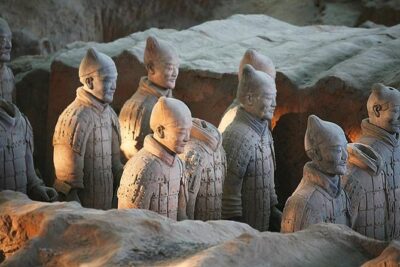
Mini Group Xian Day Tour to Terracotta Army, City Wall, Pagoda and Muslim Bazaar
Read our review →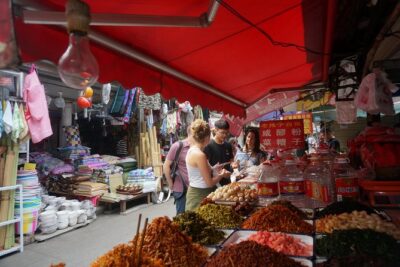
Half-Day Chengdu Cooking Class with a Local Market Visit
Read our review →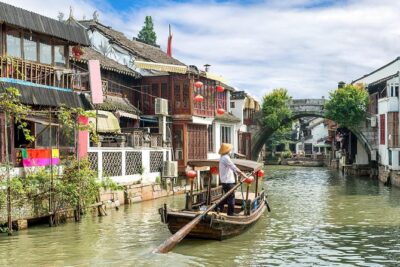
Shanghai Day Tour to Zhujiajiao Water Town, Yu Garden, Bazaar, Bund
Read our review →
Kowloon Street Market & Food Culture Walking Tour
Read our review →
Organic Chinese Dumpling Class with Market Walk
Read our review →
Terracotta Army, Lunch, City Wall, Pagoda, Bazaar
Read our review →
Organic Xiao Long Bao Soup Dumpling Class & Market Walk
Read our review →
Lijiang Naxi Cuisine Cooking Class & Market Visit
Read our review →Where else this tour turns up