
Reviewed · TRAIN TRIPS IN CHENGDU
13 Day Classic Tibet Tour on Flight and Soft Sleeper Train
Tibet by train rewards patient planning. I like the soft sleeper Qinghai-Tibet Railway and the small group capped at 10 people, since both make a long high-altitude journey easier to manage. I also like the central four-star hotels, usually within 1 to 3 kilometers of Potala Palace and Jokhang Temple. The main concern is the pace: several days involve long drives, rough roads, and high passes.
This is a serious Tibet itinerary, not a quick city break. You will see Lhasa, Nyingchi, Shigatse, Everest Base Camp, Yamdrok Lake, and Namtso Lake in 13 days. The schedule has even worked for people in their 60s and 70s, but you still need moderate fitness and a willingness to rest when your body asks for it.
In This Review
- Key points to know before booking
- Why this 13-day route works
- Chengdu to Xining, then onto the roof of the world
- Potala Palace, Jokhang Temple, and Barkhor Street
- Basomtso, Nyingchi, and the greener side of Tibet
- Yamdrok Lake, Karola Glacier, and Shigatse
- The rough road to Everest Base Camp
- Tashilunpo Monastery and the return to Lhasa
- Namtso Lake and the last high pass
- Flying home from Lhasa through Chengdu
- Hotels, meals, permits, and what you carry
- Who should book this Tibet tour?
- Should you book it?
- FAQ
- How long is the tour?
- Where does the tour start?
- What is the maximum group size?
- Is the Tibet Travel Permit included?
- Is the Qinghai-Tibet Railway included?
- Are flights included?
- Are hotels included?
- Are meals included?
- Is oxygen provided?
- What happens if I need to cancel?
Key points to know before booking
- A soft sleeper train connects Xining and Lhasa, giving you a scenic and practical route into Tibet.
- The route reaches Everest Base Camp, with an early morning sunrise stop near Rongbuk and a local bus for the final approach.
- The group maximum is 10 people, with the VIP plan keeping more than 30 percent of seats empty.
- Your Tibet Travel Permit is arranged, a major help because independent travel in Tibet is restricted.
- The route includes both major sights and quieter nature stops, from Basomtso Lake and Lulang Forest to Yamdrok Lake and Namtso.
- Oxygen is provided for the Everest section, while winter travelers receive a hot water bottle and sleeping bag.
Why this 13-day route works
At $2,030 per person, this tour is not a bare-bones ground package. The price includes four-star hotels, transportation, attraction tickets, breakfast on 11 mornings, the Tibet Travel Permit, tourist accident insurance, the soft sleeper train, and the planned air connections.
That bundled cost matters in Tibet. Permits, transport, and route planning are not simple details you can always handle independently. A local Tibetan agency also provides an exclusive team doctor, which offers extra reassurance on a route that climbs above 5,000 meters several times.
The package includes a Tibetan-style welcome dinner, a Potala Palace photo shoot, bottled water, and oxygen during the drive to Everest Base Camp. Lunches and most dinners are not included, so keep room in your budget for meals. Guides can recommend restaurants, but the advertised price does not cover those meals.
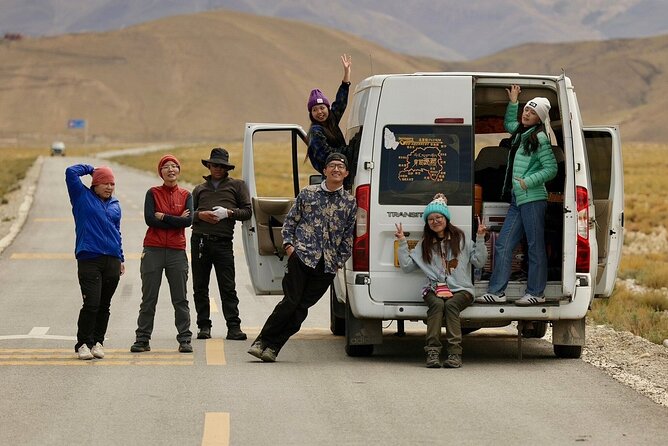
The group size is one of the better features. A maximum of 10 people allows quicker hotel check-ins, easier movement in narrow temple areas, and less waiting when the group stops for photos. The VIP arrangement also leaves more than 30 percent of seats empty, though you should confirm exactly how that applies to your vehicle and train seating before paying.
More Train Trips in Chengdu
- One Day Chengdu Xian Tour by Bullet Train
★ 5.0 · 8 reviews - Private 3Day Jiuzhaigou&Huanglong Tour by Fast Train from Chengdu
★ 5.0 · 6 reviews - Chengdu to Xi’an: Terracotta Army Day Trip by Bullet Train
★ 3.7 · 4 reviews
Chengdu to Xining, then onto the roof of the world
Day 1 is deliberately light. You fly into Chengdu Tianfu International Airport and check into the Tianfu International Hotel. With roughly six hours allocated to the arrival day, there is no packed sightseeing program to complicate a late arrival.
On Day 2, the reference flight leaves Tianfu International Airport Terminal 2 at 9:10 a.m. and reaches Xining Caojiabao Airport Terminal 2 at 10:40 a.m. The listed flight is Sichuan Airlines 3U6341, an Airbus A319 in economy class.
From Xining, you board the Qinghai-Tibet Railway. Several possible train numbers are listed, including Z8991, Y971, and Z22, so the exact service may depend on availability. The important point is the soft sleeper berth. You will have a more comfortable overnight ride than with a hard seat, and the train removes the need for another long road transfer into Lhasa.
This train section is a smart part of the design. You gain a gradual approach to Tibet and avoid spending the entire route in a vehicle. Still, sleeping on a train is not the same as sleeping in a hotel, and the schedule may change slightly according to the confirmed train.
You reach Lhasa on Day 3. Your guide meets you in the arrival hall and takes you to the arranged hotel. The advice here is sensible: rest rather than rush into sightseeing. At this altitude, a quiet first afternoon can make the rest of the trip much more enjoyable.
Potala Palace, Jokhang Temple, and Barkhor Street
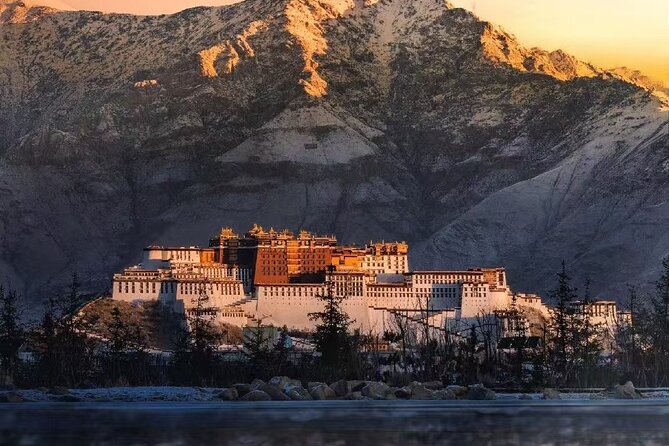
Day 4 brings the heart of Lhasa. Potala Palace is the morning highlight, and you should expect stairs, crowds, and a slow visit through one of Tibet’s great religious and political landmarks. The palace served as the residence of the Dalai Lamas and once held Tibet’s central political and religious authority.
The three-hour block gives you time to see the palace without treating it like a quick photo stop. Your ticket is included, which is helpful because advance access to major Lhasa sights is one of the reasons a guided tour earns its keep here.
In the afternoon, you visit Jokhang Temple. Its design combines Tibetan, Tang, Nepalese, and Indian influences, and its importance to Tibetan Buddhism is immediately clear. Keep your schedule flexible inside the temple. Religious sites are best appreciated at a slower pace, with time to look carefully rather than simply follow the group.
Barkhor Street follows the temple visit. You can walk clockwise around the Jokhang, browse handicrafts, or sit and watch the flow of local religious activity. This is one of the few points in the itinerary where you get some freedom to wander, so use it. The market is also a natural place to compare prices before buying souvenirs.
Your hotel location helps here. Staying within 1 to 3 kilometers of Potala Palace and Jokhang Temple means less wasted time in traffic and easier access to the center of Lhasa.
Basomtso, Nyingchi, and the greener side of Tibet
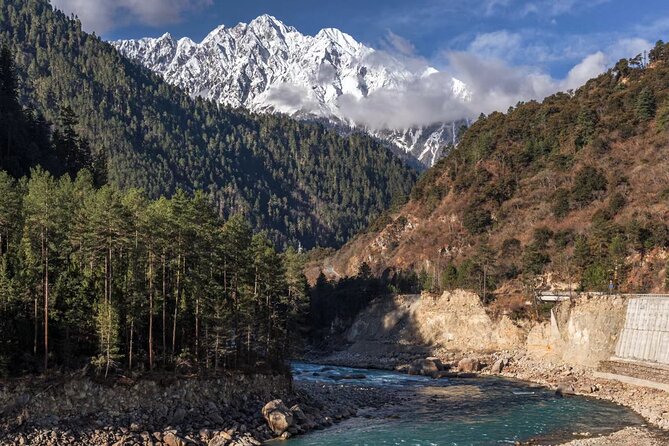
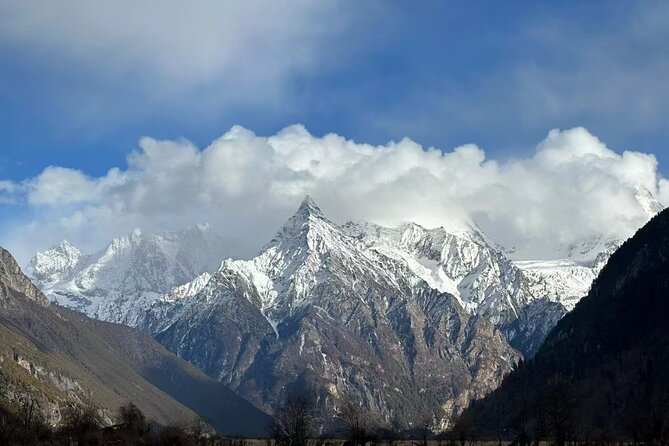
Days 5 through 7 shift the mood from monumental Lhasa to rivers, forests, and mountain valleys. You drive east along the Nyang River toward Basomtso Lake, passing Mila Mountain Pass at 5,013 meters before descending toward the southern Nyin area.
Basomtso, also called Basongcuo, is a useful reminder that Tibet is not only dry high plateau. The lake and surrounding scenery provide a gentler day after Lhasa’s major temples. The itinerary gives about three hours at the stop, followed by a drive to Nyingchi, known in Tibetan as the Throne of the Sun.
Day 6 begins with a drive from Nyingchi to Lulang, about 100 kilometers and roughly two hours. You cross Segrila Mountain at 4,515 meters, with forest views along the way. Nnamjagbarwa Mountain is included as a scenic stop, though clear weather will matter greatly for mountain visibility.
Lulang Forest is the day’s most atmospheric stop. The name means the place where gods reside, and the route continues down to Lulang Pasture, where the surrounding mountains are covered with forest and grassland. Compared with the hard high-altitude stops later in the tour, this section gives you more visual variety and a welcome change of pace.
Day 7 visits Kadinggou Scenic Spot, also described as Kadanggou Waterfall or Heavenly Buddha Waterfall. Expect a gorge setting, deep valleys, high mountain walls, and primitive forest. The six-hour block suggests a full touring day, not a quick roadside pause.
The drawback is road time. Days 5 to 7 involve repeated transfers, mountain passes, and changing elevations. You may love the scenery, but you should not expect long periods of independent exploration.
A completely different sort of day out:
- Chengdu: Giant Panda Breeding Research Base Ticket
★ 4.5 · 580 reviews - Half-Day Chengdu Cooking Class with a Local Market Visit
★ 5.0 · 465 reviews - Tuktuk Food Tour Through Chengdu’s Local Eats
★ 5.0 · 435 reviews - Private Half-Day Chengdu Panda Breeding Center Tour with Optional Volunteer
★ 5.0 · 353 reviews
Yamdrok Lake, Karola Glacier, and Shigatse
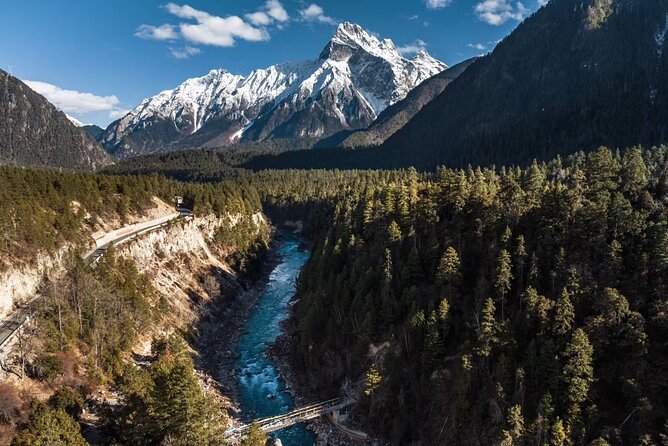
Day 8 heads west toward Shigatse. You pass the green farmland of the Nyangchu Valley before reaching Yamdrok Yumtso, one of Tibet’s best-known lakes.
Yamdrok Lake is memorable because of its setting high among the mountains. The itinerary combines it with a roadside view of Karola Glacier at 4,960 meters, then continues to Shigatse, Tibet’s second-largest city and an important center connected with the Panchen Lama.
This is a demanding sightseeing day. Lake stops and glacier viewpoints are exposed, and the elevation can make even a short walk feel tiring. Take water, protect yourself from the sun, and follow the guide’s advice about how long to remain at each stop.
The route is valuable because you see several types of Tibet in one day: cultivated valleys, a high lake, a glacier, and a major urban and religious center. It is also one of the clearest examples of the tour’s tradeoff. You cover a lot, but you spend a lot of time in the vehicle.
The rough road to Everest Base Camp
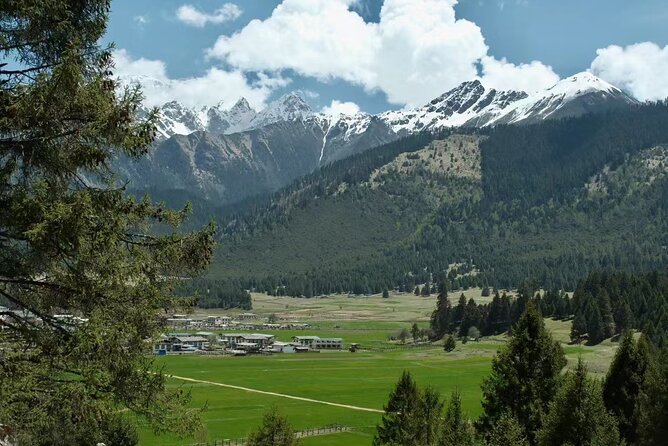
Day 9 takes you west along the Friendship Highway to Tingri, then onward toward Rongbuk and Everest Base Camp. The road from Tingri to Rongbuk is described as roughly 90 kilometers and under construction, so this is not a smooth sightseeing transfer.
The final approach crosses wild grassland, rivers, and high mountain country. In clear weather, you may glimpse four peaks above 8,000 meters. That possibility is a major reason to accept the rough road, but mountain views are never guaranteed.
The Qomolangma National Nature Preserve is the setting for this section. Oxygen is provided while traveling to Everest Base Camp, an important practical inclusion. Winter departures also receive a hot water bottle and sleeping bag, which should be useful during the coldest part of the route.
The schedule is intentionally split across two days. On Day 10, you leave early to watch sunrise from Rongbuk and view Mount Everest. After walking to the designated area, you take a local bus for about half an hour to reach Everest Base Camp.
That local bus transfer is worth noting. You do not simply drive your tour vehicle right up to the final viewpoint. The arrangement adds another step, but it also reflects the controlled access around the base camp area.
The Everest section is the tour’s biggest physical challenge. The high altitude, rough road, early start, and cold can combine quickly. I would treat the sunrise as a bonus, not something worth sacrificing your health to obtain. Anyone with concerns about altitude should discuss them with a doctor before booking.
Later on Day 10, you return through Tingri and continue toward Shigatse. This is a long day with very little spare energy, so pack snacks and keep your day bag organized.
Tashilunpo Monastery and the return to Lhasa
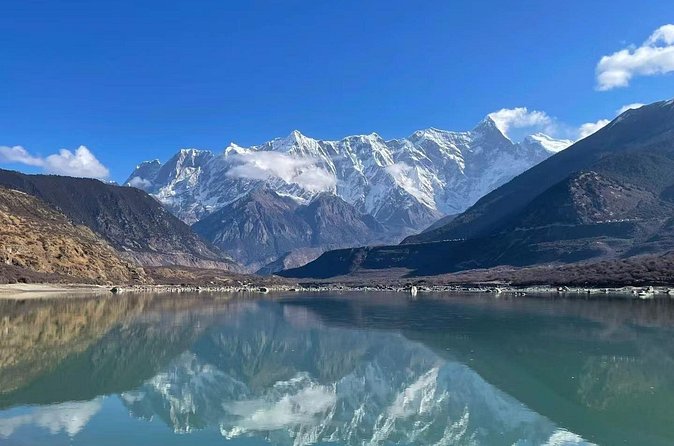
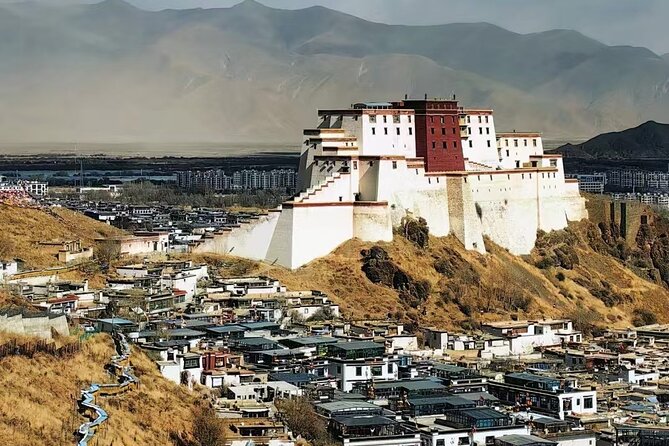
Day 11 includes Tashilunpo Monastery before the roughly four-hour drive back toward Lhasa from Shigatse. Tashilunpo is described as the largest monastery in western Tibet and serves as the final major historic site on the route.
The monastery gives you another chance to see Tibetan religious architecture after Jokhang Temple and Potala Palace, but in a different setting. By this point, you will also have more context for the religious traditions you encountered earlier in Lhasa.
The return drive is not exciting because it is short, but it keeps the itinerary moving toward the final night. After Everest, the monastery is a calmer cultural stop and a sensible way to close the western portion of the route.
Namtso Lake and the last high pass
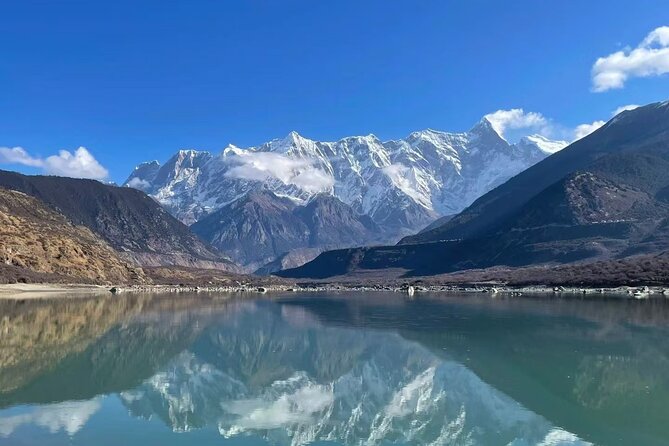
Day 12 takes you north from Lhasa across the grasslands of northern Tibet. Prayer flags, the Qinghai-Tibet Highway, and broad open views define the day.
You cross a pass at 5,190 meters on the way to Namtso Lake. That altitude is higher than several earlier points on the route, so do not underestimate this final excursion simply because it comes near the end of the trip.
Namtso is a strong final scenic stop. It gives you another type of high-altitude lake after Yamdrok, with a more open northern setting. The six-hour block allows a substantial outing, but the drive and altitude will make this another tiring day.
The order is logical. You have already had time in Lhasa to adjust before tackling Namtso. Still, fatigue may be cumulative by Day 12, especially after Everest and the long return drive.
Flying home from Lhasa through Chengdu
On Day 13, the tour arranges transport to Lhasa Gonggar Airport, about 60 kilometers away. The drive takes roughly one hour, and the reference Sichuan Airlines flight, 3U6683, departs at 6:30 p.m. and arrives in Chengdu at 8:55 p.m.
A late departure gives you part of the day in Lhasa, although the exact free time depends on the final transport plan. Do not count on a full independent sightseeing day unless the operator confirms it.
The airport transfer is included in the planned arrangements. International transportation is not included, but help with international bookings is available.
Hotels, meals, permits, and what you carry
Four-star hotels are provided throughout the tour, generally in city-center locations. Being close to Potala Palace and Jokhang Temple is especially useful in Lhasa, where you want to spend your energy sightseeing rather than commuting.
Breakfast is included on 11 mornings. One dinner is included, described as a Tibetan-style welcome dinner. Lunches and the remaining dinners are your responsibility, so the $2,030 price is not fully all-inclusive.
The Tibet Travel Permit is included and guaranteed by the local agency. This is one of the most important practical benefits of booking this kind of organized route. Tourist accident insurance is also included.
Carry layers, water, sun protection, and any personal medication you need. Oxygen is supplied for the Everest drive, but that is support, not a cure for altitude illness. You should still take the first Lhasa day slowly.
A single-room supplement of about $25 per day applies if you want your own room. Early booking can reduce the price, and group bookings may receive an additional discount.
Who should book this Tibet tour?
I would recommend it to you if you want a broad first look at Tibet and prefer having permits, transport, hotels, and major tickets handled in one package. It suits people who value cultural sights as much as scenery and who accept long drives as part of reaching Everest and Namtso.
The tour also suits older adults with moderate fitness, provided they prepare carefully and respect the altitude. A small group and a team doctor are useful safeguards, but neither removes the physical demands of the route.
I would hesitate if you want slow travel, private time, or easy road journeys. The Nyingchi section is scenic, but Days 8 through 12 are packed with long transfers and high passes. The rough road to Rongbuk is the clearest warning.
Should you book it?
Book this tour if Everest Base Camp, the soft sleeper train, and the major Lhasa temples all matter to you. At $2,030, the package offers solid value because it combines permits, domestic transport, four-star lodging, tickets, breakfast, insurance, and a small group.
Before paying, confirm the final flight and train numbers, the exact hotel names, how the empty-seat promise applies, and the amount of free time on Day 13. If you are ready for altitude, rough roads, and a full schedule, this is a practical way to see a remarkable amount of Tibet in 13 days. If your priority is comfort over coverage, choose a slower route with fewer western Tibet stops.
FAQ
How long is the tour?
The tour lasts approximately 13 days, beginning in Chengdu and ending with a flight from Lhasa to Chengdu.
Where does the tour start?
The meeting point is Chengdu Tianfu International Airport in Chengdu, China.
What is the maximum group size?
The tour has a maximum of 10 travelers.
Is the Tibet Travel Permit included?
Yes. The Tibet Travel Permit is included in the tour price and is arranged by the local agency.
Is the Qinghai-Tibet Railway included?
Yes. The route includes a soft sleeper train from Xining to Lhasa. The exact train depends on the confirmed schedule.
Are flights included?
The tour is advertised with round-trip airfare connected to the itinerary. Reference flights are listed between Chengdu and Xining and between Lhasa and Chengdu. International transportation is not included.
Are hotels included?
Yes. Four-star hotels are included throughout the tour, generally in city-center locations.
Are meals included?
Breakfast is included on 11 mornings, and a Tibetan-style welcome dinner is included. Lunches and most other dinners are not included.
Is oxygen provided?
Yes. Oxygen is provided while traveling to Everest Base Camp.
What happens if I need to cancel?
You receive a full refund if you cancel at least six full days before the start time. Cancellation two to six full days in advance receives a 50 percent refund, while cancellation less than two full days before the start time is nonrefundable.
Just added in Chengdu
- Visiting Chengdu Panda Base in a Half Day★ 5.0 · 4 reviews
- Classsic sichuan Opera at sichuan Provincial Theater★ 5.0 · 4 reviews
- Tea Village in lost Town and Buddha 1 day tour★ 5.0 · 32 reviews
- Panda, Leshan, and Emei Mountain 2-day tour★ 5.0 · 4 reviews
- Sichuan Opera with face-changing at Sichuan opera theater★ 4.5 · 6 reviews
- Sichuan Opera Show with Hotel Pickup★ 5.0 · 3 reviews
- Mini Group: Half-Day Chengdu Pandas Guided Tour★ 5.0 · 3 reviews
- Sanxingdui Ruins and Giant Pandas Private Day Tour from Chengdu★ 5.0 · 5 reviews
Train Trips in Chengdu, compared.
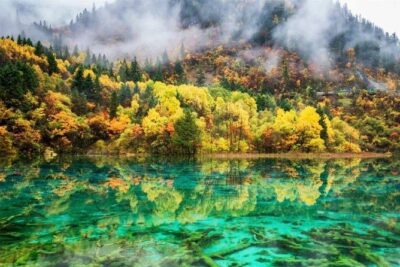
Private 3Day Jiuzhaigou&Huanglong Tour by Fast Train from Chengdu
Read our review →
Chengdu to Xi’an: Terracotta Army Day Trip by Bullet Train
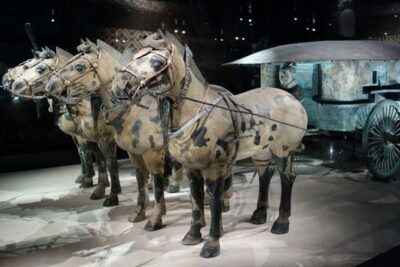
Read our review →
2 Days Xian Private Tour from Chengdu by Bullet Train
Read our review →
private 2-Day Huanglong Jiuzhaigou tour by train
Read our review →
Xi’an Terracotta Warriors Day Trip by Bullet Train
Read our review →
Private 2-Day Jiuzhaigou & Huanglong Tour by Train from Chengdu
Read our review →Where else this tour turns up