
Reviewed · THE BUND TOURS
Shanghai Hidden Histories Walking Tour: Suzhou Creek to The Bund
History feels different at walking speed. This small-group Shanghai tour links wartime memorials, old bridges, renovated lanes, and The Bund in one thoughtful route. I like the focus on meaning rather than photo stops, and I like that the group is capped at six people. The main consideration is the price: at $120 per person, this is not a casual budget walk.
I also like the relaxed afternoon start at 3 p.m., which gives you time to settle into Shanghai before setting out. Guide Charlotte brings a personal touch, with a background in interior design and a talent for explaining why buildings matter. Still, you should expect a moderate amount of walking, and museum admission, food, transport to the meeting point, and the return trip are not included.
In This Review
- Key points to know before booking
- Why this walk feels different from a standard Shanghai tour
- Starting with the Sihang Warehouse Memorial Museum
- Yanqingli and the practical side of preservation
- The treaty-port communication hub
- Crossing Zhapu Road Bridge
- Waibaidu Bridge at the mouth of Suzhou Creek
- Reaching The Bund with more context
- What the $120 price really covers
- Timing, meeting point, and walking demands
- Who will get the most from this experience
- Should you book the Suzhou Creek to The Bund walk?
- FAQ
- How long does the Shanghai Hidden Histories Walking Tour last?
- What time does the tour begin?
- Where does the tour start?
- Where does the tour end?
- How many people can join the tour?
- Is museum admission included?
- Is food included?
- What else is included?
- Can I cancel for a full refund?
Key points to know before booking
- Sihang Warehouse begins the story with wartime Shanghai, including the 1937 defense by 400 Chinese soldiers.
- The route ends at The Bund, but approaches it through Suzhou Creek, bridges, and city history instead of making the waterfront the whole show.
- Charlotte’s architecture knowledge is a major asset, especially if you enjoy design, old buildings, and the stories behind façades.
- A maximum of six people keeps the walk personal, with room for questions and conversation.
- The afternoon timing works well for a changing city view, though the route may feel busier on some days.
- The $120 fee buys interpretation and company, not a long list of admissions or included meals.
Why this walk feels different from a standard Shanghai tour
Shanghai is easy to reduce to a few postcard images: the Pudong skyline, the bright lights, and the grand stone buildings along The Bund. This walk takes another route into the city’s past. It begins near Suzhou Creek and follows the marks left by war, trade, industry, migration, and changing urban life.
I like that the tour does not treat history as a string of dates. A bridge becomes a clue about how neighborhoods connected. A renovated lane shows how old housing can find a new use. A colonial-era building points to the period when Shanghai became an international port.
The walk lasts about three to four hours. That is long enough for a connected story, but not so long that you spend the final hour simply trying to keep up. The small group also matters. With no more than six people, Charlotte can respond to questions instead of delivering a fixed speech to a crowd.
This is best for you if you enjoy quiet observation, architecture, and conversation. It is less suited to someone who wants rapid sightseeing, lots of included attractions, or a tour built around food tastings. The route may touch on local delicacies, and Charlotte has introduced dishes such as xiaolongbao and crab noodles during the walk, but meals are not part of the price.
More Walking Tours in Shanghai
- Shanghai Highlights Walking Tour With A Real Local
★ 4.9 · 153 reviews - Shanghai Breakfast Walking Tour of Former French Concession
★ 5.0 · 139 reviews - Private Shanghai Evening Street Food Walking and Cruise Tour
★ 5.0 · 123 reviews
Starting with the Sihang Warehouse Memorial Museum
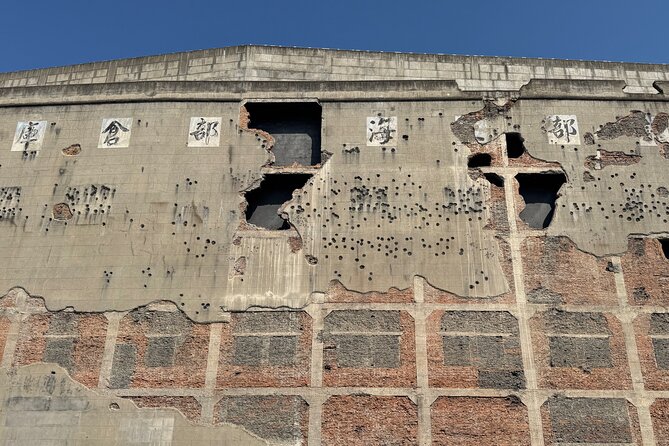
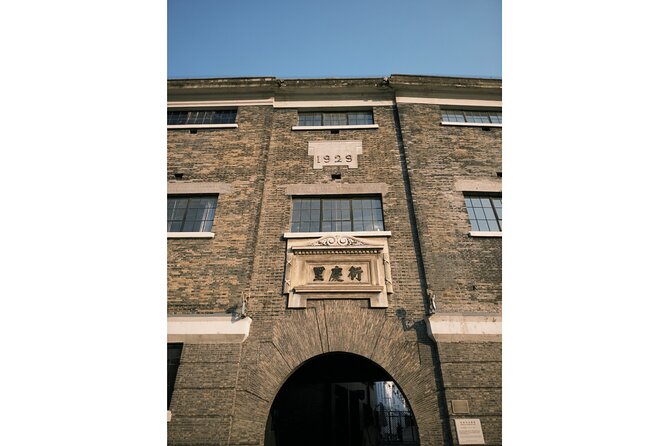
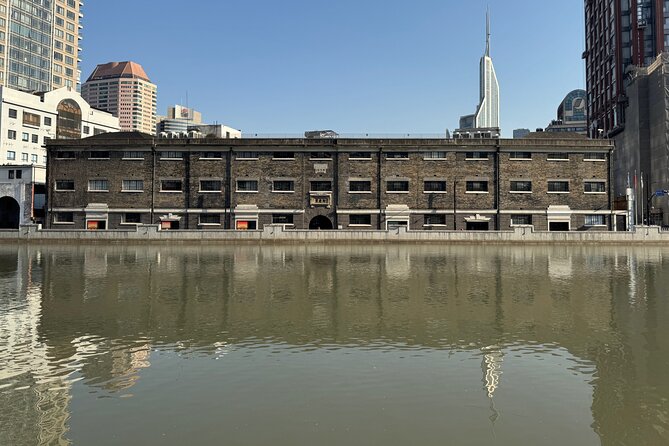
The first major stop is the Sihang Warehouse Memorial Museum, a solemn place beside Suzhou Creek. The building is tied to one of Shanghai’s best-known wartime episodes. In 1937, about 400 Chinese soldiers held their position here during the Battle of Shanghai.
You spend around 20 minutes at the site. The bullet-scarred walls give the story a physical presence that a textbook cannot match. This is not just an old structure with a plaque. It is a place where the damage helps you picture the pressure of the fighting and the importance of the warehouse during the conflict.
The stop is especially useful because it sets the tone for the rest of the walk. Shanghai’s past was not only commercial and cosmopolitan. It was also marked by violence, occupation, and the struggle to control a major city.
Museum admission is not included. If you enter, you will pay that fee separately. The tour can still make the memorial meaningful from the outside, but museum access may matter to you if you want a fuller presentation of the site.
I would give this stop your full attention. It is short, but it carries much of the emotional weight of the tour.
Yanqingli and the practical side of preservation
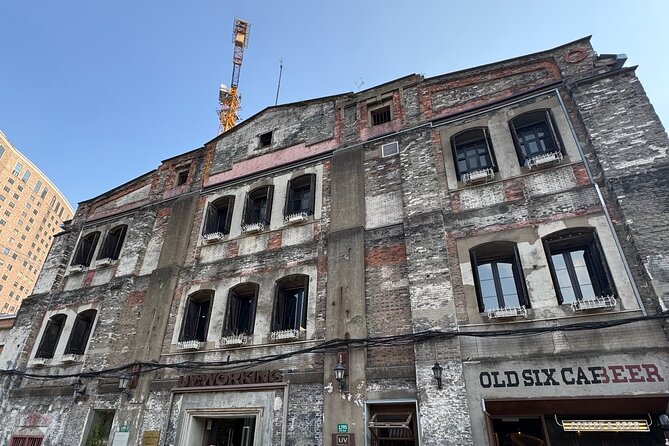
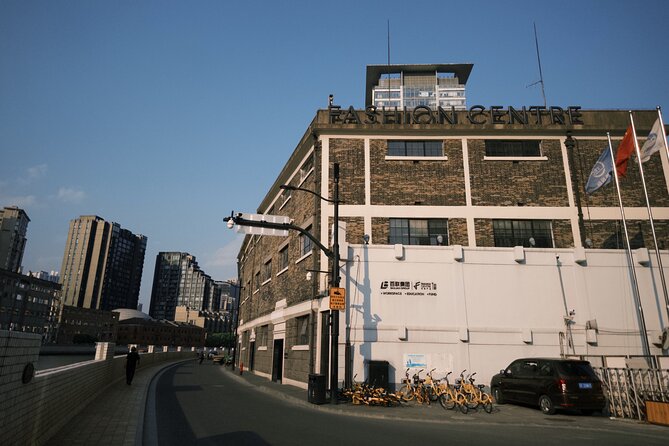
Yanqingli offers a different kind of history. Instead of a battlefield, you see older urban spaces being adapted for present-day use. Renovated interiors now house cafés, galleries, and studios.
The visit lasts about five minutes, so do not expect a long architectural inspection. Its value comes from the contrast. You have just considered a site shaped by war, and now you are looking at an older neighborhood being given another life.
I like this stop because it helps you think about preservation in ordinary terms. Saving old buildings is not only about keeping them frozen in time. It can also mean finding uses that bring people back into them.
The brief visit may feel too short if you are an architecture specialist or want time to explore the cafés and studios. Still, the compact stop fits the pace of the route. It gives you a quick visual example of how Shanghai handles the tension between old structures and new city life.
The treaty-port communication hub
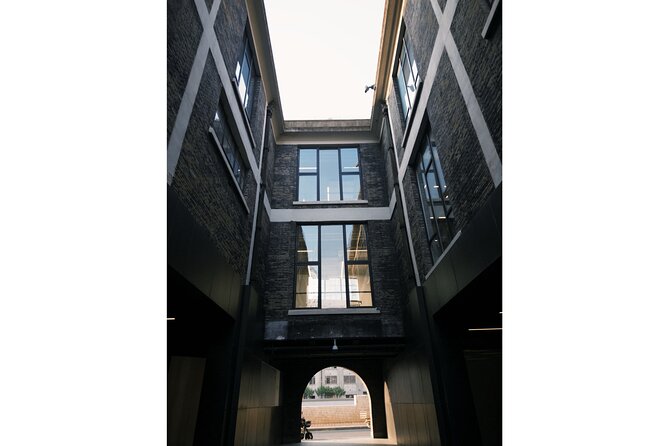
Another point along the route focuses on a building that once served as an international communication center during Shanghai’s treaty-port era. The building represented the city’s role as a gateway for commerce, ideas, and people.
The information provided for this stop does not give a specific building name, so you should not expect this section to work like a museum visit with a clearly marked indoor attraction. Its importance comes from the explanation Charlotte provides about the city’s international connections.
This is where the tour moves beyond architectural appearance. A grand façade can look impressive, but the better question is what happened inside. Who worked there? What messages passed through? Which businesses depended on that network? The stop gives you a way to read Shanghai’s buildings as working parts of a port city.
If you like architecture, this should be one of the stronger parts of the route. An interior designer by profession, Charlotte has a useful eye for structure and design. She can connect what you see to the larger story of Shanghai’s growth.
More Bund walks:
- Private Yu Garden, The Bund, French Concession, Pudong Half-Day Tour
★ 5.0 · 51 reviews - Customized Private Tour in Shanghai The Bund Yu Garden Zhujiajiao
★ 5.0 · 15 reviews - Shanghai Nightlife: Bars in The Bund and Old French Concession
★ 5.0 · 11 reviews - Shanghai Yu Garden, The Bund & Zhujiajao Water Town Bus Tour
★ 4.5 · 9 reviews
Crossing Zhapu Road Bridge
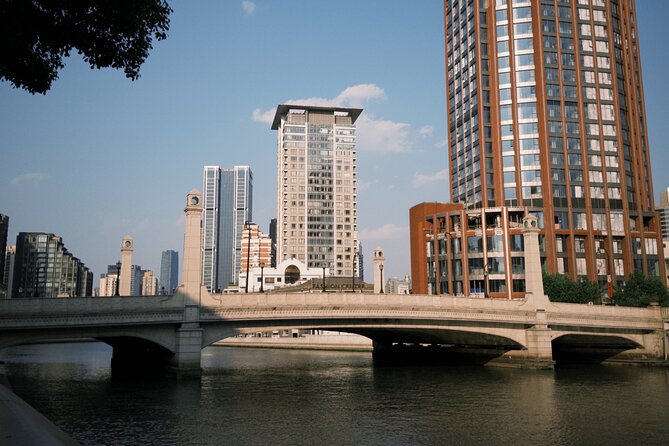
Zhapu Road Bridge, also called Zhapulu Bridge, is one of the oldest surviving steel bridges over Suzhou Creek. It was built in 1907 and linked the commercial areas of Hongkou and Huangpu.
You spend about 20 minutes here, which is enough time to consider both the structure and its setting. The bridge is not simply a crossing. It shows how Shanghai’s business districts depended on connections across the water.
Steel bridges can seem plain beside The Bund’s grand buildings, but this one tells a more practical story. Commerce needs roads, crossings, workers, and reliable routes. The bridge helped tie two important parts of the city together, and it has seen more than a century of change.
I appreciate the pause here because it slows the tour down. You can look at the bridge, the creek, and the surrounding city without rushing toward the next famous view. The drawback is that anyone expecting a major attraction may find the stop modest. Its interest depends on the guide’s explanation and your willingness to notice infrastructure.
That is a fair trade for a history-focused walk. You are not being asked to admire a bridge merely because it is old. You are shown why it mattered.
Waibaidu Bridge at the mouth of Suzhou Creek
Waibaidu Bridge is another major bridge stop, but it has a different setting and reputation. Built in 1908, it is Shanghai’s first all-steel bridge and the oldest surviving bridge of its kind in the city.
The bridge crosses the mouth of Suzhou Creek, where the creek meets the Huangpu River. Its location once marked a threshold between different parts of the city and different systems of movement and control.
You have around 15 minutes here. That is enough for photos and a short explanation, though the area can be busy. The route may feel more crowded than a quiet weekday walk, depending on the day and time.
This is one of the points where the tour begins to connect directly with The Bund. You can see how the creek opens toward the river and how the old bridges helped define Shanghai’s waterfront. The view has visual appeal, but the historical framing makes it more useful than a simple photo stop.
Bring comfortable shoes. The tour requires a moderate level of physical fitness, and the route is built around walking rather than vehicle transfers.
Reaching The Bund with more context
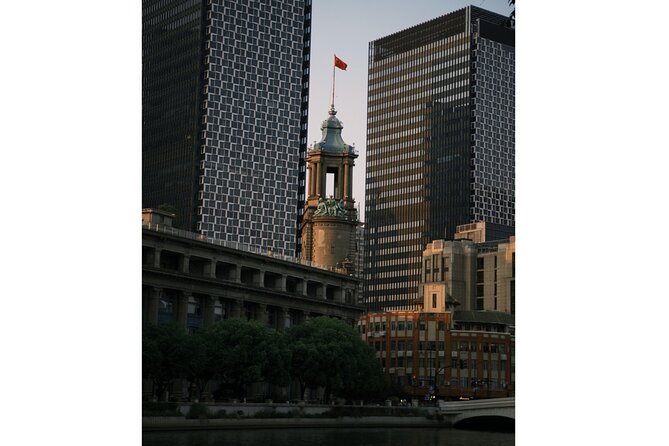
The final stop is The Bund, known locally as Wai Tan. The promenade runs along the west bank of the Huangpu River and is lined with the grand buildings that helped define Shanghai’s modern image.
Many city tours begin and end here. This one saves The Bund for the finish, after you have seen the wartime site, older neighborhoods, communication networks, and steel bridges that made Shanghai function.
That order is important. You arrive with questions about trade, city planning, colonial influence, and power. The buildings no longer appear as a row of impressive façades. They become former banks, trading houses, and offices connected to Shanghai’s role as an international port.
The tour ends near the Swatch Art Peace Hotel, on the riverside promenade close to East Nanjing Road. The end point is practical if you want to continue along The Bund or explore central Huangpu afterward.
You spend about 15 minutes at The Bund itself. That may sound brief, but the whole route has been leading here. The tour is not trying to give you every fact about every building. Instead, it gives you a framework for looking at the waterfront with more care.
Architecture enthusiasts should pay close attention here. Charlotte’s design background adds useful detail, and the buildings can prompt strong questions about who financed them, who used them, and what their presence meant in an international city.
What the $120 price really covers
The tour costs $120 per person. That is a serious price for a three-to-four-hour walk, especially since transport, meals, snacks, and museum admission are extra.
The value comes from the format. You are paying for a licensed local English-speaking guide, a maximum group size of six, a connected route, and interpretation that goes beyond the obvious sights. If you want someone to explain why a bridge, lane, or building matters, the fee can make sense.
You also receive one complimentary coffee at a selected café or one bottled water per person upon request. A digital citywalk map is included, along with a group photo or self-portrait on request, taken with an iPhone and supplied as a digital copy.
I would not book this expecting a bundle of attractions. There are no listed meal tastings, private vehicles, or included museum tickets. The price makes the most sense for you if you value a personal guide and a very small group.
Group discounts may help if you are booking with companions. Since the walk averages nine days of advance booking, I would reserve ahead if your Shanghai schedule is tight.
Timing, meeting point, and walking demands
The walk begins at 3 p.m. at 245 Xin Zha Lu in Huangpu District. It ends at the Swatch Art Peace Hotel on The Bund, near East Nanjing Road.
The one-way arrangement is useful. You finish in a major central area rather than returning to the starting point. However, transportation to the meeting point and your onward transport after the tour are your responsibility.
The afternoon start gives you a gentle way into the route. Light and activity can change as the walk progresses, and reaching The Bund later in the day may suit you if you want to continue along the waterfront afterward.
You need moderate physical fitness. The experience is built around several hours on foot, with no private transport included. Service animals are allowed, and the meeting area is near public transportation.
Wear shoes suited to city walking and carry water if you prefer more than the included bottle. The coffee or water option is helpful, but it is not a substitute for planning your own refreshments.
Who will get the most from this experience
I would choose this tour for a first or second visit to Shanghai if you want more than a standard introduction. It is also a strong match for architecture fans, history lovers, photographers who care about context, and people who prefer conversation to a large group lecture.
Charlotte seems particularly well suited to travelers interested in buildings. Her interior design background gives the architecture section extra weight, and the personal style of the tour allows room for questions.
Food-curious visitors may also enjoy the conversation. Charlotte has introduced local specialties including xiaolongbao and crab noodles along the route, though you should budget separately for anything you decide to eat.
I would hesitate to recommend it if your priority is low cost, extensive museum time, or a food-focused itinerary. The route includes only a short museum stop, and admission is extra. It is also not the right pick if you dislike walking or prefer to cover Shanghai by private vehicle.
Should you book the Suzhou Creek to The Bund walk?
Book it if you want Shanghai explained through places that still carry signs of their working, wartime, and international past. The best parts are the Sihang Warehouse, the two historic steel bridges, and the final approach to The Bund with Charlotte’s architectural perspective.
Skip it if $120 feels too high for a walking tour with few included expenses. You can see the public bridges and waterfront without paying for access, but you will miss the connected story and the chance to ask a local guide detailed questions.
For the right person, the small group changes the value. Six people or fewer means this can feel like a guided conversation rather than a moving crowd. Free cancellation is available up to 24 hours before the 3 p.m. start, which gives you some flexibility. I would book this for substance, not for a checklist of famous sights.
FAQ
How long does the Shanghai Hidden Histories Walking Tour last?
The tour lasts approximately three to four hours.
What time does the tour begin?
The scheduled start time is 3 p.m.
Where does the tour start?
The meeting point is 245 Xin Zha Lu, Huangpu District, Shanghai, China, 200071.
Where does the tour end?
The tour ends at the Swatch Art Peace Hotel on The Bund, near the riverside promenade and East Nanjing Road.
How many people can join the tour?
The maximum group size is six travelers.
Is museum admission included?
No. Admission to the Sihang Warehouse Memorial Museum is not included.
Is food included?
No. Meals and snacks are not included. The experience includes one complimentary coffee at a selected café or one bottled water per person upon request.
What else is included?
You receive a digital citywalk map, a licensed local English-speaking guide, and a group photo or self-portrait on request, provided as a digital copy.
Can I cancel for a full refund?
Yes. You can cancel at least 24 hours before the experience start time for a full refund. Cancellations or changes made within 24 hours are not refunded or accepted.
Just added in Shanghai
- Zhujiajiao Water Village: Private Tour from Shanghai★ 4.9 · 43 reviews
- Zhujiajiao with Private Customized Shanghai City Highlights★ 5.0 · 14 reviews
- Zhujiajiao Water Town Private Tour with Night River Cruise★ 5.0 · 9 reviews
- Zhujiajiao & Shanghai:Small Group Tour Water Town to Skyline★ 5.0 · 4 reviews
- Zhujiajiao & Shanghai:Private Day Tour Water Town to Skyline★ 5.0 · 12 reviews
- Yu Garden Shanghai Entry Tickets Booking And Trip★ 3.6 · 9 reviews
- Water Town Zhujiajiao Shanghai: Boat Ride,Sights,Bites&Sips★ 5.0 · 7 reviews
- shanghai Disney tour★ 5.0 · 12 reviews
The Bund Tours, compared.
Private Yu Garden, The Bund, French Concession, Pudong Half-Day Tour
Read our review →
Customized Private Tour in Shanghai The Bund Yu Garden Zhujiajiao
Read our review →
Shanghai Nightlife: Bars in The Bund and Old French Concession
Read our review →
Shanghai Yu Garden, The Bund & Zhujiajao Water Town Bus Tour
Read our review →
Shanghai Private Night Tour with Huangpu River Cruise, the Bund and Xintiandi
Read our review →
3-Hour Private Tour: The Bund and Shanghai Tower
Read our review →
Classic Shanghai 8h Private Tour-Yuyuan Garden,The Bund+TV Tower Optional
Read our review →
Private Tour of Shanghai Museum the Bund Yu Garden and Cruise on Huangpu River
Read our review →Where else this tour turns up