Reviewed · FULL-DAY
Private Full-Day Tour: Shanghai Past and Present
Shanghai tells two stories at once. This private eight-hour tour brings them together, from Ming-era Yuyuan Garden and a working Buddhist temple to the Bund’s grand waterfront and modern Nanjing Road. I like the private vehicle and guide, which make a full day easier in a large, traffic-heavy city. I also like the clear contrast between old Shanghai, colonial Shanghai, and the high-rise city across the Huangpu River. The main drawback is a fairly packed schedule, with some stops receiving only 30 to 40 minutes.
At $147.20 per person, the tour offers solid value if your group wants convenience. Admission tickets, lunch, transport, and hotel pickup and drop-off are included within Shanghai’s Middle Ring Zone. Guide Jack earned specific praise for making the day work well, though the experience has only three published reviews and a 4.3 rating, so I would treat it as a useful private introduction rather than a definitive look at every side of Shanghai.
In This Review
- Key points to know before booking
- Why this tour works as a first day in Shanghai
- Yuyuan Garden and the old quarters
- Jade Buddha Temple and living religious practice
- Shikumen housing and the shape of old Shanghai
- Lunch at a Chinese restaurant
- The Bund and Shanghai’s most famous view
- Nanjing Road and the modern city
- Is $147.20 per person good value?
- Who should book this Shanghai tour?
- Should you book it?
- FAQ
- How long does the tour last?
- Is hotel pickup included?
- Is this a private tour?
- Is transportation included?
- Are entrance fees included?
- Is lunch included?
- Can vegetarian or gluten-free meals be arranged?
- What is the cancellation policy?
Key points to know before booking
- Yuyuan Garden dates to the Ming Dynasty: You get one hour among pavilions, ponds, rockeries, bridges, and corridors in Shanghai’s old quarter.
- The tour is genuinely private: Only your group participates, with an English-speaking guide and an air-conditioned vehicle.
- The Bund gives you Shanghai’s best visual contrast: European-style buildings line one side of the river while Pudong’s modern towers rise across the water.
- Lunch and admission fees are included: That keeps the day simple and makes the price easier to assess.
- The schedule may include both Shikumen housing and a silk reeling mill: The supplied details describe both, so confirm the final stops with the operator before departure.
- Pickup has a firm boundary: Hotel service is available within Shanghai’s Middle Ring Zone, and the guide contacts you the night before.
Why this tour works as a first day in Shanghai
Shanghai can feel like several cities laid over one another. Fishing village, treaty port, colonial trading center, revolutionary-era metropolis, and modern financial capital are all part of its story. Seeing those layers in one day gives you a useful framework for the rest of your stay.
The guide explains that the city grew rapidly after the British established Shanghai as a treaty port in 1842. British, French, and American settlements followed, bringing foreign banks, trading houses, and imposing public buildings. That past is not presented in isolation. You also see the older Chinese city, traditional religious life, local housing, shopping streets, and the towers of Pudong.
I like the private format here because it gives the day a little breathing room. You are not waiting for a large group at every doorway, and you can ask questions about architecture, religion, food, or the city’s rapid growth. The air-conditioned vehicle also matters. Shanghai’s streets can be crowded, and moving between sites by private transport is more comfortable than trying to connect every stop by public transportation in one long day.
The tour begins with an 8:30 a.m. hotel pickup. Pickup and drop-off are available only within the Middle Ring Zone, so check your hotel location before paying. The guide and pickup details arrive in your voucher the day before, and the guide is scheduled to call your hotel or leave a message the night before the tour.
A few more to weigh up in Shanghai
- Authentic Local Food Tour in Central Shanghai
★ 5.0 · 1,382 reviews - Zhujiajiao Water Town and Shanghai City Private Day Tour
★ 5.0 · 1,016 reviews - Private Shanghai Full Day City Tour with Old and New Highlights
★ 5.0 · 995 reviews
Yuyuan Garden and the old quarters
Your first major stop is Yuyuan Garden, also called Yu Garden, in the center of Shanghai’s old quarters. The garden was built as a private retreat in 1559 during the Ming Dynasty and covers about two hectares.
You can expect a classic Chinese garden arrangement rather than a broad open park. Rockeries, pavilions, ponds, bridges, and covered corridors create a series of small scenes. The design encourages you to turn corners and discover another framed view instead of taking in the entire garden at once.
The one-hour visit is enough for a guided walk and photographs, though it is not a slow, contemplative visit to every corner. Your guide adds useful context about how private gardens worked and how the old city differs from the commercial streets outside.
This is one of the tour’s strongest stops because it gives you a visual introduction to traditional Chinese design before the day moves toward temples, colonial buildings, and department stores. The old-quarter setting also helps you picture a Shanghai that existed before the skyline and motor traffic took over the city’s image.
Jade Buddha Temple and living religious practice
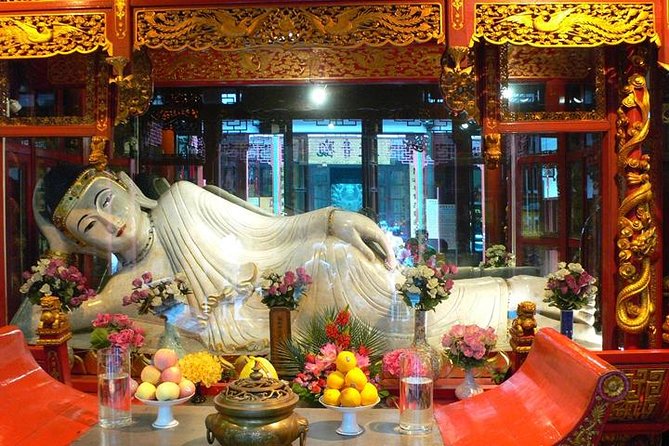
The Jade Buddha Temple was built in 1918 and remains a working Buddhist temple. It is popular with local worshippers as well as sightseers, so this stop offers more than decorative architecture. You may see monks, worshippers, and visitors sharing the temple halls.
The main objects of interest are two jade Buddha images. One is carved from pale green jade, while the other is made from white jade. The detailed description also notes that the statues were brought by sea from Burma and carved from single blocks of rare jade, with precious stones added to the white jade figures.
You have about 40 minutes here. That is enough to enter the principal areas and see the key images, but it is a short visit for anyone who wants to linger over temple art or observe religious activity at length. Dress and behave respectfully, since this is an active place of worship, not simply a museum.
I appreciate the order of the first two stops. Yuyuan Garden introduces classical Chinese aesthetics, while the Jade Buddha Temple shows that Chinese tradition is still part of daily city life. You are not only looking at old objects behind glass. You are seeing a religious site still used by people in Shanghai.
Shikumen housing and the shape of old Shanghai
The schedule also includes the Shikumen Museum for about an hour. Shikumen means stone gate, and the style refers to a form of Shanghai housing built around lanes and shared residential life.
The museum’s small exhibition, Wu Li Xiang, presents old Shanghainese home furnishings. This is a valuable change of scale after the garden and temple. Instead of focusing on famous monuments, you get a look at how local families lived in the city’s traditional residential areas.
The supplied description says that a large share of Shanghainese people were born and raised in Shikumen housing before the 1990s. As Shanghai’s economy expanded, many of these areas changed into places with bars, tea houses, and entertainment venues. That gives the stop a practical purpose: it helps explain how modernization altered everyday neighborhoods, not just the skyline.
There is one point you should clarify before booking. The broader tour description promises a visit to a silk reeling factory, where you can watch raw silk being drawn from silkworm cocoons and turned into thread. The detailed stop schedule names Shikumen Museum instead, and it does not list the silk mill as a separate timed stop. Since both cannot be assumed from the supplied details, confirm whether the day includes the silk reeling visit, the Shikumen Museum, or a change based on local conditions.
A completely different sort of day out:
- Shanghai: Hop-on Hop-off Bus Ticket and Optional Attractions
★ 3.4 · 692 reviews - Shanghai Private Tour: Zhujiajiao Water Town and Boat Ride
★ 5.0 · 661 reviews - Eat Like A Local: Shanghai Night Food Tour
★ 5.0 · 616 reviews - Huangpu Night Cruise: Cozy Vibe & Modern Shanghai Glow
★ 4.3 · 520 reviews
Lunch at a Chinese restaurant
Lunch at a local Chinese restaurant is included. That is useful on an eight-hour tour because you do not need to break away from the schedule to find a place to eat, and the guide can help keep the meal within the day’s timing.
Vegetarian and gluten-free options are available if you request them when booking. The information does not specify the restaurant, menu, or number of dishes, so you should not book this expecting a particular regional cuisine or a carefully selected dining experience.
Think of lunch as a practical pause rather than the main attraction. The meal gives you a chance to rest in the middle of a full sightseeing day, and it is included in the quoted price. If food is a major reason for choosing a Shanghai tour, ask the provider for more detail before booking.
The Bund and Shanghai’s most famous view
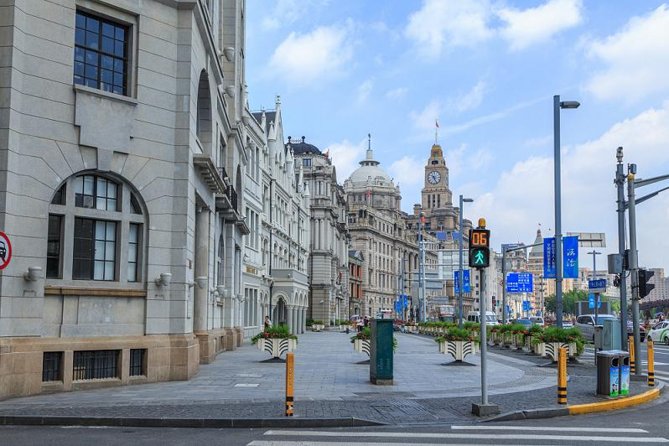
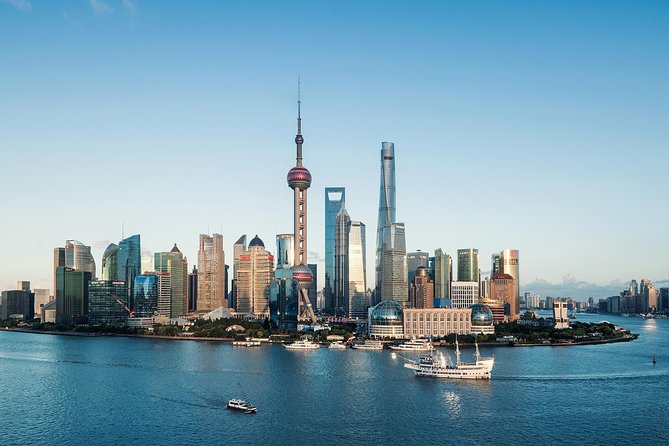
The Bund is the tour’s big architectural and photographic moment. This 1.5-kilometer embankment runs along the western bank of the Huangpu River. On the city side, 52 well-preserved European-style buildings form what is often called an architecture gallery.
These structures recall the period when foreign powers controlled separate concessions and Shanghai served as a major trading and commercial center. The buildings give the waterfront a formal, almost theatrical appearance, with banks, offices, hotels, and other grand institutions represented in stone and masonry.
You have about one hour at the Bund. That is enough to walk along part of the embankment, examine the older buildings, and look across the river toward Pudong. The view is especially useful because it puts Shanghai’s past and present in the same frame: colonial-era facades behind you, modern skyscrapers across the water.
The Bund is free to enter, but crowds and traffic can affect the pace. Your private vehicle gets you to the area, but the main experience is on foot. Wear comfortable shoes and keep your camera ready. The guide’s historical explanation matters here, since the buildings can otherwise become a quick photo stop without much sense of why they were built.
Nanjing Road and the modern city
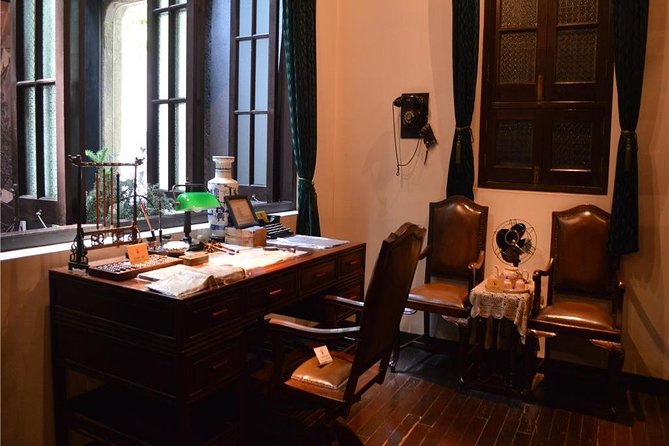
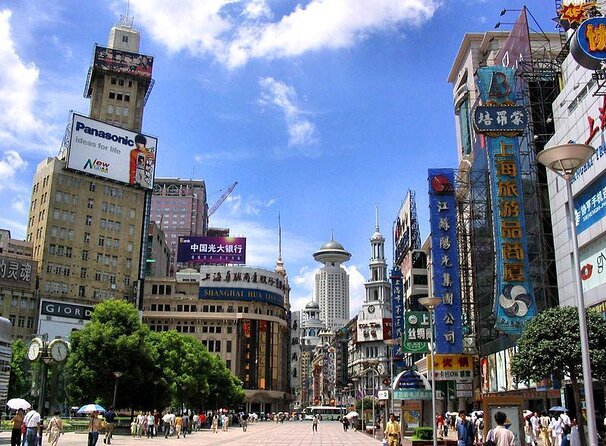
Nanjing Road follows the Bund and shifts the mood from grand architecture to commercial Shanghai. This is the city’s best-known shopping street, with traditional Chinese brand stores, international designer shops, hotels, restaurants, theaters, and shopping malls.
The scheduled visit is about 30 minutes, so think of this as a short walk and orientation rather than a serious shopping session. You can get a feel for the crowds, browse for souvenirs, and see how modern consumer culture shapes central Shanghai.
I like including Nanjing Road because it prevents the tour from turning Shanghai into an old-building museum. The city’s present-day energy is part of its identity, and this street shows it plainly. The drawback is the limited time. If you want to shop for clothing, electronics, tea, or gifts, you will probably need to return on your own.
The tour ends with hotel drop-off after roughly eight hours. That makes the experience easy to fit into a first or second day, especially if you want a guided overview before exploring specific neighborhoods independently.
Is $147.20 per person good value?
The price is easiest to justify for a small group. You are paying for a private guide, private air-conditioned transport, hotel pickup and drop-off within the service zone, entrance tickets, and lunch. For a couple or family, those inclusions can be more convenient than arranging separate taxis, admissions, meals, and guides.
The value is less obvious if you are a solo visitor who is comfortable using Shanghai’s public transportation and planning each site yourself. The private format costs more than a group excursion, but it buys control over the day and avoids sharing the guide’s attention.
Group discounts may be available, so ask about them if several people are traveling together. Personal expenses are not included, and you should budget separately for shopping, drinks, and souvenirs on Nanjing Road.
The tour’s 4.3 rating from three published reviews is respectable but not a large evidence base. The most specific praise goes to the guide, with Jack called a very good guide and the tour recommended. That is encouraging, but the experience will still depend on traffic, weather, the final route, and how much detail your assigned guide provides.
Who should book this Shanghai tour?
I would recommend it to first-time Shanghai visitors who want the main historical contrasts explained in one day. Families and small groups should especially appreciate the private vehicle, hotel service, included lunch, and the ability to ask questions without a large tour group around them.
It also suits anyone with limited time. You see a classical garden, a Buddhist temple, old residential culture, a silk industry stop if confirmed, the Bund, and Nanjing Road without spending several days organizing separate outings.
I would be more cautious if your priority is slow photography, extensive shopping, or long temple visits. The schedule moves along, and some stops are brief. Independent explorers may prefer to spend a whole morning in the old city or return to the Bund after dark.
The best practical step is to confirm two things before departure: your hotel falls within the Middle Ring Zone, and the final schedule includes the silk reeling factory or the Shikumen Museum according to your interests. Vegetarian and gluten-free meals should also be requested at booking, not on the morning of the tour.
Should you book it?
Book this tour if you want a well-rounded private introduction to Shanghai and value transport, a guide, admissions, and lunch being handled for you. Its strongest feature is the sequence from traditional garden to temple, local housing, colonial waterfront, and modern shopping street.
Skip it if you already know Shanghai well or want a slow, specialized day focused on food, museums, architecture, or shopping. For a first visit, though, the mix is sensible, and guide Jack’s positive mention suggests that a strong guide can turn a packed route into a useful story of how Shanghai changed.
FAQ
How long does the tour last?
The tour lasts approximately eight hours, beginning with an 8:30 a.m. pickup and ending with hotel drop-off.
Is hotel pickup included?
Yes. Hotel pickup and drop-off are available for hotels within Shanghai’s Middle Ring Zone.
Is this a private tour?
Yes. Only your group participates in the tour.
Is transportation included?
Yes. The tour uses a comfortable air-conditioned vehicle, with pickup and drop-off included within the stated service area.
Are entrance fees included?
Yes. Admission tickets for the listed attractions are included in the tour price.
Is lunch included?
Yes. Lunch at a Chinese restaurant is included.
Can vegetarian or gluten-free meals be arranged?
Yes. Vegetarian and gluten-free options are available, but you must advise the provider when booking.
What is the cancellation policy?
You can cancel at least 24 hours before the start time for a full refund. Cancellations or changes made less than 24 hours before the start time are not accepted for a refund. If poor weather causes the tour to be canceled, you will be offered another date or a full refund.
Just added in Shanghai
- Zhujiajiao Water Village: Private Tour from Shanghai★ 4.9 · 43 reviews
- Zhujiajiao with Private Customized Shanghai City Highlights★ 5.0 · 14 reviews
- Zhujiajiao & Shanghai:Private Day Tour Water Town to Skyline★ 5.0 · 12 reviews
- Zhujiajiao Water Town Private Tour with Night River Cruise★ 5.0 · 9 reviews
- Zhujiajiao & Shanghai:Small Group Tour Water Town to Skyline★ 5.0 · 4 reviews
- Yu Garden Shanghai Entry Tickets Booking And Trip★ 3.6 · 9 reviews
- Water Town Zhujiajiao Shanghai: Boat Ride,Sights,Bites&Sips★ 5.0 · 7 reviews
- shanghai Disney tour★ 5.0 · 12 reviews
Full-Day, compared.
Beijing Full Day Tours: Tiananmen Sq, Forbidden City, Great Wall
Read our review →
Private Shanghai Full Day City Tour with Old and New Highlights
Read our review →
Beijing Classic Full-Day Tour including the Forbidden City, Tiananmen Square, Summer Palace and Temple of Heaven
Read our review →
Beijing Essential Full-Day Tour including Great Wall at Badaling, Forbidden City and Tiananmen Square
Read our review →
Great Wall of China at Mutianyu Full-Day Tour Including Lunch from Beijing
Read our review →
Private Full-Day Tour: Incredible Shanghai Highlights
Read our review →
Full-Day Small-Group Great Wall Hiking at Jinshanling
Read our review →