
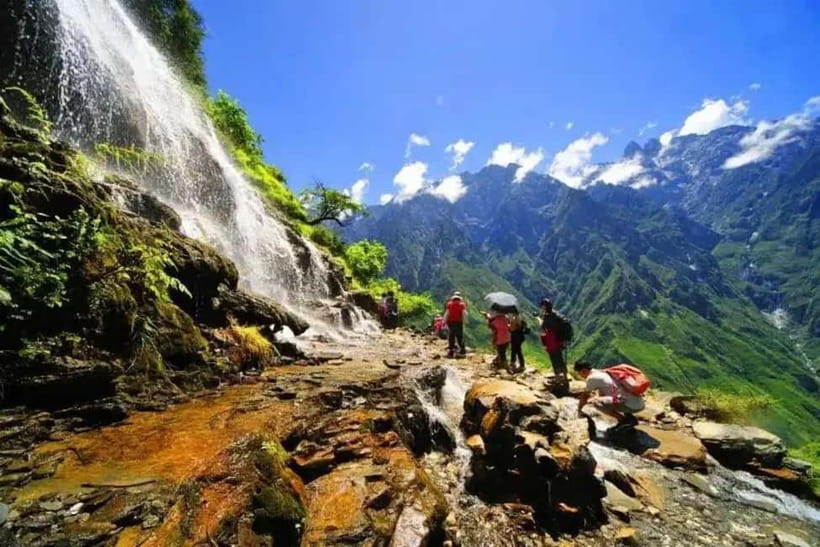
Reviewed · LIJIANG TOURS
Lijiang to Shangri-La HuXiang Road Private Scenic Tour
Mountain roads, big views, and a long day await. This private trip links Lijiang with Shangri-La through Tiger Leaping Gorge, Haba Snow Mountain, and Baishui Terrace, then adds Tibetan villages, grassland, and Dukezong Ancient Town. I like the flexible one-way option, which lets you finish in Shangri-La instead of retracing the road to Lijiang. I also like the private vehicle and hotel pickup, especially for a route with many separate stops.
The main caution is the ambitious schedule. Ten hours is a lot of ground for one day, and the advertised route includes more places than most people can explore at length. The English guide service also needs careful confirmation: one recent booking praised the organization but found the guide’s English very weak, while another party had an excellent experience with driver Mr. Lai.
In This Review
- Key points at a glance
- Why this route is worth considering
- Starting from Lijiang and reaching Tiger Leaping Gorge
- Haba Village and the Naxi culture
- Haba Snow Mountain and Baishui Terrace
- Pudacuo National Park and the Napahai grassland
- The optional Niru Village visit
- Arrival in Dukezong Ancient Town
- Returning to Lijiang or staying in Shangri-La
- Transport, guide quality, and pace
- Who should book this day trip?
- Should you book the HuXiang Road tour?
- FAQ
- How long does the Lijiang to Shangri-La tour last?
- Does the tour include hotel pickup?
- Can I finish the tour in Shangri-La?
- Is the tour private?
- Are entrance fees included?
- Are meals and drinks included?
- What languages are available?
- What should I bring?
Key points at a glance
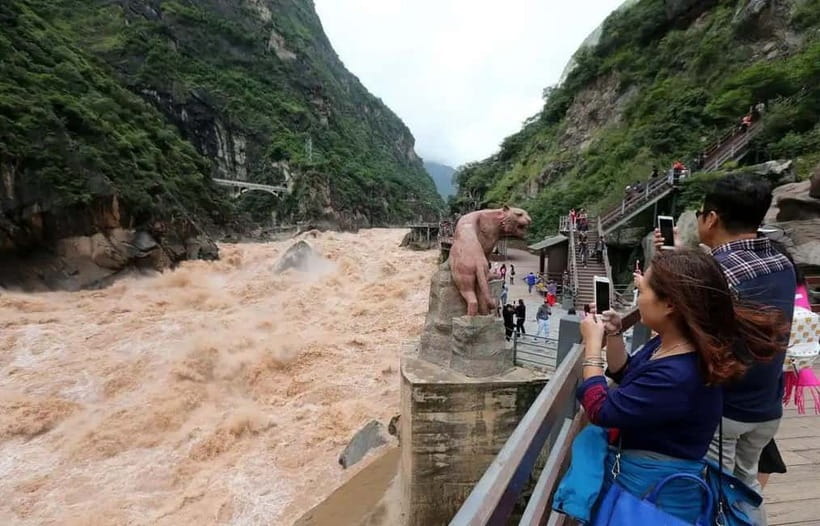
- Tiger Leaping Gorge opens the day with drama: You view the narrow canyon from an observation deck, where steep peaks rise on both sides and the river churns below.
- Haba Village adds a human side: Traditional Naxi homes feature wooden construction, sloped roofs, and detailed carvings.
- Baishui Terrace is a natural oddity: White limestone shelves look like a frozen cascade beneath Haba Snow Mountain.
- The route can finish in Shangri-La: Choose a return to Lijiang or a one-way transfer and stay in Shangri-La City.
- Private travel makes the route more workable: A dedicated vehicle and customized plan give you more control than a fixed group bus.
- Budget for entrance fees: Tiger Leaping Gorge costs CNY 45 and Baishui Terrace costs CNY 30, while other tickets, rides, food, and drinks are extra.
Why this route is worth considering
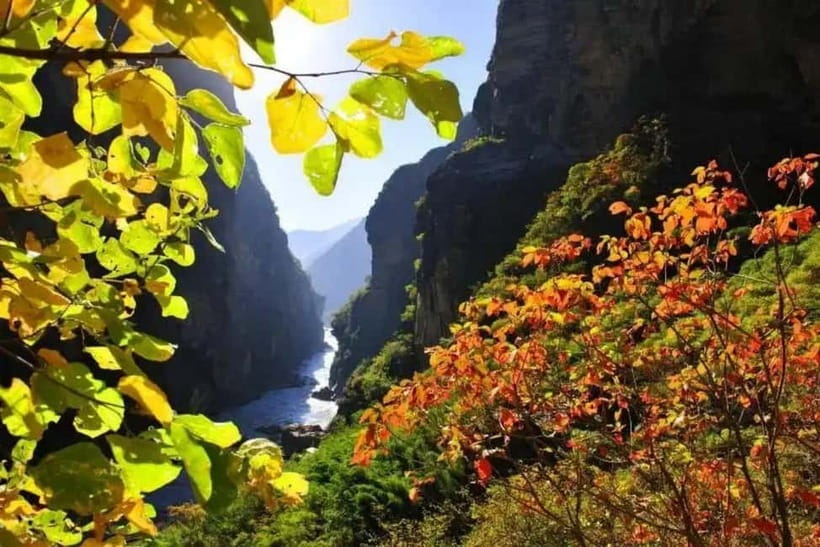
At $118 per person, this is not simply a sightseeing ride between two cities. It is a full-day mountain route with a private vehicle, hotel pickup and drop-off, a customizable schedule, and the choice of a one-way transfer between Lijiang and Shangri-La.
That price can make good sense if you are already planning to visit both places. A one-way trip avoids paying for a separate transfer, and you get scenic stops along the way. It is also useful for couples, families, or small private parties who do not want to match the pace of a large group.
The value is less clear if you want a slow visit to every location listed. Ten hours must cover mountain roads, sightseeing, meals if you stop for them, and the final arrival. I would treat this as a broad sampler of the region rather than a detailed tour of each attraction.
The private format is the biggest practical advantage. You can ask to spend more time at a favorite viewpoint or shorten a stop that does not interest you. Still, the exact schedule matters. Before departure, I would ask the operator to mark which places are guaranteed, which are optional, and how much time is planned at each one.
A few more to weigh up in China
- Lijiang Naxi Cuisine Cooking Class & Market Visit
★ 5.0 · 48 reviews - Lijiang to Shangri-La Scenic Drive Tour with Tiger Leaping Gorge
★ 5.0 · 11 reviews - 4 Days Haba Snow Mountain Climbing Tour (Lijiang-Shangri-La)
★ 5.0 · 6 reviews
Starting from Lijiang and reaching Tiger Leaping Gorge
The day begins with pickup from your hotel lobby in Lijiang. The vehicle then heads toward Tiger Leaping Gorge, one of the route’s strongest scenic moments.
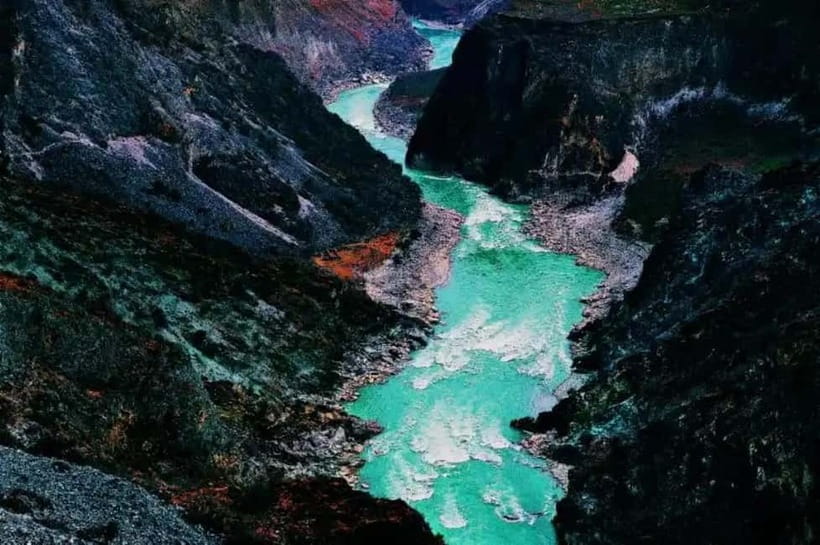
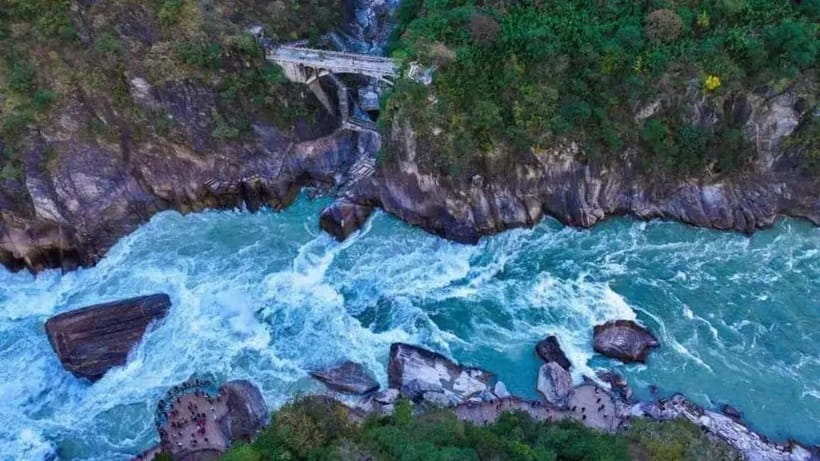
At the observation deck, you look into a narrow canyon framed by towering peaks. The river is described as surging through the confined channel, with waves breaking against the rocks. You do not need to commit to a long hike to appreciate the setting, but you should expect some walking and uneven ground.
This is a good first stop because it gives you an immediate sense of the scale of northwestern Yunnan. The gorge is not a gentle opening scene. It is steep, noisy, and exposed, with a real sense of height. If heights or vertigo trouble you, take the warning seriously. The tour is not suitable for people afraid of heights or people with vertigo.
The entrance ticket to Tiger Leaping Gorge is not included. Set aside CNY 45 per person, in addition to the tour price. Comfortable shoes are important here, and a small daypack is easier to manage than a large bag.
Haba Village and the Naxi culture
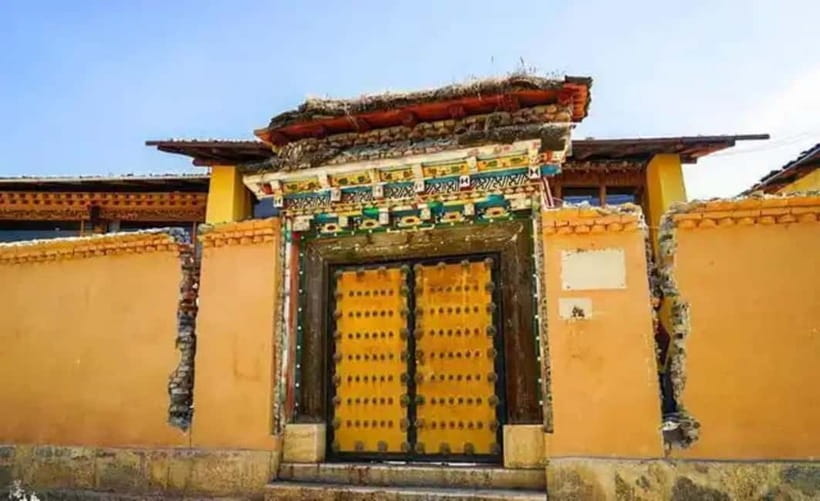
The route continues toward Haba Village, an important cultural stop rather than just another photo point. Haba is home to Naxi people, and the traditional houses are described with wooden structures, sloping roofs, and intricate carvings.
I like this part of the route because it gives the scenery a local context. Mountains and forests are impressive, but a village visit helps you see how people have built homes and communities in this high-altitude region. Look closely at the construction details instead of rushing straight to the next viewpoint.
The tour also presents information about the area’s plant and animal life. Lijiang has recorded 112 species of mammals, 446 species of birds, and 7,084 species of plants. Those figures help explain why the forested sections feel more than decorative. Tall pine and spruce trees, bird calls, and the movement of squirrels are part of the experience.
The cultural value of Haba depends heavily on the guide. An English-speaking guide is offered, but the quality may vary. One party specifically found the English very poor, so I would confirm the guide’s language ability before booking if cultural explanation is a major reason for choosing this tour. If clear communication is important, ask whether you will have an English guide or mainly a driver.
Haba Snow Mountain and Baishui Terrace
Haba Snow Mountain provides one of the route’s biggest natural backdrops. Its main peak reaches 5,396 meters above sea level, a figure that gives the mountain real presence even when viewed from the road.
You are not climbing the peak on this day trip. Instead, you pass by the mountain and continue to Baishui Terrace, a natural limestone formation that looks like a frozen waterfall. The pale terraces were shaped by mineral deposits, creating a series of white shelves and shallow pools.
Baishui Terrace is a different kind of scenic stop from Tiger Leaping Gorge. The gorge is about force and depth. Baishui Terrace is about texture, color, and slow natural change. The contrast helps keep the day from becoming a string of similar mountain viewpoints.
Admission to White Water Terrace is CNY 30 and is not included. Other admission tickets, activities, and rides are also excluded, so the final cost can rise if you add optional experiences. Food and drinks are not covered either. Bring water and snacks, particularly because the schedule may not leave much room for a long meal.
The weather can change quickly in the mountains. Warm clothing and layers are sensible even if Lijiang feels mild when you leave. A hat, sunscreen, and insect repellent are also listed as useful items.
A completely different sort of day out:
- From Beijing: Mutianyu Great Wall Tours with Options
★ 4.9 · 9,216 reviews - Beijing: Forbidden City Tour(Group/Private)-Tickets Included
★ 4.8 · 7,974 reviews - Beijing: T-Square & Forbidden City Group or Private Tour
★ 4.8 · 4,446 reviews - Beijing: Mutianyu Great Wall Daily Tour with Ticket & Lunch
★ 5.0 · 3,056 reviews
Pudacuo National Park and the Napahai grassland

The route then reaches Pudacuo National Park and the Napahai grassland. The grassland is pictured as a broad green plain with yaks and sheep grazing in the distance. This is the part of the day for open views and a slower visual rhythm after the gorge and mountain roads.
Napahai is especially appealing if you enjoy rural scenery rather than a dense list of monuments. The animals, grass, and wide sky create a simple scene, but the altitude and mountain setting give it character. Bring your camera, though you should keep a respectful distance from animals.
The supplied information groups Pudacuo National Park and Napahai together, but it does not provide separate admission details for every stop. Ask which park fees are included before you set out. The only listed prices are CNY 45 for Tiger Leaping Gorge and CNY 30 for Baishui Terrace.
There are also clear conduct rules. Do not feed animals, touch plants, litter, or smoke. Plastic bottles are not allowed. These restrictions may feel strict, but they matter in a fragile high-altitude setting. Carry a reusable container if the operator permits it, and confirm what kind of water bottle is acceptable.
The optional Niru Village visit

Niru Village is presented as an optional extension into a quieter part of Shangri-La. The visit offers another look at local life, including women in colorful Tibetan clothing and examples of embroidery and jewelry work.
This stop could be one of the most rewarding parts of the day for you if traditional dress and handicrafts interest you. It also appears to be the kind of place that benefits from time and conversation, which creates a scheduling problem on a 10-hour route. If Niru is a priority, tell the operator before the day begins and ask what other stop will be shortened.
The word optional matters here. Do not assume that every advertised place is automatically included in the same fixed sequence. One booking reported that only part of the advertised activity list took place. That does not mean the whole tour is unreliable, but it does mean you should agree on the route in advance.
A customized itinerary is useful only when both sides have the same understanding. I would save the names of your preferred stops and confirm them with the driver or guide at pickup.
Arrival in Dukezong Ancient Town
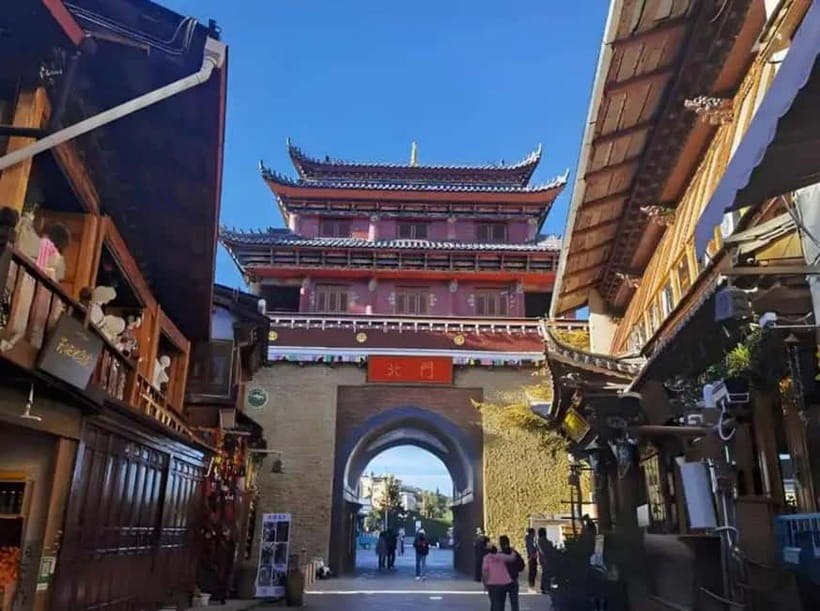
The final major stop is Dukezong Ancient Town in Shangri-La City. Here, the mountain scenery gives way to cobbled streets, stone houses, sloping roofs, and prayer flags moving in the wind.
Dukezong is a good finish because it gives you a place to walk after hours in the vehicle. The old town’s Tibetan-style architecture provides a clear change from the Naxi homes of Haba Village. You can compare the two building traditions instead of treating the region as one single culture.
The information provided does not specify how long you will have in Dukezong or which sights are included inside the old town. That makes timing worth discussing. If your goal is simply to arrive in Shangri-La, the stop may be brief. If you want to explore the cobbled streets at an easy pace, you may need to reduce earlier stops.
The town is also the practical endpoint for the one-way option. You can stay overnight in Shangri-La City, avoiding a late return drive to Lijiang. If your hotel booking allows it, this is probably the most efficient use of the tour.
Returning to Lijiang or staying in Shangri-La
You have two main choices at the end of the day. Return to Lijiang by highway, or finish in Shangri-La City and stay overnight.
The one-way option is the better fit if your wider trip already includes both destinations. It turns the tour into a scenic transfer with sightseeing built in. A party from Spain praised this arrangement, beginning in Lijiang and ending in Shangri-La, and found the road trip comfortable with time to visit selected places.
The round-trip option gives you a straightforward return to your Lijiang hotel, but it makes an already long day even more demanding. I would choose it only if you have a strong reason to sleep back in Lijiang or cannot arrange a Shangri-La hotel.
Ask clearly about the drop-off point. The information says hotel pickup and drop-off are included, but the one-way choice means the destination changes. Confirm your Shangri-La hotel or city drop-off details before departure.
Transport, guide quality, and pace
The private vehicle is central to the experience. You are not merely being driven between two urban centers. The route includes a gorge, a village, mountain views, a limestone formation, grassland, an optional remote village, and an old town.
A private group gives you more control over stops, but it does not eliminate the distances. Ten hours will feel full. Wear shoes that can handle moderate walking, keep water and snacks within reach, and avoid filling your daypack with unnecessary items.
The guide situation deserves attention. English and Chinese live guiding are available, and a private guide is listed as an option. One excellent booking singled out driver Mr. Lai for being kind and handling the route details well. That is useful evidence that the service can be smooth and attentive.
At the same time, another booking reported weak English and fewer activities than expected. I would not treat the guide as a minor detail. If you want history, translation, and cultural explanation, confirm that a suitable English guide is included rather than assuming the driver will provide it.
Who should book this day trip?
I would recommend this tour to you if you want to connect Lijiang and Shangri-La while seeing several major sights along the way. It suits people who prefer a private vehicle, want hotel pickup, and value a flexible route more than a slow visit at every stop.
It is also a strong match for small groups with different interests. One person can prioritize scenery, another can focus on Naxi or Tibetan culture, and the driver can help shape the day around the available time.
I would be cautious if you have heart, respiratory, or back problems, or if you are pregnant. The tour is also not suitable for wheelchair users, people with mobility impairments, and non-swimmers. Although swimming is not a central activity in the description, that restriction is part of the stated safety guidance.
Altitude is another practical concern. The route reaches high mountain areas, and the guidance specifically recommends staying hydrated. Bring layers and do not plan the day as if the weather will remain the same from Lijiang to Shangri-La.
Free cancellation up to 24 hours before departure and reserve-now, pay-later terms make the booking flexible. Starting times depend on availability, so check the schedule before committing to hotels or onward transport.
Should you book the HuXiang Road tour?
Book it if you want a scenic transfer with many highlights, not a leisurely single-attraction excursion. The strongest reasons are the private vehicle, the choice between round trip and one-way travel, and the variety of scenery from Tiger Leaping Gorge to Baishui Terrace and Dukezong.
Before paying, confirm three points: the exact stops, the guide language and name, and the final drop-off plan. I would also budget at least CNY 75 for the two listed entrance tickets, plus other possible admissions and meals.
For a well-organized day, this can be an efficient way to connect two of Yunnan’s most appealing destinations. For a slow cultural visit, the schedule may ask too much. My practical choice would be the one-way Lijiang to Shangri-La version, with Haba Village, Tiger Leaping Gorge, Baishui Terrace, and Dukezong protected in the plan.
FAQ
How long does the Lijiang to Shangri-La tour last?
The tour duration is 10 hours. Starting times depend on availability, so check the available departure times when booking.
Does the tour include hotel pickup?
Yes. Pickup is provided from your hotel lobby, and the private vehicle includes hotel pickup and drop-off arrangements.
Can I finish the tour in Shangri-La?
Yes. You can choose a one-way transfer between Lijiang and Shangri-La and stay overnight in Shangri-La City, or select a round trip from Lijiang or Shangri-La.
Is the tour private?
Yes. The group type is private, and the tour uses a private vehicle. A customized itinerary is included.
Are entrance fees included?
No. Tiger Leaping Gorge costs CNY 45, and White Water Terrace costs CNY 30. Other admission tickets, activities, and rides are also excluded.
Are meals and drinks included?
No. Meals and beverages are not included. You should bring water and snacks, along with sunscreen and other personal supplies.
What languages are available?
Live guiding is available in English and Chinese. A private guide is listed as an option, so confirm the guide arrangement and language before booking.
What should I bring?
Bring comfortable walking shoes, warm clothing, layers, a hat, a camera, snacks, sunscreen, water, and insect repellent. You should also respect local customs and wildlife, avoid littering, and not feed animals or touch plants.
Just added in China
- Songcheng Park & Lengend of Song Dynasty Show Ticket★ 4.5 · 3 reviews
- Classic Hangzhou One Day Private Tour★ 5.0 · 3 reviews
- Private Wuzhen Water Town Day Tour from Hangzhou★ 5.0 · 2 reviews
- Wuzhen Water Town Self-Guided Tour with Private Transfer from Hangzhou★ 5.0 · 12 reviews
- Wuzhen Classical Water Town day tour★ 5.0 · 4 reviews
- Wuzhen Water Town Delight Tour With Riverside Lunch Experience★ 5.0 · 15 reviews
- Private Transfer to Shanghai Pudong Airport from Hangzhou★ 5.0 · 3 reviews
- Private Amazing Hangzhou Airport Layover Tour with Lunch or Dinner Option★ 5.0 · 2 reviews
Lijiang Tours, compared.

Lijiang Naxi Cuisine Cooking Class & Market Visit
Read our review →Lijiang to Shangri-La Scenic Drive Tour with Tiger Leaping Gorge
Read our review →
4 Days Haba Snow Mountain Climbing Tour (Lijiang-Shangri-La)
Read our review →
Jade Dragon Snow Mountain and Blue Moon Valley Tour
Read our review →
Where else this tour turns up