
Reviewed · CITY TOURS
Historia and Entertain Tour of the Youngest City of China
Shenzhen grew from fields into a global city in one generation. This two-hour walking and transport tour with Timo Xu gives you a human story behind that astonishing change, starting at Luohu Port and moving through Futian and Huaqiang. I like the focus on overlooked history, and I like the small group limit of seven, which leaves room for questions and conversation. The main drawback is value: at $40 per person, the tour may feel costly if you want a long list of major sights or a substantial meal.
Timo brings an unusual mix to the experience. He worked in Hong Kong and Shenzhen for five years and holds degrees in engineering and finance, while his free time is devoted to travel and guiding. His strongest gift appears to be connecting buildings, streets, businesses, politics, and ordinary city life into one clear story. The tour is best for you if you would rather understand Shenzhen than simply photograph it.
In This Review
- Key points at a glance
- Why Shenzhen needs a history tour
- Meeting Timo at Futian
- Luohu Port and the beginning of modern Shenzhen
- Futian Civic Center and the city’s startling speed
- Huaqiang and the price of a square meter
- A short hill for the best city view
- Food stops that keep the history grounded
- The guide makes the difference
- Is $40 fair for two hours?
- Who should book this experience?
- Practical details before you reserve
- Should you book the Luohu and Futian tour?
- FAQ
- Where does the tour meet?
- How long does the tour last?
- What language is the tour given in?
- Who leads the experience?
- How many people can join the group?
- What places does the tour visit?
- Is food included in the price?
- Are transportation fees included?
- How much does the experience cost?
Key points at a glance
- Luohu Port begins the story: Learn why this border crossing mattered to Shenzhen, Hong Kong, and modern China.
- Futian looks different with context: Today’s Civic Center area was once fields and lakes, a striking reminder of the city’s speed.
- Huaqiang adds an economic angle: Walk through streets where land prices, companies, entrepreneurs, and electronics shaped the city.
- A short hill brings a wide view: The route includes a not-too-high park and hill for a bird’s-eye look at Shenzhen’s central axis.
- Local food is part of the route: Timo may stop at a traditional local restaurant or snack shop, depending on time and weather.
- Small groups keep it personal: With no more than seven participants, you can ask about history, politics, business, or daily life.
Why Shenzhen needs a history tour
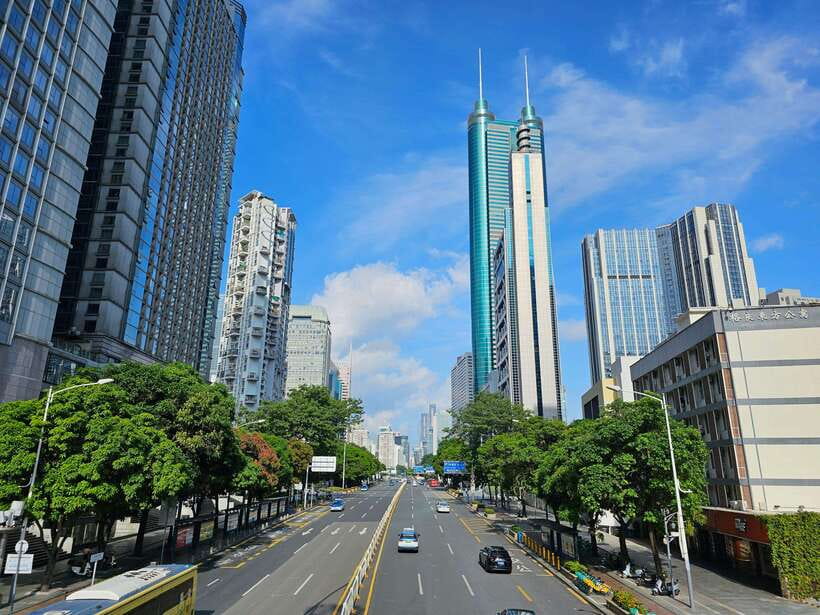
Shenzhen can be hard to read at street level. You see towers, broad roads, shopping districts, and an efficient modern city. What you do not see right away is how recently much of this urban scene came into being.
Timo’s central idea is simple: look at the city through time. Places that now feel established were once open land, lakes, or small settlements. The story is not just about construction. It is about the links between Shenzhen and Hong Kong, the Chinese government’s wider plans, the rise of private companies, and the people who made money and careers in the new city.
That context gives the tour its purpose. You are not only moving from one address to another. You are learning why those addresses matter.
The experience also has a personal feel. Timo’s background in both Hong Kong and Shenzhen helps him explain the relationship between the two places. His finance and engineering training should appeal to you if you enjoy understanding how a city works, not just hearing dates and names.
A few more to weigh up in Shenzhen
- Shenzhen Tech Tour: Explore the Future
★ 5.0 · 49 reviews - Customizable Private Shenzhen Tour with Local guide and Car
★ 5.0 · 48 reviews - Shenzhen Private Flexible Day Tour with Guide and Driver Service
★ 5.0 · 41 reviews
Meeting Timo at Futian
The tour begins at Starbucks in China Bank Garden, at No. 1006 Fuzhong 1st Road in Futian District. The Chinese address is 深圳市福田区 福中一路1006号 星巴克(中银花园店).
This is a practical meeting point in central Shenzhen, but you should allow enough time to find the correct Starbucks. The address is specific, and having the Chinese version saved on your phone can help if you need to ask for directions.
Starting in Futian gives you an immediate contrast with the older Luohu area. Futian is associated with government offices, modern planning, and the central axis of the city. From there, the route connects the present city with the earlier frontier and border story.
Because the group is limited to seven, the opening conversation should be more relaxed than a large coach outing. You can ask Timo to explain a place in greater detail or steer the discussion toward business, politics, architecture, or everyday life.
The tour is given in English. That matters here because the subject is more complex than a simple sightseeing circuit. You will want to follow explanations about Shenzhen’s connection to Hong Kong and Beijing, as well as the events that drove its rapid growth.
Luohu Port and the beginning of modern Shenzhen
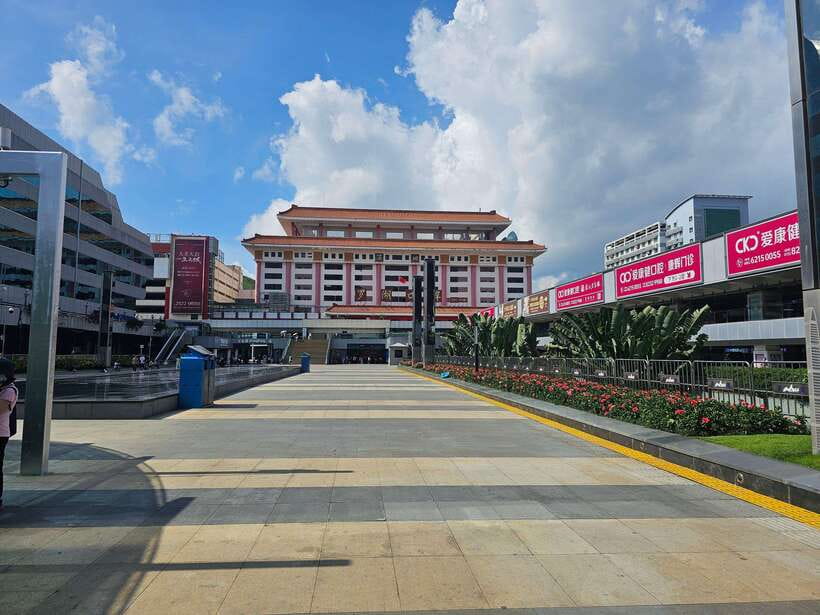
Luohu Port is the first major stop, and it is a smart place to begin. The port was one of only two land ports in China, making it a key crossing between Shenzhen and Hong Kong.
This is where the tour moves beyond the familiar image of Shenzhen as a young technology center. Luohu helps explain the city’s location and its role as a gateway. Its importance comes from movement: people, goods, money, ideas, and political attention all passed through this border area.
Timo uses Luohu to set up the larger story of Shenzhen. You should expect discussion of buildings that once shocked the nation, along with views of the modern skyline and stories about the city’s earlier years.
The point is not that every building is beautiful. Some places may look ordinary or heavily developed. Their value is the story attached to them. A street can tell you about the first waves of investment, the pressure created by the border, or the speed at which Shenzhen changed its role in China.
If you are interested in the connection between Shenzhen and Hong Kong, this part may be the most useful section. Timo also explains how the city relates to Beijing and to China’s current political situation, giving you more background than a basic city walk usually offers.
Futian Civic Center and the city’s startling speed
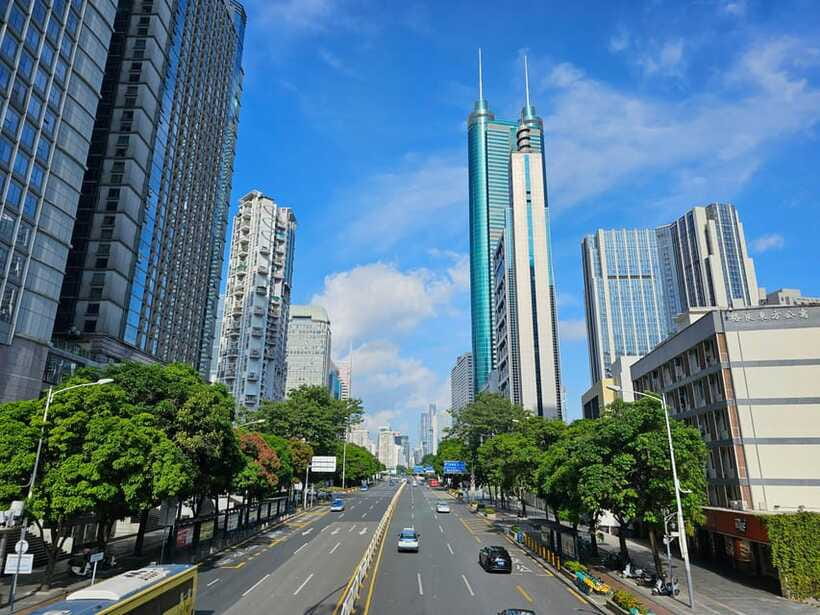
The route returns to Futian and the area around the Plaza of Citizens, commonly associated with Shenzhen’s grand civic center. This is one of the clearest places to grasp the city’s age.
It is difficult to imagine that the area was once described as wild fields and lakes only about 40 years ago. Today, it represents planning, government, offices, public space, and a carefully shaped central axis.
I like this section because it puts Shenzhen’s growth into a physical frame. You do not need a complicated chart to understand the pace of development when you compare the present skyline with the earlier land described by Timo.
This is also where the guide’s visual aids and maps become useful. Claudia from Venezuela found that the maps helped explain the key facts behind Shenzhen’s expansion, and that is exactly the sort of support you need when a city has changed so quickly.
The Civic Center area may not appeal to you if you prefer old streets, preserved buildings, or traditional architecture. Shenzhen’s story is largely about new construction and economic change. The reward comes from understanding that modern setting rather than searching for an old town that is not the focus of this tour.
A completely different sort of day out:
- Shenzhen Tech Tour: Robotaxi, Drone Delivery & Innovation Demos
★ 5.0 · 18 reviews - ShenZhen: Tallest Building with Luxury Meal on Highest Floor
★ 4.7 · 7 reviews - Iconic Shenzhen Skyscraper – Ping An Finance Center
★ 3.4 · 6 reviews - Shenzhen:8h City Walk & Future Experience Highlights Trip
★ 4.4 · 6 reviews
Huaqiang and the price of a square meter
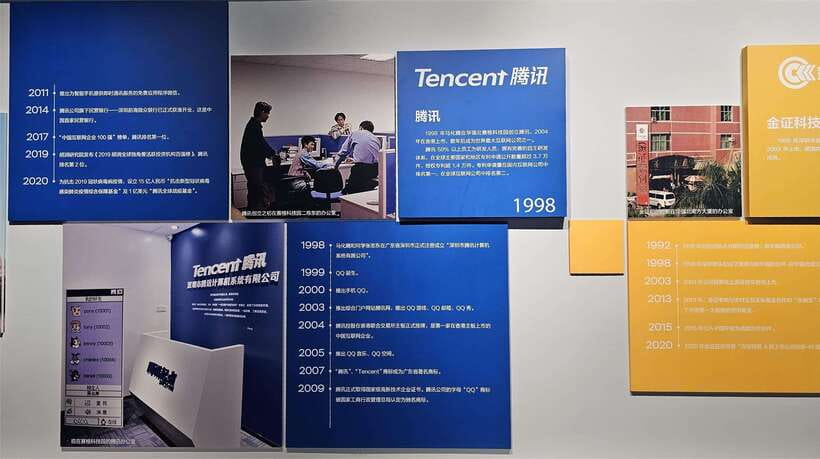
The Huaqiang District adds a sharper business angle. Timo takes you through streets where each square meter can create enormous value and where leases have been described as among the most expensive in China.
That claim is more useful when treated as a clue to the district’s role. Huaqiang is not simply another commercial area. It represents the concentration of trade, electronics, companies, entrepreneurs, and opportunity that helped define Shenzhen’s modern identity.
You will hear about traces of businesses and famous people connected with the area. The emphasis is on the forces that made the district important, not on a shopping checklist.
If you enjoy markets and retail, you may appreciate the energy of Huaqiang. If you dislike shopping districts, do not assume this tour is a shopping trip. The focus is historical and cultural. Timo is trying to show you how commercial space can shape a city and how the value of land reflects wider economic change.
This stop also gives the tour a useful balance. Luohu explains the border. Futian shows planned government and public space. Huaqiang shows commerce and private enterprise. Together, the three areas create a readable map of Shenzhen’s rise.
A short hill for the best city view
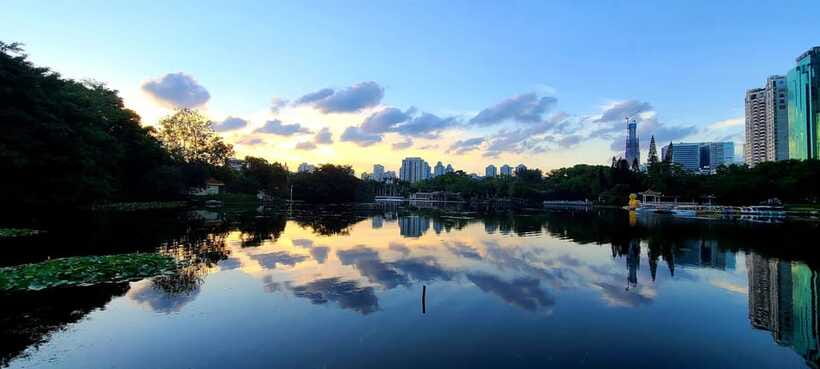
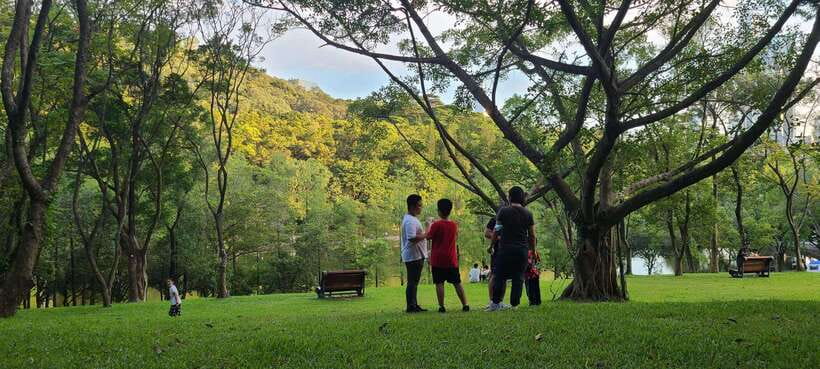
The itinerary includes a park and a hill that is described as not so high. You will hike up for a bird’s-eye view of the city axis.
That short climb adds welcome variety to a route focused on streets and buildings. From above, the relationship between Futian’s major spaces should be easier to understand. You can see the city as a planned whole rather than as a series of separate stops.
The wording about the hill matters. This is not a demanding mountain hike, but you should still wear comfortable shoes and be ready to walk uphill. The tour lasts only two hours, so the climb is intended as a concise viewpoint rather than a long nature outing.
Claudia’s account gives a good sense of why this part works. She described the view as astonishing and enjoyed continuing a lively conversation with Timo while walking upward. That detail captures the tour’s style: the walk is a setting for discussion, not a race to a lookout.
Weather can affect the route, especially the food stop, so you should keep your expectations flexible. The view may be one of the highlights, but the main value remains the explanation of what you are seeing.
Food stops that keep the history grounded
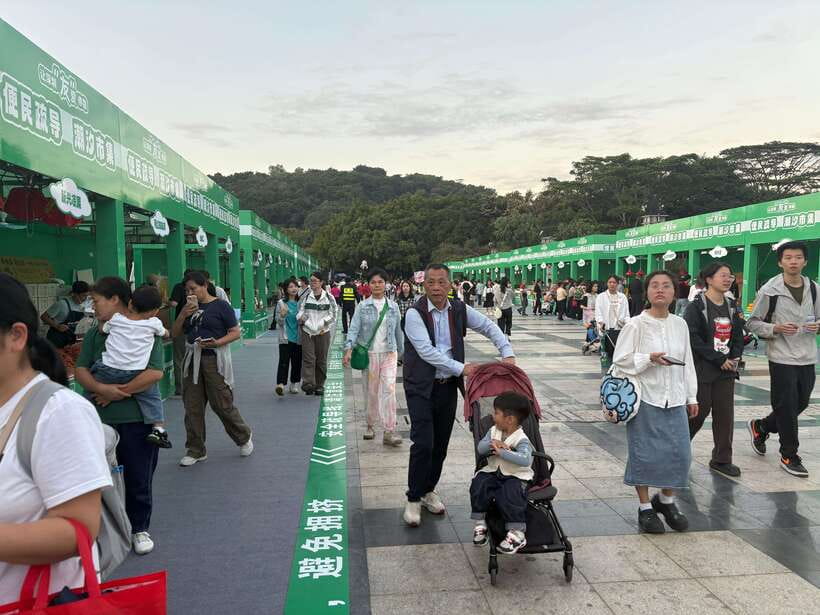
Food may be included along the way at a traditional local restaurant or another local snack stop, depending on weather and available time. The food itself is not included in the $40 price, so bring money if you want to eat.
This is a small but important part of the tour. A snack gives you a break from buildings and helps connect the city’s rapid growth with ordinary life. It also gives you a chance to ask Timo about local customs, tastes, and daily routines.
Do not book this expecting a full food tour. The meal or snack is an addition to the historical route, not its main subject. The timing is also flexible, so the exact stop is not fixed.
Timo provides a carefully researched list of restaurant recommendations, along with suggestions for bars, cocktails, and live music venues. That list increases the tour’s value for anyone staying in Shenzhen beyond the two-hour walk. You can use the experience as an introduction, then explore the city’s food and nightlife on your own.
The guide makes the difference
The most praised part of this experience is Timo himself. The feedback consistently describes him as passionate, friendly, hospitable, polite, empathetic, and engaged with people from around the world.
Those qualities matter because this tour depends on explanation and conversation. You are not being handed a fixed script and moved quickly from one photo stop to the next. The best moments are likely to come when you ask why Shenzhen developed as it did, how Hong Kong fits into the picture, or what the city means to people who live there.
Timo also brings personal stories from his years working in Hong Kong and Shenzhen. That gives the tour a contemporary voice. You hear about the city not only as a historical project but as a place where people build careers, companies, and lives.
Individual interests can be accommodated. One German participant specifically valued having personal requests considered, along with the many useful impressions and facts shared along the way. That flexibility is easier in a group of seven than in a large organized outing.
You should still keep your expectations realistic. Timo’s professional background is a strength, but this is not a university lecture or a formal academic tour. It is a conversational city experience guided by someone with strong personal interest and a broad working knowledge of the subject.
Is $40 fair for two hours?
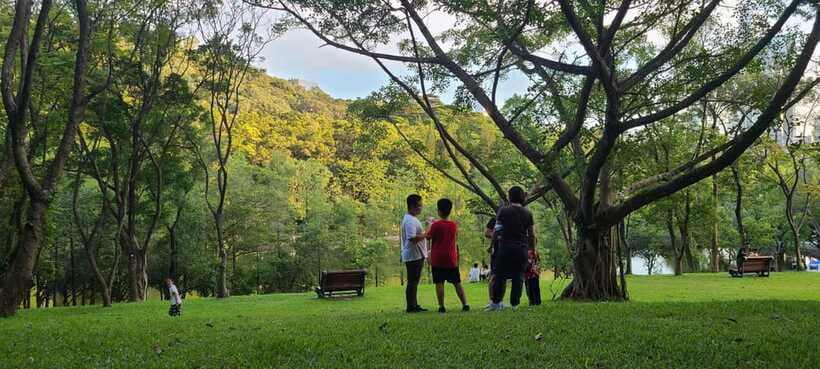
At $40 per person, the price sits above what you might pay for a simple free walking tour, but the comparison is not quite fair. The fee includes the guide, transportation costs during the tour, a small-group format, and the recommendation list for restaurants, bars, cocktails, and live music.
The real question is how much you value interpretation. If you only want to see Luohu Port, Futian, and Huaqiang, two hours may feel short for the price. One Spanish participant gave the guide five stars while also feeling that the cost was high for what you see and do.
I think the price makes more sense for a first visit, especially if you have limited time and want a clear explanation of Shenzhen’s rise. It is also a better deal if you use Timo’s recommendations during the rest of your stay.
Food and souvenirs cost extra. The tour is not designed around shopping or a large meal, so budget separately for any snack and for anything you buy afterward.
The small group is the other part of the value. You get a better chance to speak directly with Timo, ask follow-up questions, and shape the conversation. If you prefer independent wandering, you may find the price harder to justify. If you want a local guide to make sense of a complicated city, it is easier to defend.
Who should book this experience?
I would choose this tour if you enjoy history, politics, urban development, and personal conversation. It suits you especially well if you are not mainly interested in shopping or fast sightseeing.
The tour also works for people who want to understand the link between Shenzhen and Hong Kong. Its route gives you three useful viewpoints: the border at Luohu, the planned center of Futian, and the commercial force of Huaqiang.
You should be comfortable with walking, a short hill climb, and an itinerary that can shift with weather and time. Since the food stop is not fixed and food is not included, this is not the right choice if you need a tightly scheduled meal.
The two-hour duration is useful for a first orientation. You can fit it into a short stay and then decide which districts deserve more of your time. The experience is less suitable if you want museums, historic temples, or a long list of formal attractions, since those are not the focus.
Practical details before you reserve
The experience costs $40 per person and lasts two hours. Starting times vary, so check availability for your chosen date.
The tour is in English with a live guide. The group is limited to seven participants, which keeps the format personal and makes discussion a central part of the outing.
Transportation fees are included. Food and souvenirs are not. You receive recommendations for restaurants, bars, cocktails, and live music venues, which can be especially handy if Shenzhen is one stop in a longer China trip.
You can cancel up to 24 hours ahead for a full refund. You can also reserve now and pay later, which helps if your China schedule is still changing.
Should you book the Luohu and Futian tour?
Book it if you want Shenzhen explained rather than merely displayed. Timo’s strongest qualities are his passion, warmth, and ability to connect the border, the skyline, business districts, politics, and personal stories.
Skip it if your priority is a bargain, a full food tour, or a packed schedule of major attractions. Two hours passes quickly, and the $40 price may feel high if you are not interested in conversation and context.
For the right audience, this is a thoughtful introduction to one of China’s most remarkable new cities. Go with comfortable shoes, an appetite for questions, and a willingness to see modern Shenzhen as a story still being written.
FAQ
Where does the tour meet?
The meeting point is Starbucks Cafe in China Bank Garden, No. 1006 Fuzhong 1st Road, Futian District. The Chinese address is 深圳市福田区 福中一路1006号 星巴克(中银花园店).
How long does the tour last?
The tour lasts two hours.
What language is the tour given in?
The tour is given in English by a live English-speaking guide.
Who leads the experience?
The guide is Timo Xu. He worked in Hong Kong and Shenzhen for five years and holds engineering and finance degrees.
How many people can join the group?
The group is limited to seven participants.
What places does the tour visit?
The route begins at Luohu Port and includes areas such as Futian, the Plaza of Citizens, and Huaqiang District. It also includes a park and a short hill for a city view.
Is food included in the price?
No. Food is not included, although the route may include a stop for a local snack or traditional restaurant visit depending on the weather and available time.
Are transportation fees included?
Yes. Transportation fees are included in the tour.
How much does the experience cost?
The price is $40 per person. You can cancel up to 24 hours before the tour for a full refund, and you can reserve now and pay later.
Just added in Shenzhen
- Tour of Future: Explore Shenzhen Tech World & Drone Delivery★ 5.0 · 2 reviews
- Iconic Shenzhen Skyscraper – Ping An Finance Center★ 3.4 · 6 reviews
- Shenzhen: Window of the World Full Day Adult Ticket★ 5.0 · 2 reviews
- Shenzhen:8h City Walk & Future Experience Highlights Trip★ 4.4 · 6 reviews
- Shenzhen: Royal Dinning Experience with Culture Performance★ 4.4 · 2 reviews
- ShenZhen: Tallest Building with Luxury Meal on Highest Floor★ 4.7 · 7 reviews
- Shenzhen: Dapeng Peninsula Day Tour with Hotel Pickup★ 3.6 · 4 reviews
- Shenzhen: Immersive Tang Dynasty Banquet Show★ 4.5 · 2 reviews
City Tours, compared.
Forbidden City Tour(Group/Private)-Tickets Included
Read our review →
T-Square & Forbidden City Group or Private Tour
Read our review →
All-Inclusive Tour: Tiananmen Square, Forbidden City, Great Wall
Read our review →
4-Hour Small Group Tour to Forbidden City with Entry Tickets
Read our review →
Beijing Full Day Tours: Tiananmen Sq, Forbidden City, Great Wall
Read our review →
Mini Group Xian Day Tour to Terracotta Army, City Wall, Pagoda and Muslim Bazaar
Read our review →
Tianmen Square, Forbidden City & Royal Museum Tours
Read our review →
Beijing Forbidden City Ticket Booking (Optional: guide service)
Read our review →Where else this tour turns up