
Reviewed · HALF-DAY
Guangzhou: Textile Hub and Garment Factory Half-day Tour
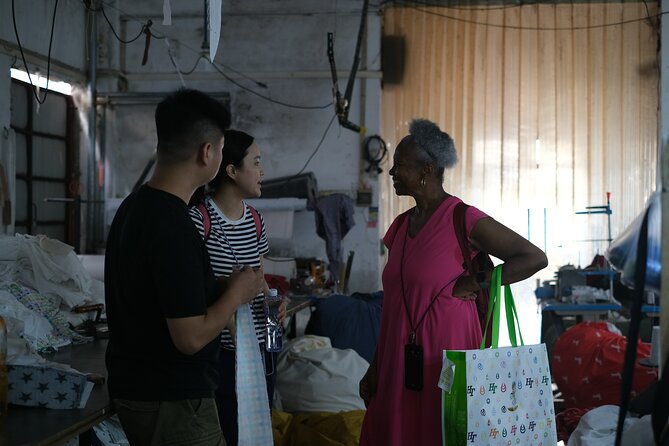
Fabric becomes clothing before your coffee cools. Guangzhou’s Zhongda Textile Hub offers a rare look at China Speed, from fabric stalls and labels to sewing rooms and packed orders. I like the direct contact with factory owners, and I like the small group size, capped at 10 people. The main drawback is that two hours goes quickly in a huge, crowded market.
I also like that this is not a polished showroom visit. You walk through an active textile district, then into urban villages and small garment workshops where flexible labor helps businesses respond to orders. Expect plenty of walking, e-scooters, noise, and a pace that may feel intense if you prefer slow sightseeing.
In This Review
- Key points at a glance
- Why Zhongda Textile Hub matters
- Starting at Zhujiang International Textile City
- The first hour: fabric, labels, and supply links
- The urban village and the human side of production
- The second hour: inside a small garment factory
- What China Speed means in practical terms
- Who will get the most from this visit
- Is two hours enough?
- Price, walking, and comfort
- My verdict: book it for access, not sightseeing
- FAQ
- Where does the Guangzhou textile tour begin?
- How do I find the meeting point by Didi?
- Which subway station is closest?
- How long does the experience last?
- Is the tour offered in English?
- How large is the group?
- Is the tour suitable for wheelchair users?
Key points at a glance
- Fabric to finished garment in 48 hours: See how Guangzhou’s supply chain moves from material selection to production at remarkable speed.
- Zhongda Textile Hub: Walk through one of the city’s densest textile centers with an English-speaking industry guide.
- Small factories up close: Watch workers sew garments piece by piece and see how patterns are placed on fabric.
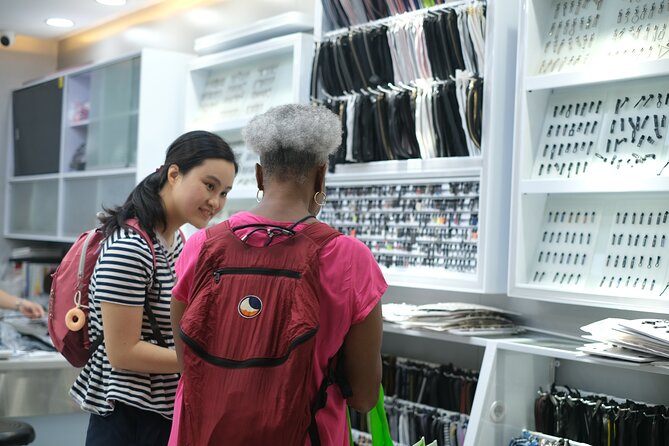
- Direct business contact: Speak with order takers and factory owners instead of viewing production from behind glass.
- A useful tour for fashion professionals: Sourcing managers, designers, retailers, and entrepreneurs will get the most from the visit.
- Two hours, but lots of walking: Wear comfortable shoes and prepare for a crowded area filled with e-scooters.
Why Zhongda Textile Hub matters
Guangzhou is one of China’s major centers for garments and textile production. At Zhongda Textile Hub, the important feature is not one enormous factory. It is the close grouping of fabric sellers, accessory suppliers, pattern services, order takers, sewing rooms, packaging operations, and small manufacturers.
That arrangement helps explain how an order can move so quickly. A buyer can locate fabric in one part of the district, ask for labels or packaging nearby, send a pattern to a workshop, and arrange sewing without dealing with a single giant company. Each business handles one piece of the work, but the businesses operate close together.
You will not simply hear a talk about supply chains. You will walk through the places where those connections happen. The guide can point out how stalls work, how orders move, and why a dense commercial district can respond faster than a spread-out production system.
For anyone who works in fashion or retail, this is the useful part. Online sourcing platforms show products and prices, but they rarely show the relationships and physical proximity that make rapid production possible.
A few more to weigh up in Guangzhou
- Guided Cycle Tour of Guangzhou
★ 5.0 · 164 reviews - Customised Private Guangzhou City Tour with Flexible Itinerary
★ 5.0 · 107 reviews - Gulong Gorge Skywalk Glass Bridge and Waterfall View Private Tour
★ 5.0 · 103 reviews
Starting at Zhujiang International Textile City
The tour begins at the main entrance of Zhujiang International Textile City Area A, written in Chinese as 珠江国际纺织城A区正门. The entrance is at a traffic-light intersection, and you should look for the shop called 恒泰超泓.
Your guide will wait in front of the shop with a sign reading Textile Hub Tour and the Authentic Tour Asia company name. This detail matters because the area is busy and commercial signs can be hard to sort out at first glance.
If you use Didi, enter 海珠合生新天地 as your destination. That shopping mall is directly across the street from the meeting point. For the subway, take Line 11 to Yijing Lu Station, or 逸景路站, and leave through Exit C.
From Exit C, walk west for about 10 minutes along the main road. The directions describe this as walking with your back to the morning sun, which means heading in the opposite direction from where you are facing when you leave the station. Save the Chinese names on your phone. They will be more useful than an English address once you are in Guangzhou.
The first hour: fabric, labels, and supply links
The first guided section takes place around the textile hub. You can expect rows of fabric sources and related suppliers rather than a conventional museum-style display.
This is where the guide explains the first steps in garment production. You may compare different fabrics, learn how buyers select materials, and see how the fabric trade connects with the businesses that handle the rest of an order.
The tour also covers labels and boxes, two details that are easy to overlook when you shop for finished clothing. A garment needs more than cloth and stitching. It may need a brand label, care information, packaging, and shipping materials, all of which can be arranged through the same broad district.
That is one of the most useful lessons here. Production speed does not come only from fast sewing. It also comes from having many support services close by, so a buyer does not have to send each small request to a different city.
The guide is there to explain what you are seeing and to help you speak with order takers. English is the tour language, and the group is limited to 10 participants. That small size should make it easier to ask questions, although the market itself can still be noisy and crowded.
Ceciliaye is one of the named guides associated with this experience. She has been praised for explaining the production process clearly and for sharing details about how clothing moves from design to bulk manufacture. If she leads your tour, you can ask her to connect the broad market activity to your own interests, such as sewing, sourcing, labels, or retail production.
The urban village and the human side of production
The route also passes through urban villages, where workers live and work within the same tightly packed areas. This part gives the tour a more human focus.
You are not only looking at fabric bolts and finished products. You are seeing the working conditions that support a flexible order system. Small workshops can adjust to different requests because labor and production spaces are close together.
The tour describes this as a self-driven network rather than a system controlled from one central office. Order takers, factory owners, suppliers, and workers each handle their own role. They cooperate because they need one another to complete an order.
That structure helps explain why smaller factories can compete for work. A factory does not need to own every stage of production. It can rely on nearby suppliers and services, then concentrate on the part it handles best.
For you, this section may be more interesting than the machinery. It shows the daily setting behind the clothing sold in international markets. At the same time, you should keep your expectations realistic. An urban village is a working area, not a staged cultural attraction. Space may be tight, foot traffic heavy, and the route uneven or difficult for anyone with limited mobility.
A completely different sort of day out:
- Private Guangzhou Full Day City Tour with Old and New Highlights
★ 5.0 · 62 reviews - Reputable Private Guangzhou Tour Guide Service by Xaq
★ 5.0 · 60 reviews - Guangzhou Baiyun Airport Guangzhou Hotels:Private with Meet & Great Service
★ 5.0 · 50 reviews - Guangzhou Foodie Tour
★ 5.0 · 40 reviews
The second hour: inside a small garment factory
The second guided portion takes you into garment production. Here, you can see workers sewing clothing piece by piece and learn how a design becomes a finished item.
One particularly useful detail is the pattern process. Designers send patterns to the factory, where the pieces are laid out on the fabric before cutting and sewing. Seeing this step helps connect a digital or paper design with the physical work of making many identical garments.
You can also see how a factory owner manages the production floor. The point is not just to watch people at sewing machines. It is to understand how a small operation handles orders, organizes workers, and links with suppliers nearby.
Factory access can make this tour much more valuable than a market walk alone. A market shows what can be bought. A factory shows how those products are made and what happens after a customer places an order.
Direct conversation is another benefit. You may speak with order takers and factory owners about the way they work. The exchange is especially useful if you are trying to source products, compare production options, or understand how small manufacturers fit into larger supply chains.
The tour provider has also accommodated a request to include a cosmetic factory visit on a past booking. That suggests some flexibility for business-focused visitors, but you should not assume an added factory stop is part of the standard two-hour route. Ask before booking if you need access to a specific type of manufacturer.
What China Speed means in practical terms
The 48-hour idea is the central theme of the experience. It does not mean every custom garment order is guaranteed to be completed in two days. It shows what becomes possible when fabric sources, labor, factory owners, and support services operate close together.
You will see why speed can come from coordination rather than from one huge production line. A buyer can find material, confirm an order, arrange patterns, and connect with a workshop through a chain of nearby specialists.
This setup can be valuable for small businesses. A new fashion label may not have the money or volume for a large dedicated factory. A dense supply network gives that business access to smaller suppliers and flexible production arrangements.
There is a tradeoff. A system built from many independent businesses may require more communication and follow-up from the buyer. You may need to clarify materials, quantities, labels, packaging, and delivery details with several people instead of handing everything to one company.
That is why the guide’s explanations matter. You are learning not only where to find products, but also how to think about the relationships behind an order.
Who will get the most from this visit
This tour is best for people who want to understand production from the inside. I would especially recommend it to:
- Fashion entrepreneurs looking for fabric or manufacturing contacts
- Retail buyers and sourcing professionals
- Supply chain managers
- Designers who want to see how patterns become garments
- Students or newcomers entering fashion and manufacturing
- Sewing hobbyists curious about bulk clothing production
- Business owners exploring potential production partners
The experience can also suit a curious shopper, but the value is strongest if you have a serious interest in how goods are made. The focus is on business connections and production methods, not on buying souvenirs or sightseeing landmarks.
If sewing is your hobby, you may enjoy the factory portion most. You can see fabric choices, pattern layouts, labels, boxes, and the hands-on sewing work that turns those parts into finished clothing.
If you are sourcing for a business, bring clear questions. Ask about fabric types, minimum order expectations, labels, packaging, production timing, and how communication works. The tour does not promise specific suppliers or contracts, but it gives you a better base for deciding what to ask.
Is two hours enough?
Two hours is enough for an introduction, but not enough to understand every corner of Zhongda Textile Hub. The tour divides its time between the textile market and garment production, giving each guided section about one hour.
That short format is useful if you have a packed Guangzhou schedule. You can see a lot without giving up a full day. It also keeps the experience focused instead of letting you wander through a large market without knowing what matters.
The limitation is pace. You may need to move quickly between areas, and you will not have unlimited time to stop at every stall or hold long business discussions. If you have a specific sourcing goal, tell the guide early so the available time is used well.
The small group, with no more than 10 people, helps. It gives you a better chance to hear explanations and ask questions than a large commercial tour would. Still, the surrounding market does not become calm just because the group is small.
Price, walking, and comfort
At $89 per person, the price is reasonable if you value access and interpretation rather than a standard sightseeing walk. You are paying for an English-speaking industry guide, entry into working production areas, and introductions to the people involved in garment making.
The cost makes less sense if you only want to look at fabrics without asking how the supply chain works. You could visit a textile market on your own, but you would likely miss much of the context and may find it difficult to arrange factory access or speak with owners.
Private transportation is not included. You need to reach Zhujiang International Textile City yourself by Didi or subway, and meals and drinks are also excluded. Since the activity lasts only two hours, that keeps the arrangement simple.
Wear comfortable shoes. The route involves substantial walking through a fast, chaotic area where e-scooters move around pedestrians. Smoking is not allowed, and the tour is not suitable for wheelchair users.
Free cancellation is available up to 24 hours before the activity for a full refund. You can also reserve now and pay later, which helps if your Guangzhou schedule is still shifting.
My verdict: book it for access, not sightseeing
I would book this tour if I wanted a practical look at Guangzhou’s textile business or needed a clearer picture of how small garment factories work. The best parts are the close look at the full production chain, the chance to meet factory owners, and the explanation of how nearby specialists help orders move so quickly.
I would skip it if you want a relaxed city walk, a polished factory showroom, or a guaranteed private sourcing appointment. Two hours is short, the setting is crowded, and the experience requires comfortable walking and an interest in business.
For fashion professionals, retailers, designers, and serious hobbyists, $89 buys something difficult to arrange alone: context, access, and a guided route through an active production district. Go with focused questions, sturdy shoes, and an appetite for a little commercial chaos.
FAQ
Where does the Guangzhou textile tour begin?
It begins at the main entrance of Zhujiang International Textile City Area A, written as 珠江国际纺织城A区正门. Look for the shop called 恒泰超泓 at a traffic-light intersection.
How do I find the meeting point by Didi?
Enter 海珠合生新天地 as your destination. The shopping mall is directly across the street from the meeting point.
Which subway station is closest?
Take Line 11 to Yijing Lu Station, or 逸景路站. Use Exit C, then walk west for about 10 minutes along the main road.
How long does the experience last?
The tour lasts two hours. It includes two guided sections of about one hour each before returning to Zhujiang International Textile City.
Is the tour offered in English?
Yes. The tour includes a live English-speaking guide.
How large is the group?
The group is limited to 10 participants.
Is the tour suitable for wheelchair users?
No. The tour is not suitable for wheelchair users because it involves a lot of walking through a busy area.
Just added in Guangzhou
- Big Buddha Mountain Martial Art Culture Countryside Private Tour★ 5.0 · 31 reviews
- Guangzhou travel shopping business customized tour★ 5.0 · 2 reviews
- Hong Kong One Day Private Tour from Guangzhou by Bullet Train★ 5.0 · 3 reviews
- Seven Star Crag and Dinghu Mountain private day tour from Guangzhou★ 5.0 · 5 reviews
- Seven Star Crags Karst Cave Mirror Lake Bird Islands Private Tour★ 5.0 · 30 reviews
- Private Tour to Gulong Canyon with Glass Bridge and Water Falls from Guangzhou★ 5.0 · 20 reviews
- Private Tour: Guangzhou City Sightseeing Including Yuexiu Park★ 3.5 · 3 reviews
- Guangzhou Self-Guided Tour with Private Car and Driver Service★ 5.0 · 2 reviews
Half-Day, compared.
Half-Day Mini Group Xian Tour to Terracotta Warriors Museum
Read our review →
Half-Day Chengdu Cooking Class with a Local Market Visit
Read our review →
Private Half-Day Chengdu Panda Breeding Center Tour with Optional Volunteer
Read our review →
Half-Day Bike Tour of Shanghai Old Town with Food Tasting
Read our review →
Private Half-Day Tour of Xi’an Terracotta Warriors
Read our review →
Half-Day Private Zhujiajiao Water Town Tour with Boat Ride from Shanghai
Read our review →Where else this tour turns up