Reviewed · SHANGHAI TOURS
Experience Shanghai Like a Native A Day in Local Life
Shanghai reveals itself over lunch. This six-hour private outing trades a checklist of grand sights for ordinary local routines, from a wet market and supermarket to a community canteen. I like the honest look at how residents shop and eat, and I like that lunch and public transportation are included. The main drawback is the pace: seven stops in six hours means some visits will be brief.
You begin and end at your hotel with an English-speaking guide, using the Shanghai metro along the way. That makes the day practical as well as cultural, though you should expect walking, station transfers, and standing. The provider has also arranged broader customized trips for families, and guide Jenny is praised for prompt replies and for accommodating children and older family members.
In This Review
- Key points at a glance
- Why this six-hour Shanghai tour feels different
- Jia Shan Road market: Shanghai’s everyday shopping scene
- Tianzifang: old lanes with a modern artistic edge
- A large supermarket: the small details of home life
- Community canteen lunch: the day’s strongest local moment
- Longhua Temple and the ancient pagoda
- Shanghai Library: a quieter look at city life
- Wukang Mansion and the former French Concession
- Metro travel and the private format
- Who should book this Shanghai experience?
- Should you book it?
- FAQ
- How long does the Shanghai local-life tour last?
- What is included in the tour price?
- Is hotel pickup available?
- Is this a private tour?
- What places are visited?
- Can I cancel for a full refund?
Key points at a glance
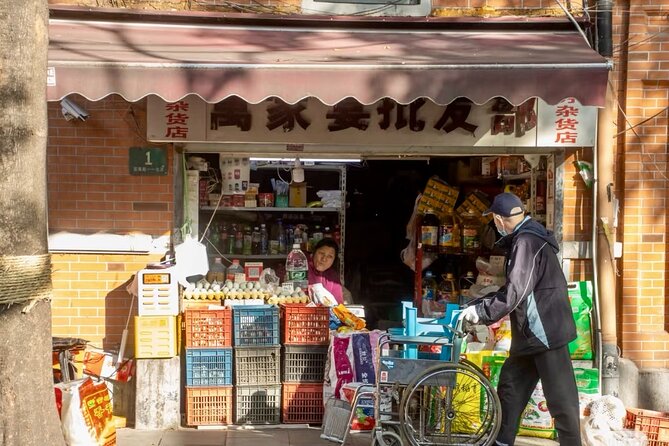
- Start with Jia Shan Road market: See residents buying produce, seafood, and daily essentials in a real community setting.
- Lunch at a community canteen: Try Shanghai-style home cooking in a place designed for everyday local meals, not sightseeing theater.
- Ride the metro like a resident: Public transportation is part of the experience and is included in the price.
- Pair Longhua Temple with Longhua Pagoda: Visit one of Shanghai’s oldest Buddhist centers and learn about Chinese Buddhism.
- See several sides of the city: Tianzifang, Shanghai Library, and Wukang Mansion add art, reading culture, and historic streets.
- Enjoy a private format: Only your group takes part, allowing more room for questions and possible adjustments.
Why this six-hour Shanghai tour feels different
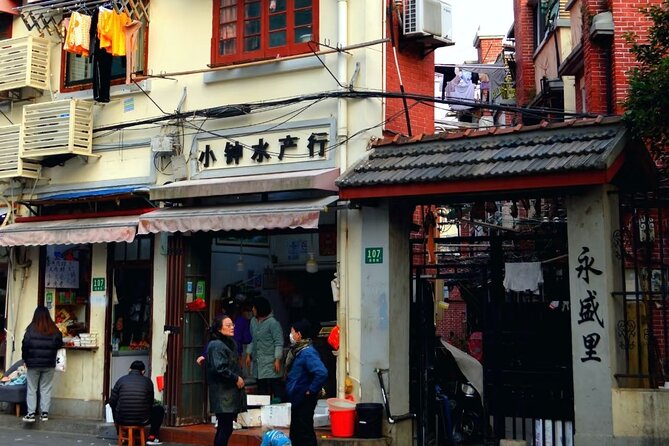
Many city tours keep you on a bus and move from one famous photo stop to the next. This one asks you to notice smaller things: what people put in their shopping baskets, where they eat a quick lunch, and how they move through the city.
That approach gives you a useful contrast. Shanghai is known for its huge skyline and polished commercial districts, but daily life happens in neighborhood markets, public canteens, metro stations, libraries, and residential streets. I like that this tour gives those places equal billing with Longhua Temple and Wukang Mansion.
The experience costs $95 per person. That is not simply an admission-fee calculation, because the listed stops do not charge entrance fees. You are paying for a private English-speaking guide, hotel pickup and return, metro transportation, and lunch, plus the time saved by having someone connect the neighborhoods and explain what you are seeing.
For a private six-hour outing in one of China’s largest and most complex cities, the price can make sense. If you prefer to wander independently and already understand Shanghai’s transport system, you may find it expensive. If you want an efficient introduction to local customs with a guide beside you, the value is stronger.
A few more to weigh up in Shanghai
- Authentic Local Food Tour in Central Shanghai
★ 5.0 · 1,382 reviews - Zhujiajiao Water Town and Shanghai City Private Day Tour
★ 5.0 · 1,016 reviews - Private Shanghai Full Day City Tour with Old and New Highlights
★ 5.0 · 995 reviews
Jia Shan Road market: Shanghai’s everyday shopping scene
The first stop takes you to the Jia Shan Road community market in Xuhui. Plan on about 30 minutes here, enough to get a feel for the place without turning the visit into a long shopping trip.
You can watch residents choose fresh produce, seafood, and other household supplies. The value is in the context. A market like this shows you what a neighborhood needs each day, and your guide can explain the shopping habits and ingredients that may look unfamiliar.
I would pay attention to the rhythm of the visit. This is not a staged food demonstration, and you should not expect a formal tasting session. It is a short look at a working market, so the experience may feel quick if you enjoy food culture and want more time to inspect every stall.
The stop works best when you stay curious and let your guide interpret what you see. Ask about ingredients, typical household shopping, and how this market fits into life in Xuhui. Since admission is free, the guide’s explanations are the main reason this stop matters.
Tianzifang: old lanes with a modern artistic edge
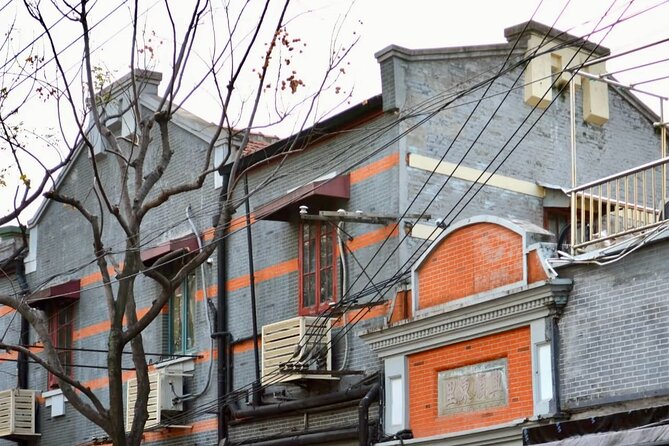
The tour then moves to Tianzifang for about an hour. This area is known for its Shikumen architecture, a Shanghai building style that combines Chinese and Western influences, along with shops, cafes, and art studios.
Tianzifang changes the tone of the morning. After the practical sights of the market, you get narrow lanes, old façades, creative businesses, and a more polished visitor setting. It is still useful for understanding how Shanghai has adapted older neighborhoods for shops and art.
I would not treat Tianzifang as a pure local-life stop. It is a popular area, and the cafes and studios give it a more visitor-friendly feel than the community market. That is not a flaw, but it is worth knowing. The tour is not offering six hours of untouched residential life. It mixes daily routines with well-known cultural areas.
The one-hour visit should give you enough time to walk around and take in the architecture. If you enjoy photographs, design, and old neighborhoods, this may be one of the more appealing sections of the day. If you prefer quiet streets and fewer commercial spaces, you may find it less authentic than the market or canteen.
A large supermarket: the small details of home life
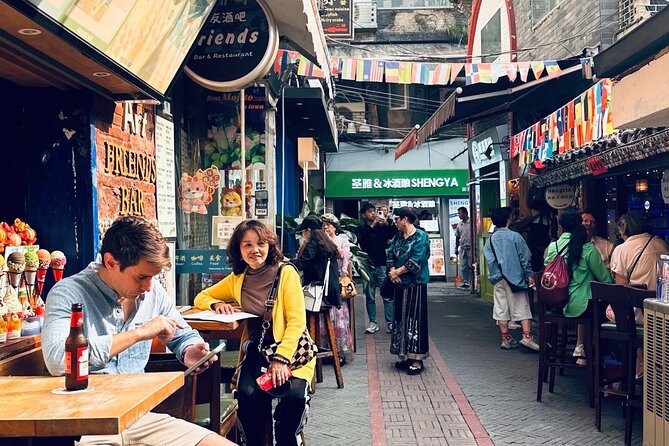
The next stop is a local large supermarket in Dapuqiao, with roughly 30 minutes set aside. At first, this may sound less exciting than a temple or historic building. In practice, it can be one of the clearest ways to understand modern city life.
Supermarkets show you the products people buy when they are not shopping for a special meal or a holiday. You can look at household staples, packaged foods, fresh items, and other goods used in Shanghai homes. The guide can help connect those products to local habits and explain items that are unfamiliar.
This stop also keeps the tour grounded. Shanghai is not only old lanes and religious buildings. It is a working city where residents make routine purchases in large stores, just as you do at home.
Thirty minutes is a sensible limit. You probably will not need more time unless you plan to shop. The tour includes public transportation, but it does not state that supermarket purchases are included, so treat this as a viewing stop unless your guide says otherwise.
A completely different sort of day out:
- Shanghai: Hop-on Hop-off Bus Ticket and Optional Attractions
★ 3.4 · 692 reviews - Shanghai Private Tour: Zhujiajiao Water Town and Boat Ride
★ 5.0 · 661 reviews - Eat Like A Local: Shanghai Night Food Tour
★ 5.0 · 616 reviews - Huangpu Night Cruise: Cozy Vibe & Modern Shanghai Glow
★ 4.3 · 520 reviews
Community canteen lunch: the day’s strongest local moment
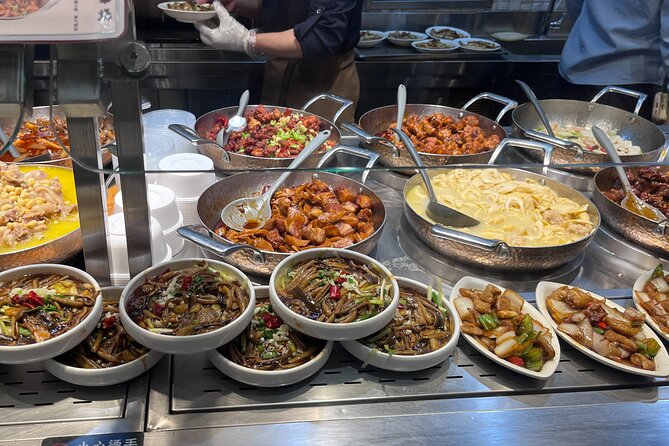
Lunch is served at a popular community canteen in Xuhui, with about one hour for the meal. This is the part I find most appealing because it gives you a direct look at Shanghai-style home cooking in an everyday setting.
A community canteen is built around local residents and practical meals. You are not being taken to a restaurant selected only for tourists. The food is prepared and served with local habits in mind, which makes the meal a useful bridge between the market and the table.
The experience includes lunch, but no menu is provided. I would keep an open mind and let the guide explain what you are eating. If you have dietary restrictions, raise them when booking or before the tour begins, since the available information does not describe special meal arrangements.
The one-hour timing allows more than a quick bite. You can eat, ask questions, and notice how the canteen functions. Still, this is a shared local food setting rather than a private dining room, so travelers seeking a formal culinary lesson may want something more specialized.
For me, this is where the tour’s central idea comes together. You see ingredients at the market, household products at the supermarket, and a prepared meal in a community dining space. It is a simple sequence, but it gives the day a clear purpose.
Longhua Temple and the ancient pagoda
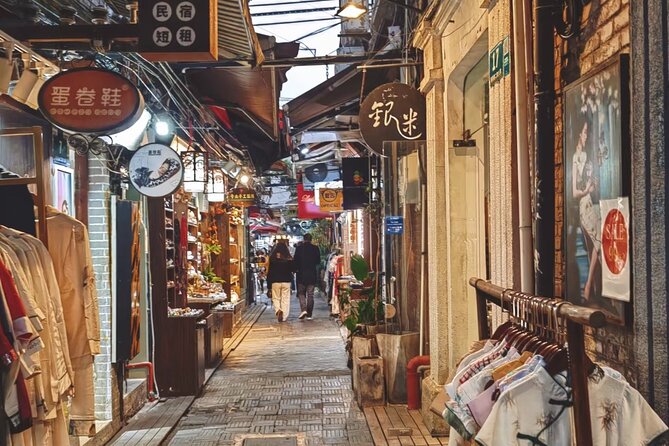
After lunch, you visit Longhua Temple for about an hour. The temple is described as having more than 1,700 years of history and being one of Shanghai’s oldest and most important Buddhist temples.
This is the tour’s main historic and religious stop. Your English-speaking guide explains the roots of Chinese Buddhism and the cultural meaning of the site. That context matters because temple buildings, statues, rituals, and courtyards can be hard to understand if you only walk through with a camera.
The visit also includes the ancient Longhua Pagoda. Together, the temple and pagoda give you a sense of Shanghai’s older identity, far removed from its modern financial image.
An hour is enough for a focused visit, but not for every corner of a large religious complex. The schedule asks you to balance observation with movement, so listen closely to the guide and save detailed photography for moments when the group is not moving.
You should also expect this to be a cultural visit, not simply another landmark photo stop. The guide’s explanation is central. If your main interest is architecture, you will enjoy the buildings and pagoda. If you want more background on Buddhism, use the private format to ask questions.
Shanghai Library: a quieter look at city life
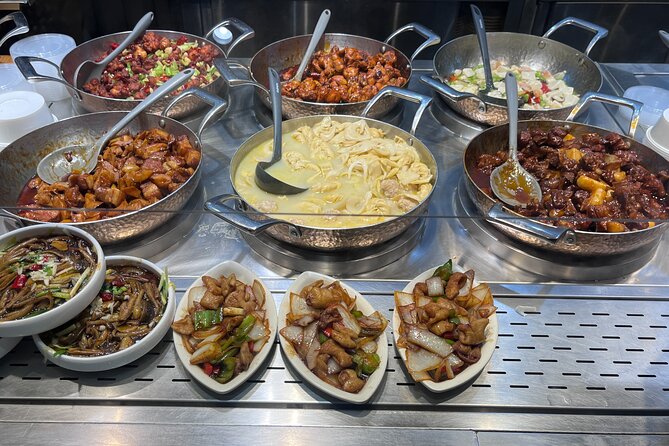
The Shanghai Library follows, with about 30 minutes inside or around this local institution. It is presented as a place where residents read, study, and relax, with modern facilities and a large collection.
This stop offers a quieter contrast to the market, metro, and temple. It shows Shanghai as a city of education and public life, not just shopping and sightseeing. You can see why a library matters in a dense urban environment, especially when public buildings serve as places to spend time, read, and work.
The short timing is the main limitation. Thirty minutes will give you an impression of the building and its role, but it will not allow a full exploration of the collection. The tour is offering a glimpse rather than a research visit.
I like the inclusion because it is unexpected. A library is not usually the first place international visitors associate with a Shanghai tour, yet it can tell you a great deal about how residents use their city.
Wukang Mansion and the former French Concession
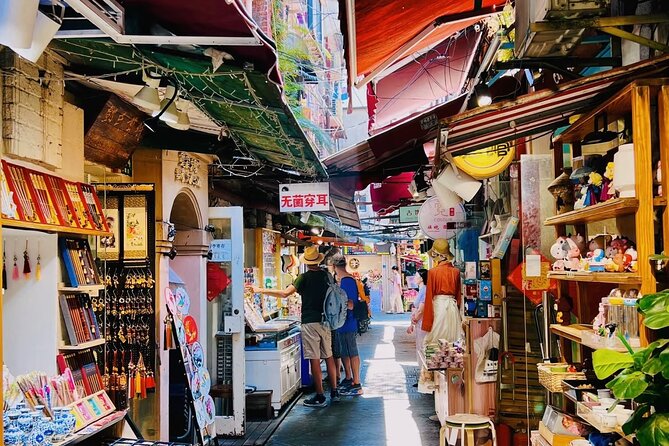
The final stop is Wukang Mansion, also called Wukang Building, in the former French Concession. You have about 30 minutes to stroll through the area and appreciate the architecture and local street atmosphere.
The building is one of Shanghai’s recognizable historic structures, and the surrounding district adds a different visual character from Longhua Temple or Tianzifang. This is a good final stop because it lets you finish with a walk rather than another indoor presentation.
Again, 30 minutes is brief. You will not have time for a long architectural study or a broad tour of the former French Concession. Think of this as a focused look at one landmark and its immediate surroundings.
The stop also shows how much ground the tour covers. In a single day, you move through markets, art lanes, a supermarket, a canteen, a Buddhist temple, a library, and a historic urban district. That variety is the tour’s strength, though it also means you should not expect long, unhurried visits at every location.
Metro travel and the private format
The Shanghai metro is not just a way to get from one stop to another. It is part of the lesson. You use the same public transportation system that local residents rely on, and the guide accompanies you at the beginning and end of the day.
Hotel pickup is offered, and the guide returns with you to your hotel by metro after the final stop. That removes much of the stress of figuring out routes in an unfamiliar city. It also means the tour is not a private vehicle experience, so you should be comfortable with walking and public transit.
The tour requires a moderate level of physical fitness. The information does not give a precise walking distance or accessibility details, so ask before booking if anyone in your group has mobility concerns. The metro and seven scheduled stops can make the day feel active.
Only your group participates. That private setup is valuable here because the tour depends on questions and explanation. You can ask why a market works a certain way, what a dish contains, or how a temple tradition fits into Chinese culture without waiting for a large group to catch up.
The provider’s broader service record is also worth noting. Guide Jenny has been praised for timely replies and for accommodating requests on customized multi-day trips, including help with airport transfers and Disneyland transportation. That does not guarantee a particular guide for this experience, but it suggests the company is used to handling family needs and practical arrangements.
Who should book this Shanghai experience?
I would recommend this tour to you if you want an introduction to Shanghai that feels connected to daily life. It suits first-time visitors who want help with the metro, families who prefer a private guide, and curious eaters who care more about a community canteen than a formal restaurant.
It is also a good match if you want several types of Shanghai in one morning and afternoon: food shopping, modern retail, art lanes, Buddhist culture, public reading spaces, and historic architecture.
You may want a different tour if you prefer a slow schedule. Seven stops in six hours is efficient, but it leaves limited time for lingering. It may also disappoint you if you expect extensive shopping, a long temple visit, or a full guided tour of the former French Concession.
The free cancellation policy gives you flexibility up to 24 hours before the start time. Cancellations inside that window are not refunded, and changes are not accepted less than 24 hours before departure. Confirmation is normally provided at booking, although bookings made within two days of travel may take up to 48 hours to confirm, subject to availability.
Should you book it?
Book this experience if you want to understand how Shanghai works, not just how it photographs. The market, supermarket, community lunch, and metro ride give you the most useful local context, while Longhua Temple, Tianzifang, Shanghai Library, and Wukang Mansion add culture and architecture.
At $95, it is best value for a private group that wants a guide, lunch, transit help, and a tightly planned introduction. I would skip it if you already know Shanghai well or prefer to spend a whole day at one neighborhood. For many first-time visitors, though, this is a smart way to see the city through ordinary routines as well as famous places.
FAQ
How long does the Shanghai local-life tour last?
The experience lasts approximately six hours.
What is included in the tour price?
Public transportation, lunch, and an in-person English-speaking guide are included.
Is hotel pickup available?
Yes. Pickup is offered, and the guide accompanies you back to your hotel by Shanghai metro at the end of the experience.
Is this a private tour?
Yes. Only your group participates in the activity.
What places are visited?
The tour visits the Jia Shan Road community market, Tianzifang, a local large supermarket in Dapuqiao, a community canteen in Xuhui, Longhua Temple and Longhua Pagoda, Shanghai Library, and Wukang Mansion.
Can I cancel for a full refund?
Yes, if you cancel at least 24 hours before the experience start time. Cancellations made less than 24 hours in advance are not refunded.
Just added in Shanghai
- Zhujiajiao Water Village: Private Tour from Shanghai★ 4.9 · 43 reviews
- Zhujiajiao with Private Customized Shanghai City Highlights★ 5.0 · 14 reviews
- Zhujiajiao Water Town Private Tour with Night River Cruise★ 5.0 · 9 reviews
- Zhujiajiao & Shanghai:Small Group Tour Water Town to Skyline★ 5.0 · 4 reviews
- Zhujiajiao & Shanghai:Private Day Tour Water Town to Skyline★ 5.0 · 12 reviews
- Yu Garden Shanghai Entry Tickets Booking And Trip★ 3.6 · 9 reviews
- Water Town Zhujiajiao Shanghai: Boat Ride,Sights,Bites&Sips★ 5.0 · 7 reviews
- shanghai Disney tour★ 5.0 · 12 reviews
Shanghai Tours, compared.
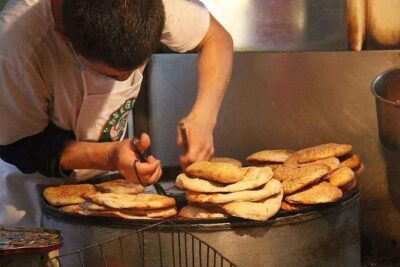
Authentic Local Food Tour in Central Shanghai
Read our review →
Zhujiajiao Water Town and Shanghai City Private Day Tour
Read our review →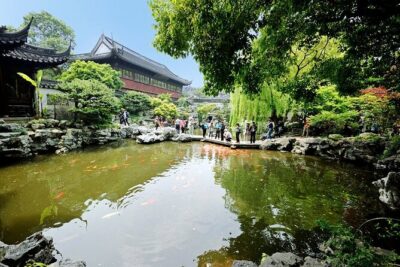
Private Shanghai Full Day City Tour with Old and New Highlights
Read our review →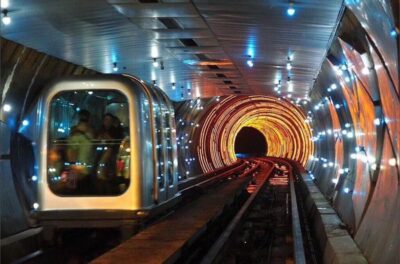
Hop-on Hop-off Bus Ticket and Optional Attractions
Read our review →
Shanghai Private Tour: Zhujiajiao Water Town and Boat Ride
Read our review →
Huangpu Night Cruise: Cozy Vibe & Modern Shanghai Glow
Read our review →