Reviewed · PRIVATE
Customized Private Wuhan Day Tour (10 attractions to choose / Not group tour)
Wuhan rewards a well-planned day. This private tour lets you choose four major sights from eight options, then adds one local food stop and a Chinese tea tasting. I like the one-to-one planning, especially for a short stay, and I like that Rafiq, your driver-guide, has lived in Wuhan for more than 30 years. He can explain the city as you move between stops, rather than giving you disconnected snapshots.
The main consideration is pace. Six to eight hours is enough for four selected attractions, but Wuhan is a large city and some sights are far apart. The $280 per-person price also makes the most sense for visitors who value a private car, personal guiding, and flexible planning over the lower cost of public transportation.
In This Review
- Five things to know before booking
- How the customized day works
- Yellow Crane Tower and Wuhan’s best city view
- East Lake for open air and a slower hour
- Hubei Provincial Museum and four major treasures
- Wuhan Yangtze River Bridge and the working riverfront
- The Yangtze River Ferry and a short local crossing
- Wuhan University and the Luojia Mountain setting
- Guiyuan Temple and its 500 golden Arhats
- Gude Temple, an unusual stop in central Wuhan
- Hubu Alley or Jiqing Street for Wuhan food
- Tea tasting, transport, and the $280 value
- Who should book this Wuhan day tour?
- FAQ
- How long does the private Wuhan tour last?
- How many attractions can I choose?
- Is this a group tour?
- Is hotel pickup included?
- Is food included in the price?
- Is Chinese tea included?
- Who is the guide?
- My booking advice
Five things to know before booking
- You choose four of eight major sights: Pick from Yellow Crane Tower, East Lake, Hubei Provincial Museum, Wuhan Yangtze River Bridge, Yangtze River Ferry, Wuhan University, Guiyuan Temple, and Gude Temple.
- Food is part of the plan: You visit either Hubu Alley or Jiqing Street, with lunch or dinner paid separately.
- Rafiq plans before arrival: He contacts you after booking, discusses special interests, and prepares the day with you.
- The experience is genuinely private: Your party has its own English or Chinese-speaking guide, driver, air-conditioned car, and hotel transfers within Wuhan’s Third Ring Road.
- It mixes famous sights with ordinary Wuhan life: The ferry, riverfront, snack streets, tea tasting, and neighborhood temples add local texture to the better-known monuments.
How the customized day works
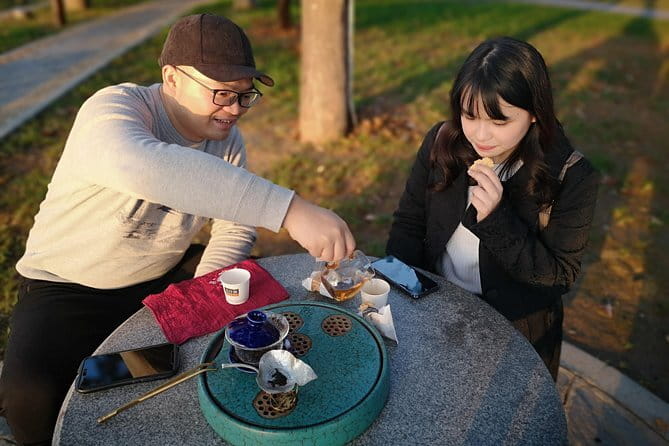
This is not a fixed sightseeing circuit where you simply follow a flag through ten stops. You select four places from the eight main attractions, then the operator arranges one of the two food areas, Hubu Alley or Jiqing Street. Chinese tea tasting is included, with one cup of green or black tea per person.
That format is useful because Wuhan offers several different kinds of sightseeing. You can build a day around history and views, choose a softer nature-focused schedule, or mix monuments with temples and street food. I would decide based on your interests before you arrive, since trying to cover every option in one day would leave little time at each place.
Rafiq is the key personal element. He has spent more than three decades in Wuhan and also helps with photographs. Previous guests praised his quick communication after booking, his willingness to discuss special requests, and the detailed itinerary sent before the day. An assistant named Summer helped on some outings, but the listed arrangement centers on Rafiq as both guide and driver.
The private vehicle matters in Wuhan. You avoid waiting for other people, and you can spend your limited time walking through a museum, viewing the river, or eating rather than working out each connection yourself. Hotel pickup and drop-off are included for downtown hotels within the Third Ring Road. Locations outside that area are excluded, so check your hotel address carefully.
A few more to weigh up in China
- Beijing: Forbidden City Tour(Group/Private)-Tickets Included
★ 4.8 · 7,974 reviews - Beijing: T-Square & Forbidden City Group or Private Tour
★ 4.8 · 4,446 reviews - Beijing:Mutianyu Great Wall Private Trip with English Driver
★ 5.0 · 1,263 reviews
Yellow Crane Tower and Wuhan’s best city view
Yellow Crane Tower is the natural choice if you want Wuhan’s signature landmark. The current tower recalls a long tradition of people climbing high for wide views, and its position gives you a broad look toward Hanyang, Hankou, and Wuchang.
Allow about 90 minutes. That gives you time for the tower, the surrounding park, and the winding paths beyond the main building. The park is not only a quick photo stop. Quiet corners and smaller features reward a slower walk, especially if you need a break from busy city streets.
The view is the main reason to choose it. You see the Yangtze crossing the city and the different character of Wuhan’s districts from above. If you want photographs, this is one of the strongest selections.
The drawback is that a landmark view can feel less personal than the ferry or a neighborhood street. If you have already seen several towers and city panoramas in China, you may prefer the museum or East Lake instead.
East Lake for open air and a slower hour
East Lake changes the rhythm of the day. Its lakeside paths, willow trees, lotus ponds, stone bridges, and water views offer a welcome pause after traffic and buildings. Wild ducks may appear along the water, and stone benches provide places to sit.
The planned visit lasts about 90 minutes. That is enough for a pleasant walk and time to enjoy the surroundings, but East Lake is extensive, so you will not see every corner. I would choose it if you prefer nature, photography, or a quiet break over another indoor attraction.
Sunset is mentioned as a particularly pleasant time for the lakeside. Since the tour lasts six to eight hours and timing depends on your chosen stops, ask Rafiq if an East Lake visit can fit later in the day. Do not assume it will automatically be scheduled at sunset.
East Lake has fewer historical facts to absorb than the museum, and weather will affect the experience more. On a comfortable day, though, it may be the most restful stop on your schedule.
Hubei Provincial Museum and four major treasures
Hubei Provincial Museum is the best choice for understanding the area’s past. Its major objects include Qin Dynasty bamboo slips, the Sword of Goujian, the chime bells from the Tomb of Marquis Yi of the Zeng State, and a Yuan Dynasty blue-and-white plum vase decorated with the Four Loves.
The chime bells are the star attraction. The set is described as the most complete of its kind in China, and a chime performance adds sound to the display. That matters because ancient objects can be difficult to grasp through glass alone. Hearing the bells gives you a clearer sense of their purpose and scale.
Plan on 90 minutes. That is long enough for a focused visit, especially if Rafiq helps connect the exhibits to Wuhan and Hubei. It is not enough for a slow examination of every gallery, so tell him if you want to spend more time indoors.
This stop suits anyone interested in archaeology, early Chinese states, or museum collections. The possible downside is simple: if you prefer outdoor sights, an hour and a half inside may feel demanding, particularly after a long journey.
A completely different sort of day out:
- From Beijing: Mutianyu Great Wall Tours with Options
★ 4.9 · 9,216 reviews - Beijing: Mutianyu Great Wall Daily Tour with Ticket & Lunch
★ 5.0 · 3,056 reviews - All-Inclusive Tour: Tiananmen Square, Forbidden City, Great Wall
★ 5.0 · 2,873 reviews - MuBus: Mutianyu Great Wall ENG/ESP/RUS Guided Bus Tour
★ 5.0 · 2,361 reviews
Wuhan Yangtze River Bridge and the working riverfront
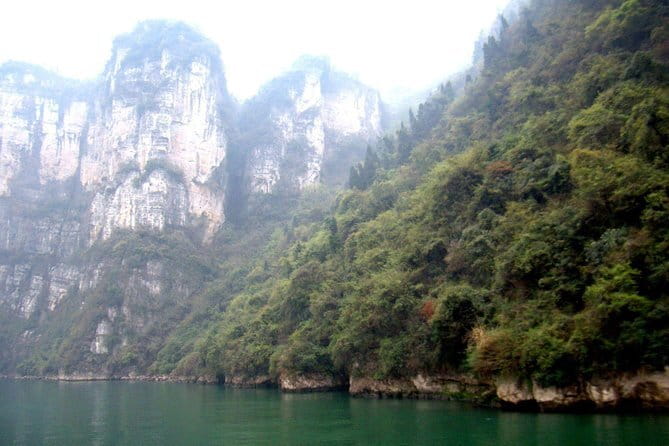
The Wuhan Yangtze River Bridge opened in 1957 and carries both road and rail traffic. It was the first bridge across the Yangtze River, making it more than a scenic viewpoint. It is also part of the city’s modern story and daily transport system.
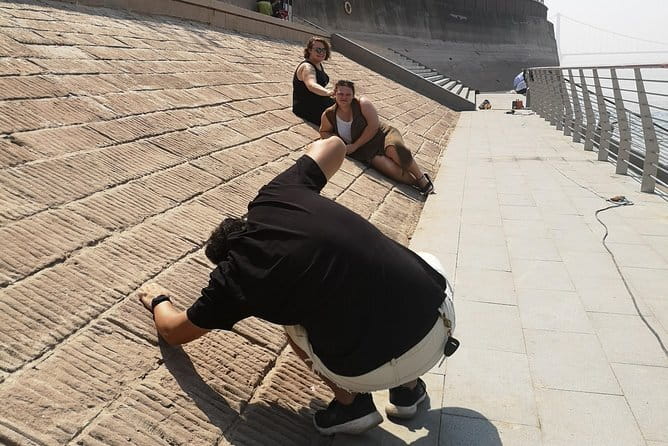
You have about 90 minutes here. The best part is the combination of structure and river scenery. From the bridge area, you can look across the Yangtze toward both sides of Wuhan. Walking along the riverbank below brings you closer to ordinary city life, with local residents using the riverfront for their own routines.
This is a strong pick for photographers and anyone who wants to see Wuhan as a working city rather than a collection of monuments. It pairs especially well with the ferry, though using both choices may give you similar river views.
Traffic and weather are practical concerns. The bridge is active, not a quiet pedestrian monument, and the experience depends on where the vehicle can stop and how much walking you prefer. Rafiq’s local knowledge should help keep the visit efficient.
The Yangtze River Ferry and a short local crossing
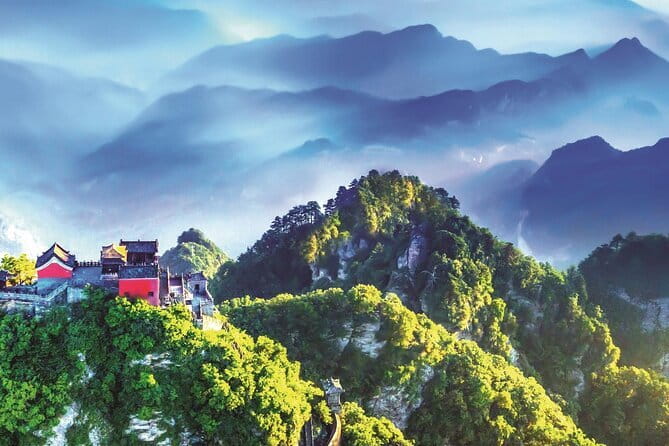
The ferry offers one of the most direct ways to feel Wuhan’s relationship with the Yangtze. You cross the river by boat, with wind on your face and the banks moving past like a changing picture.
Unlike a viewpoint, the ferry places you among people going about their day. You might share the crossing with couples, college students, and small vendors. That ordinary mix is the point. You are not simply looking at Wuhan from a distance; you are using a long-established form of city transport.
The itinerary calls this stop Beach Park and allows around 90 minutes. Ask how the ferry timing fits with the rest of your selected sights, since a boat crossing depends more on the day’s movement than a fixed museum visit.
This is my pick for an authentic-feeling addition to the day. It may not satisfy you if you want detailed guiding or a long historical visit, but it gives the tour a sensory moment that a car ride cannot provide.
Wuhan University and the Luojia Mountain setting

Wuhan University dates to 1893 and sits near East Lake and Luojia Mountain. Its campus architecture combines Chinese and Western features, with grand buildings and a more relaxed academic setting.
A 90-minute visit gives you time to see the architectural character and walk through part of the grounds. In mid-March, cherry blossoms attract very large crowds from across China. If you are visiting during that period, ask about access, crowd conditions, and how much walking is practical.
The university works well for architecture lovers, photographers, and anyone who enjoys historic campuses. It also pairs naturally with East Lake, although selecting both may make the day feel more scenic and less focused on Wuhan’s central monuments.
The main limitation is timing. Cherry blossom conditions are seasonal, and the campus experience will not be the same outside bloom season. You should also avoid expecting a complete campus tour in 90 minutes.
Guiyuan Temple and its 500 golden Arhats
Guiyuan Temple was founded in 1658 and remains an important place of worship for Wuhan residents. People come to pray for blessings, and the temple becomes especially busy during the Lunar New Year period.
Its most distinctive feature is the Arhat Hall, with 500 golden Arhats. You can try the traditional counting activity and see what meaning people attach to the figure you reach. It is a small, playful moment inside a serious religious site.
The temple receives about 90 minutes in the schedule. That is enough to see the main areas and take in the atmosphere without rushing through every detail. Dress and behave respectfully, since this is an active place of worship rather than a museum display.
Guiyuan Temple is a good choice if you want Buddhist art and local religious life. During major festival periods, the crowds may change the mood considerably. If you prefer a quieter setting, Gude Temple may suit you better.
Gude Temple, an unusual stop in central Wuhan
Gude Temple dates to 1877 and is known for combining Eurasian architectural features with Buddhist traditions. The site brings together elements associated with Mahayana and Tibetan Buddhism, creating an unusual visual mix.
The temple is located among residential buildings in Hankou. That setting is part of its appeal. You arrive not at a grand isolated religious complex, but at a place woven into the city’s everyday neighborhoods.
About 90 minutes lets you look closely at the architecture and absorb the contrast between the temple and its urban surroundings. The setting can be difficult to find without local help, which makes Rafiq’s guiding particularly useful here.
Gude Temple is the better choice for architecture and atmosphere. It may be less satisfying if your main goal is a large collection of religious sculptures or a major ceremonial complex. Its strength is the unexpected setting and unusual design.
Hubu Alley or Jiqing Street for Wuhan food
Food is not included as a meal, but one snack district is included in the plan. You choose between Hubu Alley and Jiqing Street, and you pay for anything you eat there.
Hubu Alley is a 400-year-old food street stretching about 150 meters. It is known for Wuhan staples such as hot-and-dry noodles, called Re Gan Mian, and soup noodles with fish paste, called Hu Tang Fen. The compact layout makes it easy to sample several items during a one-hour visit.
Jiqing Street offers a different mood. During the day, you can see long-established food names such as Si Jimei and Lao Tongcheng, along with stalls run by folk craftsmen. In the evening, lights, food stands, and local activity give the street a more social feel.
I would choose Hubu Alley for a first taste of Wuhan specialties and Jiqing Street if evening atmosphere matters more. Neither stop is a quiet sit-down meal by default. Bring an appetite, and budget separately for food.
Tea tasting, transport, and the $280 value
One cup of Chinese tea per person is included, either green or black. It is a small addition, but it gives you a calm pause between major sights and a chance to ask about Chinese tea in a less hurried setting.
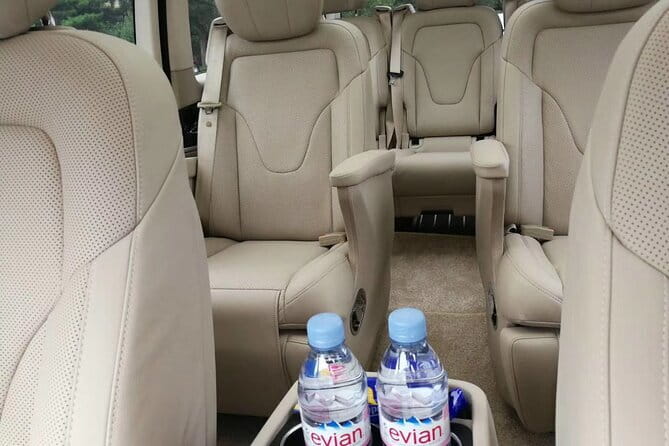
At $280 per person, this is not a budget sightseeing option. Its value comes from the private air-conditioned vehicle, English or Chinese-speaking guide, driver, bottled water, hotel transfers within the service area, and advance communication. For one or two people with only a day in Wuhan, the time saved can justify the cost.
The price is harder to defend if you are comfortable using public transport, do not need English guiding, or plan to visit only one or two central sights. Lunch and dinner are extra, and you should confirm which selected attractions carry included admission under your customized plan.
The tour is typically booked about 12 days ahead. Confirmation arrives at booking, and cancellation is free if you cancel at least 24 hours before the start time. Last-minute changes or cancellations inside that window are not refundable.
Who should book this Wuhan day tour?
I would recommend it most strongly for a first visit, a short stopover, couples, families, and anyone who wants local explanation without joining a group. It is also useful if you want to combine places that would be awkward to arrange independently, such as a museum, temple, river crossing, and food street.
You should be comfortable with a full day of movement. Four major sights plus food and tea can feel busy, and each selected attraction is allotted roughly 90 minutes. Tell Rafiq your priorities early, then let the schedule favor depth over collecting every possible name.
FAQ
How long does the private Wuhan tour last?
The experience lasts approximately six to eight hours.
How many attractions can I choose?
You can choose four attractions from eight main options: Yellow Crane Tower, East Lake, Hubei Provincial Museum, Wuhan Yangtze River Bridge, Yangtze River Ferry, Wuhan University, Guiyuan Temple, and Gude Temple.
Is this a group tour?
No. It is a private activity for your party only, with a private vehicle, driver, and guide.
Is hotel pickup included?
Pickup and drop-off are included for hotels in downtown Wuhan within the Third Ring Road. Locations outside the Third Ring Road are not included.
Is food included in the price?
No. The tour arranges either Hubu Alley or Jiqing Street, but lunch or dinner is not included.
Is Chinese tea included?
Yes. Each person receives one cup of Chinese tea, either green tea or black tea.
Who is the guide?
Rafiq is the driver and guide. He has lived in Wuhan for more than 30 years and communicates with you before departure to plan the day.
My booking advice
Book this tour if you want Wuhan explained by a long-time local and prefer a flexible private day to a fixed group schedule. The strongest plan would combine one major view, one cultural sight, one river or nature stop, and either Hubu Alley or Jiqing Street.
Before paying, send Rafiq your must-see list and hotel address. If you want the best balance, I would consider Yellow Crane Tower, Hubei Provincial Museum, the Yangtze River Ferry, and Hubu Alley. For a quieter day, swap in East Lake or Gude Temple. The tour costs more than arranging each stop yourself, but the planning help, private transport, and local stories can make that extra cost worthwhile when your time in Wuhan is short.
Just added in China
- Zhujiajiao Water Village: Private Tour from Shanghai★ 4.9 · 43 reviews
- Zhujiajiao with Private Customized Shanghai City Highlights★ 5.0 · 14 reviews
- Zhujiajiao & Shanghai:Private Day Tour Water Town to Skyline★ 5.0 · 12 reviews
- Zhujiajiao Water Town Private Tour with Night River Cruise★ 5.0 · 9 reviews
- Zhujiajiao & Shanghai:Small Group Tour Water Town to Skyline★ 5.0 · 4 reviews
- Zhangjiajie: Highlights Tour with Glass Bridge & Cable Car★ 5.0 · 32 reviews
- Zhengzhou: Private Tour to Shaolin Temple & Longmen Grottoes★ 4.8 · 8 reviews
- Zhangjiajie National Forest Park: Private Tour and Transport★ 4.9 · 20 reviews
Private, compared.
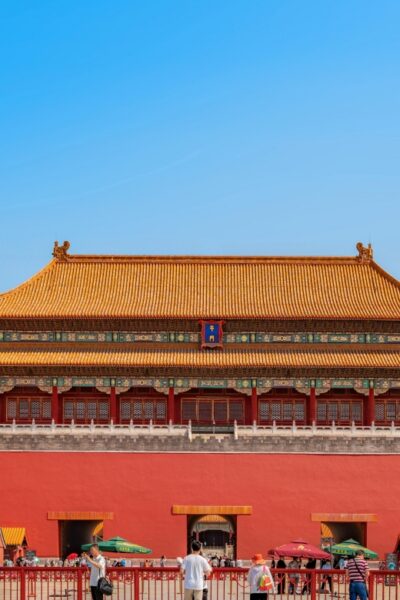
Forbidden City Tour(Group/Private)-Tickets Included
Read our review →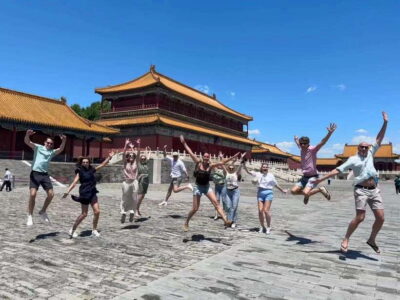
T-Square & Forbidden City Group or Private Tour
Read our review →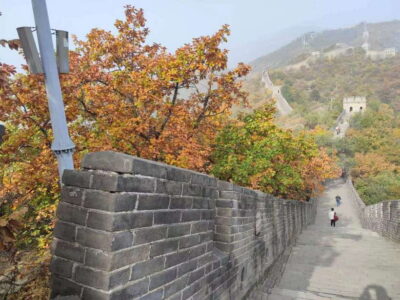
Mutianyu Great Wall Private Trip with English Driver
Read our review →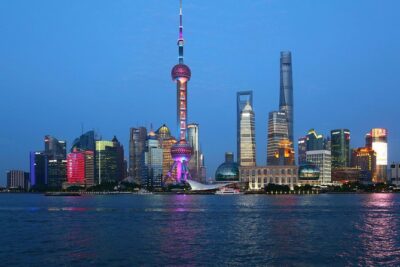
Zhujiajiao Water Town and Shanghai City Private Day Tour
Read our review →
Private Shanghai Full Day City Tour with Old and New Highlights
Read our review →
Private Mutianyu Great Wall Trip with English-Speaking Driver
Read our review →