
Reviewed · CITY TOURS
Chongqing: 1-day Essential Guided City Tour without Car
Chongqing rewards a good guide. This private seven-hour outing combines the city’s famous monorail view, steep lanes, old neighborhoods, local food, and useful cultural context. I especially like the custom itinerary and Chris Tang’s clear English explanations, backed by a detailed handout. The main catch is simple: this is a serious walking tour, not an easy sightseeing ride.
You pay $155 per group of up to three, before transport, meals, and entrance fees. That can be strong value if you are new to China and want someone to handle the confusing parts of Chongqing. Just bring good shoes, prepare for stairs, and contact Chris before the day so the meeting point and route make sense.
In This Review
- Five things that make this Chongqing tour different
- Why a guide helps in Chongqing
- Starting at the hotel and finding your bearings
- Kuixinglou, where Chongqing’s levels play tricks
- Liziba and the monorail through the building
- Eling Park for a calmer view
- Ciqikou, a living old-town stop
- Mountain alleyways and the old city walls
- Jiefangbei, Raffles City, and the modern center
- Optional river and residential routes
- Getting around without a private car
- How Chris performs as a guide
- Who should book it?
- FAQ
- How long does the Chongqing tour last?
- What is included in the price?
- How much does the tour cost?
- Is hotel pickup available?
- Do I need to use a private vehicle?
- Can I customize the itinerary?
- Is lunch included?
- What should I bring?
- Should you book this Chongqing day tour?
Five things that make this Chongqing tour different
- A city where trains pass through buildings: The Liziba viewing platform gives you the famous monorail photo, but Chris adds the urban story behind it.
- Flexible sightseeing without a private vehicle: You use the metro, walking routes, and possibly Didi, China’s ride-hailing service, with a guide helping you navigate.
- A useful mix of postcard stops and everyday streets: The route can include Kuixinglou, Eling Park, Ciqikou, mountain alleyways, Raffles City, and other central sights.
- Food is part of the lesson: Lunch is optional, but a local hotpot or noodle stop can help you understand Chongqing through its powerful flavors.
- Strong English support: Chris is a licensed freelance guide, translator, and tourist assistant who can explain language, customs, transport, and local history.
- A demanding seven hours: Expect stairs, sloping streets, long transfers, and plenty of standing. This suits active visitors best.
Why a guide helps in Chongqing
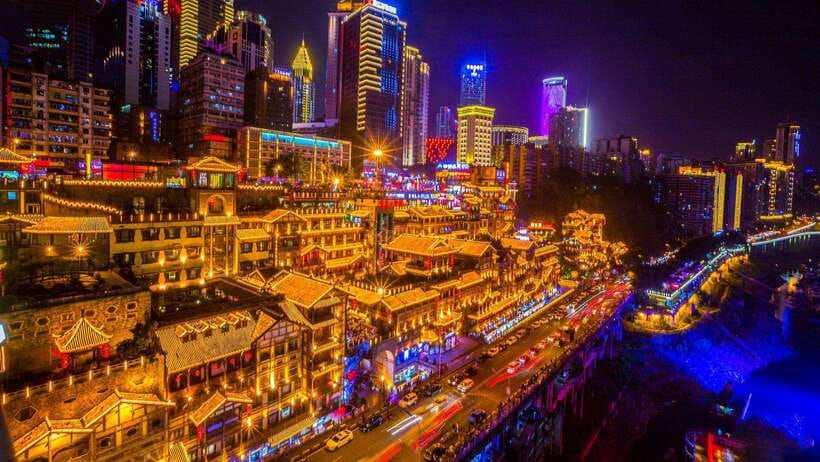
Chongqing is not difficult because it lacks attractions. It is difficult because the city is built on dramatic slopes and several layers of roads, walkways, stations, bridges, towers, and residential blocks. A place that looks close on a map may involve a long route, a change of level, or a subway entrance that is not obvious from the street.
I like the way this tour treats that confusion as part of the experience rather than trying to hide it. You travel mainly by public transport and on foot, with Didi available at your own expense when it saves time or energy. Chris can help with the practical side while explaining what you are seeing.
The guide’s role goes beyond pointing at buildings. He explains Chongqing’s place in China, its former connection with Sichuan Province, its period as a wartime capital, and its European influences from the era of foreign concessions and semi-colonial rule. He also brings in Chinese language, geography, food, and daily customs.
That broad context is useful because Chongqing’s famous sights can otherwise feel disconnected. The monorail, old alleys, shopping towers, and hotpot are not just separate photo stops. Together, they show a city shaped by mountains, war, migration, redevelopment, and fast modern growth.
A few more to weigh up in Chongqing
- Chongqing Wulong National Park Private Tour
★ 5.0 · 87 reviews - Chongqing: Two Rivers Night Cruise- Yangtze & Jialing Rivers
★ 4.5 · 64 reviews - Chongqing deep explore & private car service including meals
★ 4.9 · 51 reviews
Starting at the hotel and finding your bearings
The standard pickup options are JW Marriott Hotel Chongqing, Marriott Executive Apartments Chongqing, Moxy Chongqing, Hilton Chongqing, and Glenview ITC Plaza Chongqing. If you stay at the Ascott or Marriott apartments, go to the ground lobby rather than the higher check-in lobby.
If you are staying elsewhere, contact Chris before booking or before the tour day. The meeting place may change depending on your hotel address, and early communication through WeChat or email can prevent avoidable trouble.
The tour is private and priced per group, not per person. At $155 for up to three people, the cost works best for a small group that wants personal attention and route control. For one person, it is a bigger spend. For three, the per-person price is much easier to justify, especially if you would otherwise lose time finding stations, choosing transport, or sorting out a Chinese menu.
The usual schedule covers about seven hours, often from 9:30 a.m. to 5 p.m. or 10 a.m. to 5:30 p.m. Chris can adjust the start time and stops. Five main places are a realistic target, although the exact number depends on walking speed, lunch, crowds, weather, and transport.
Kuixinglou, where Chongqing’s levels play tricks
Kuixinglou is an excellent first stop because it quickly explains the city’s strange vertical design. The building is associated with a famous 1-to-22-floor difference. You can appear to be at ground level in one place and reach a much higher floor by crossing the structure elsewhere.
This is the sort of feature that is easy to photograph but more interesting when someone explains how the terrain shapes ordinary life. Chongqing’s buildings, roads, and public spaces often refuse to behave like those in a flat city.
The visit is listed at about 20 minutes, so think of it as a sharp introduction rather than a long architectural tour. You will want to stay alert to the meeting point because the area’s different levels can make a quick regrouping less obvious.
Liziba and the monorail through the building

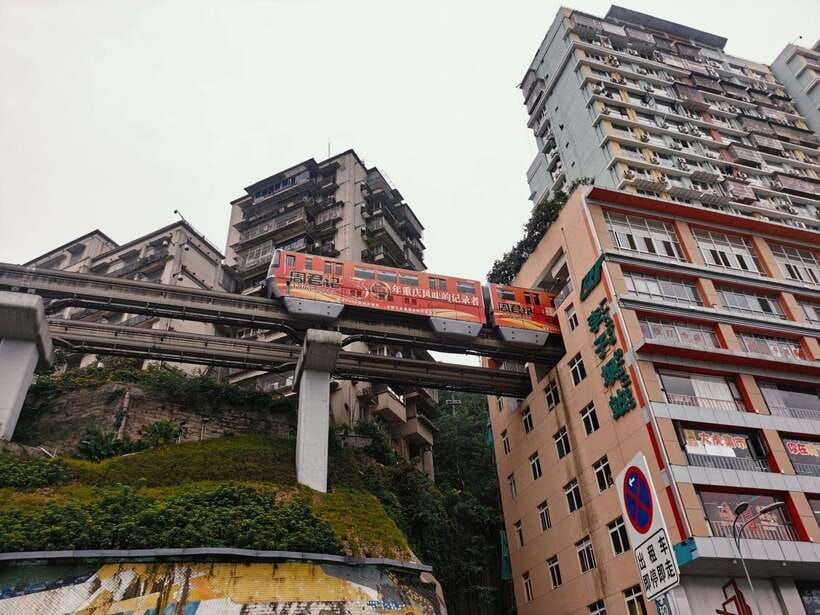
At Liziba Viewing Platform, you watch a train pass directly through a residential building. It is one of Chongqing’s most recognizable modern images, and the stop takes around 15 minutes.
The viewing platform is designed for sightseeing, so you can focus on the train and take photographs. Chris can put the spectacle into context and explain why this unusual transport arrangement is practical in a city with so little flat space.
This is a short stop, and that is a good thing. The monorail arrives, the crowd shifts, cameras rise, and the moment is over. If you expect a long museum visit, you may find it brief. If you want a striking look at Chongqing’s mix of infrastructure and housing, it earns its place.
A completely different sort of day out:
- Chongqing private luxury city tour: Must-sees All in One
★ 5.0 · 39 reviews - Chongqing: Magic Night View and Secret Viewing Spots Tour
★ 5.0 · 27 reviews - Chongqing Wulong: All inclusive luxury private trip to 2 spots
★ 5.0 · 26 reviews - All-In-One Chongqing Trendy Spots Private Tour
★ 5.0 · 26 reviews
Eling Park for a calmer view
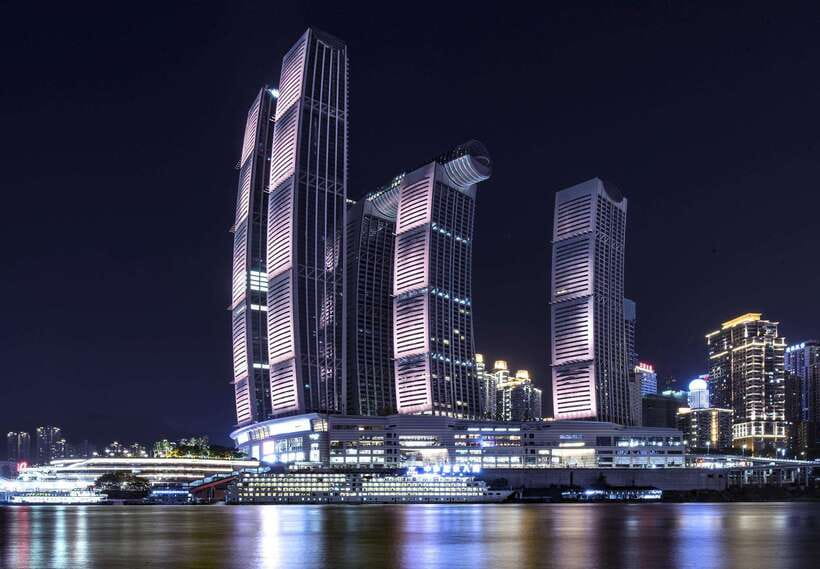
Eling Park is the breathing space in the middle of the day. Set on one of the highest points of Chongqing’s central peninsula, it gives you broad views over the urban area and the surrounding terrain. The planned walking time is about 45 minutes.
I like this stop because it changes the pace. After the tight vertical spaces around Kuixinglou and the quick crowd scene at Liziba, the park gives you time to walk, look out, and ask questions.
Do not mistake a park stop for an easy stop. The route still involves walking, and Chongqing’s slopes can make even a pleasant park visit tiring in hot weather. July and August are specifically discouraged because of the summer heat. A lightweight change of clothes, water, sun protection, and comfortable clothing are sensible.
Ciqikou, a living old-town stop
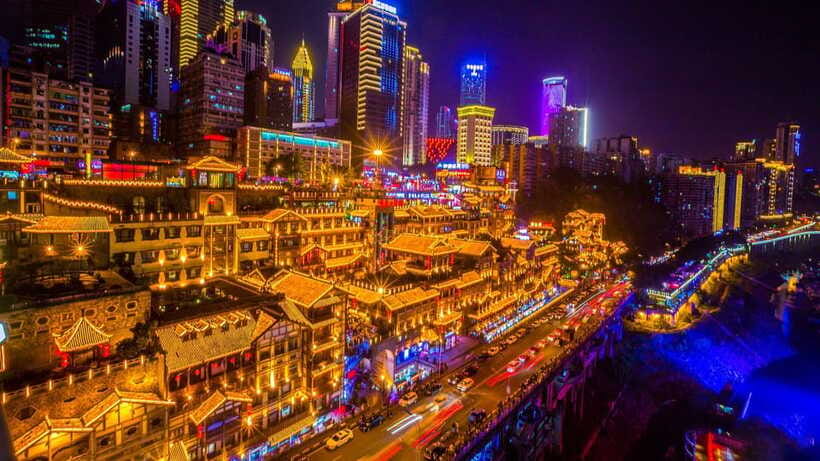
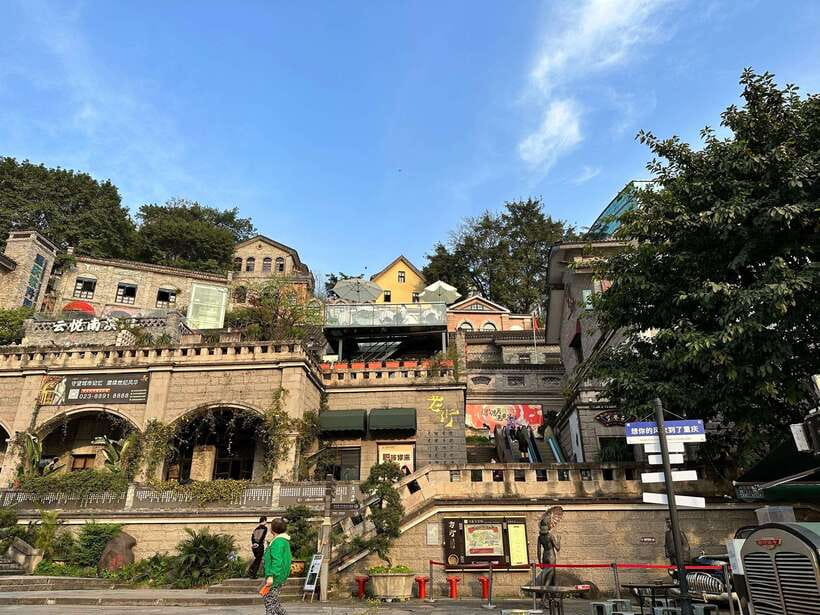
Ciqikou Old Town, also called Porcelain Harbor, offers a different side of the city. Its residential pattern and local street life connect with a medieval-era settlement that dates roughly from 900 to 1100. The scheduled visit lasts about one hour.
You will find a more traditional visual setting here, with older lanes, shops, food, and pedestrian traffic. It is a useful place to discuss folk livelihood and how old neighborhoods function inside a modern city.
Ciqikou can feel busy and commercial, so keep your expectations realistic. It is not an untouched historic village. Its value is that it gives you a compact look at older Chongqing forms, local products, snack culture, and the way a historic district has been adapted for present-day visitors.
A lunch stop can be added around this part of the day. Food and drinks are not included, but Chris can recommend a restaurant and help choose dishes. Hotpot is the obvious local specialty, while Chongqing xiaomian, a strongly seasoned noodle dish, offers a quicker meal. One useful part of Chris’s food guidance is explaining how the dishes are prepared, not simply placing a plate in front of you.
Mountain alleyways and the old city walls
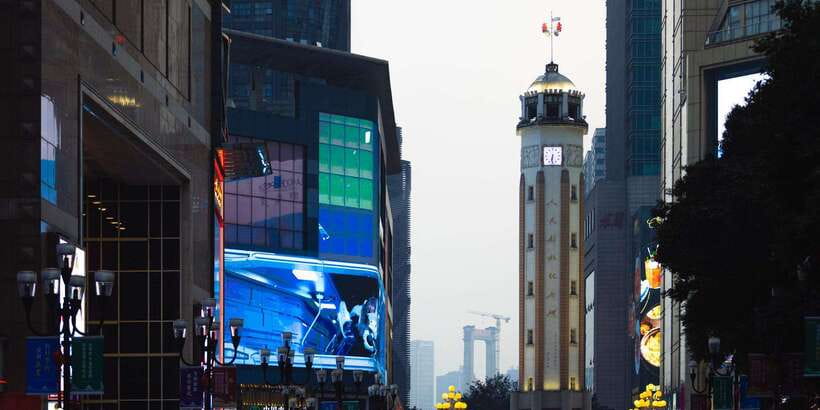
The mountainous alley route is where the tour becomes most physical and most local. These lanes include colonial-era remains, traditional zigzag steps, and the tight pedestrian paths that make Chongqing feel unlike nearly any other major Chinese city.
The walking time is about one hour. You should expect staircases, uneven surfaces, slopes, and repeated changes in height. This is not a polished boulevard walk. That is precisely why it can be so revealing, but it also demands more from your knees and lungs.
The Qixinggang City Walled Gate relic may be included on this version of the route. It adds another layer to the city’s past, showing how older defensive features fit into the present urban fabric.
This section is especially valuable if you want more than social-media landmarks. Chris can point out the relationship between traditional homes, colonial traces, steep routes, and modern redevelopment. For me, this is the part most likely to leave you with a lasting sense of Chongqing as a place where eras sit on top of one another.
Jiefangbei, Raffles City, and the modern center
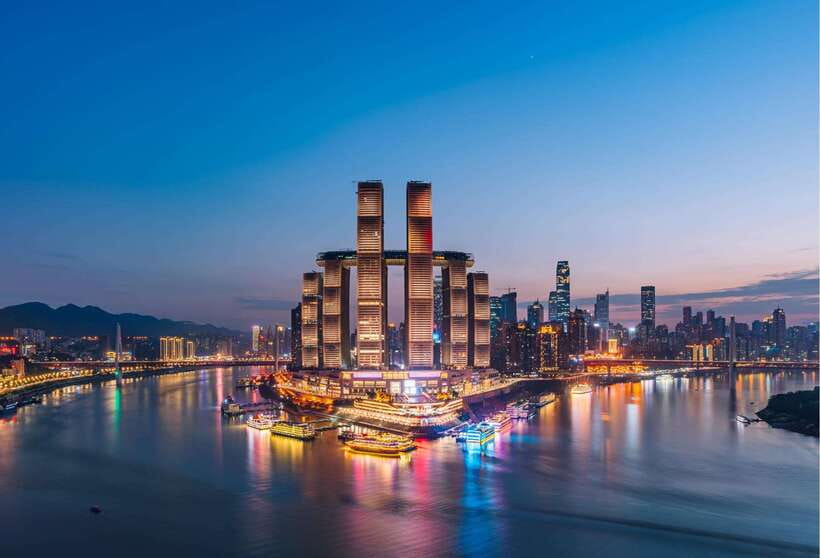
Jiefangbei Square, home of the Liberation Monument, is one possible final stop. It puts you in the commercial heart of central Chongqing and offers a useful contrast with Ciqikou and the mountain lanes.
Another route uses Raffles City Shopping Mall. The complex is a good place for a final walk, modern architecture, air conditioning, and souvenir shopping. It can also be a practical drop-off point if time remains after the last visit.
The itinerary lists about 30 minutes at Raffles City. That is enough for a look around and purchases, but not enough for a leisurely shopping session. If shopping matters to you, tell Chris at the start so you do not spend all your time at earlier stops.
Depending on the schedule, you may finish at the last attraction rather than return to the original hotel. Confirm that plan ahead of time.
Optional river and residential routes
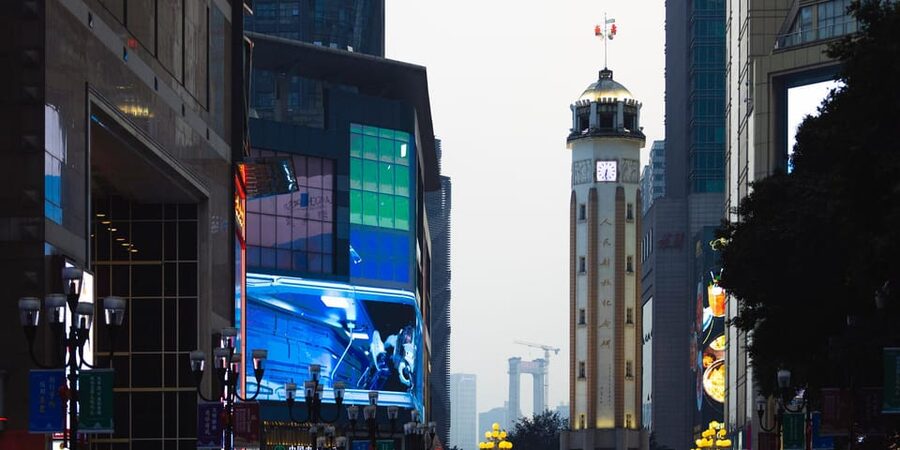
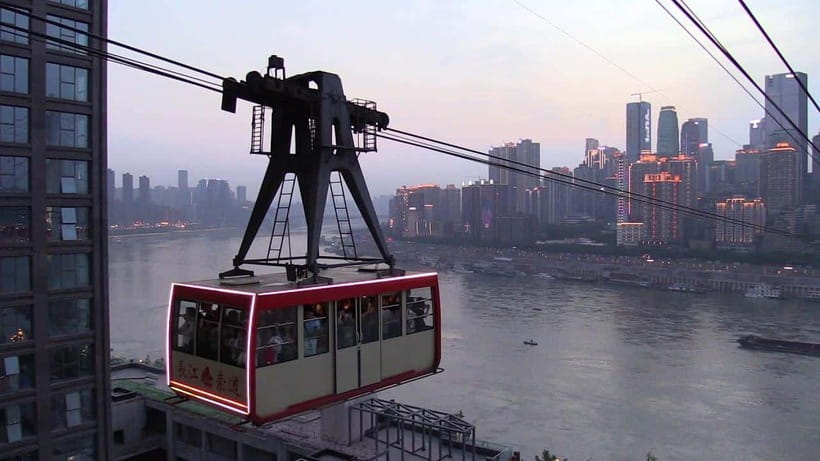
The Yangtze River cable car is listed as a possible stop, with about 40 minutes for the visit and ride. It offers a different view of Chongqing’s water, hills, and dense urban setting. Cable car timing and availability can affect the pace, so treat it as an option rather than a guaranteed part of every route.
Longmenhao Residential District is another possible addition, with around 50 minutes of walking and sightseeing. It gives the day a more residential and historical feel, away from the biggest commercial landmarks.
Because the tour is flexible, you should choose priorities before meeting Chris. A first-time visitor who wants famous images might select Kuixinglou, Liziba, Eling Park, Ciqikou, and Jiefangbei. Someone more interested in urban history might replace a shopping stop with mountain alleyways, Qixinggang, or Longmenhao.
Additional sites and overtime may require extra payment. Ask about that before adding stops.
Getting around without a private car
The title says without car, but you are not expected to walk every kilometer. The published route includes subway journeys of about 20, 35, and 30 minutes, along with walking. One transfer can take a meaningful part of the day, which is why five well-chosen stops are more realistic than trying to collect every attraction.
Didi can also be used, with the cost paid separately. One helpful detail from the tour is that Alipay and Didi are very useful for getting around and making payments. Set up your phone before arrival, and make sure you have internet access and a charged battery.
Transport is not included in the $155. Attraction tickets, food, and drinks are also separate. That keeps the base price clear, but you should budget for the day rather than treating $155 as the full cost.
The use of public transport is a benefit if you want to experience the city as residents do. It is less appealing if you want to sit in a vehicle between every stop. Expect stairs in stations, crowded platforms, and the need to keep track of your belongings.
How Chris performs as a guide
Chris’s strongest quality is his flexibility. He can adapt the day for changing interests, heavy rain, senior parents, or a traveler who wants more food and fewer landmarks. Several people also valued his help beyond the planned sightseeing, including advice for later days, airport check-in assistance, and guidance for reaching Wulong.
His English explanations are repeatedly praised for being clear and detailed. He also speaks Chinese, Traditional Chinese, and English, and the experience information identifies him as a licensed guide, translator, and tourist assistant.
That combination matters in Chongqing. You are not only paying for facts about buildings. You are paying for help with language, transport, food choices, timing, and the odd practical problem that can slow down a first visit.
The tour is also available in Spanish according to the guide’s own description, though the formal language details list Chinese, Traditional Chinese, and English. If language is important, confirm your preferred option directly.
Who should book it?
I would choose this tour if Chongqing is your first stop in the city, you have only one full day, or you want historical and cultural explanation rather than a list of photo locations. It is also a good fit for a small private group that wants to shape the day around hotpot, old neighborhoods, modern architecture, or transport.
It is less suitable if you dislike stairs, need a slow pace, or want a vehicle and fixed sightseeing route. The information says wheelchair users and people with mobility impairments are not suitable, despite a general accessibility note, so the actual walking demands should take priority in your decision. It also advises against people over 70 and over 95, though one review describes the guide tailoring a route for parents over 60.
Bring your passport, comfortable shoes, cash and a card, a charged phone, internet access, medication, and a waterproof bag. A waterproof camera or phone protection is sensible because Chongqing weather can change, and rain can force route changes.
FAQ
How long does the Chongqing tour last?
The tour lasts seven hours. Common schedules run from 9:30 a.m. to 5 p.m. or from 10 a.m. to 5:30 p.m., but the start time can be customized.
What is included in the price?
The price includes the tour, Chris as your guide, and visits to five sites. Transport, food and drinks, and attraction entry fees are not included.
How much does the tour cost?
The listed price is $155 per group of up to three people. Extra costs for transport, meals, tickets, or overtime are paid separately.
Is hotel pickup available?
Pickup is available from JW Marriott Hotel Chongqing, Marriott Executive Apartments Chongqing, Moxy Chongqing, Hilton Chongqing, and Glenview ITC Plaza Chongqing. If you stay elsewhere, contact Chris to arrange a suitable meeting point.
Do I need to use a private vehicle?
No. The experience is designed without a private car and uses public transport and walking. You may also use Didi at your own expense.
Can I customize the itinerary?
Yes. You can suggest your own route and preferred stops. If you do not provide a plan, Chris generally builds a day around about five stops and an optional meal.
Is lunch included?
No. Lunch is optional and paid separately. Chris can recommend food, including local hotpot and Chongqing noodles.
What should I bring?
Bring your passport, comfortable shoes and clothes, a charged smartphone, internet access, cash, a credit card, personal medication, and a waterproof bag. Check the weather before departure.
Should you book this Chongqing day tour?
Book it if you want Chongqing explained as well as seen. Chris offers a practical way to handle a city that can be confusing, steep, hot, rainy, and wonderfully unusual, while still leaving room for your own interests.
The best value comes when three people share the $155 fee and use the guide’s help with transport and food. If you are prepared for intense walking and separate transport costs, this is a strong one-day introduction. If you want an effortless car tour, choose another format. For everyone else, this route gives you the famous train-through-the-building image, but also the old lanes, local meals, and human scale that make Chongqing worth visiting.
Just added in Chongqing
- Yangtze River Cruise from Chongqing to Yichang Downstream in 4 Days 3 Nights★ 4.5 · 8 reviews
- Private Day Tour to Ciqikou, Liziba, Jiefangbei etc. in Chongqing★ 4.5 · 5 reviews
- Best of Chongqing One Day Tour: Stilwell Museum, Arhat Temple, Eling Park, Panda★ 3.5 · 2 reviews
- Private Customized Tour: Chongqing City Highlights in One Day★ 5.0 · 11 reviews
- 4D3N Victoria 5-star Yangtze Cruise★ 5.0 · 3 reviews
- Dazu Ancient Rock Carvings Private Tour Extension★ 5.0 · 24 reviews
- Private Chengdu Highlights Day Trip: Panda Base and City from Chongqing by Train★ 4.5 · 9 reviews
- Chongqing private luxury city tour: Must-sees All in One★ 5.0 · 39 reviews
City Tours, compared.
Forbidden City Tour(Group/Private)-Tickets Included
Read our review →
T-Square & Forbidden City Group or Private Tour
Read our review →
All-Inclusive Tour: Tiananmen Square, Forbidden City, Great Wall
Read our review →
4-Hour Small Group Tour to Forbidden City with Entry Tickets
Read our review →
Beijing Full Day Tours: Tiananmen Sq, Forbidden City, Great Wall
Read our review →
Mini Group Xian Day Tour to Terracotta Army, City Wall, Pagoda and Muslim Bazaar
Read our review →
Tianmen Square, Forbidden City & Royal Museum Tours
Read our review →
Beijing Forbidden City Ticket Booking (Optional: guide service)
Read our review →Where else this tour turns up