Reviewed · TOURS
Best China Tour: Six Memorable Days in Northeast China
Northeast China rewards curious visitors. This six-day private tour links Shenyang’s Qing Dynasty sites, Tieling’s people-to-people cultural activities, Hushan Great Wall, and Liaoyang’s Buddhist and museum treasures into one carefully planned route. I especially like the mix of major sights and hands-on experiences, including Chinese language practice, calligraphy, tea, music, and traditional medicine. The itinerary also uses high-speed trains and includes airport pickup, which removes much of the usual guesswork.
Two things appeal to me most: the Hushan section of the Great Wall, where North Korea can be seen across the Yalu River, and the chance to experience Chinese culture outside the standard palace-and-temple circuit. The main consideration is pace. You cover several cities and make long sightseeing days, while the three TCM treatments may not suit everyone. The price is also substantial at $2,556.34 per person, so this makes the most sense if you value private guiding, arranged hotels, rail travel, and cultural access.
In This Review
- Six details that define this Northeast China tour
- Shenyang arrival and a gentle first evening
- Shenyang Imperial Palace, Zhaoling, and Fuling
- Tieling brings language, calligraphy, tea, and music
- A full day of traditional Chinese medicine in Tieling
- Hushan Great Wall and the North Korean border
- Liaoyang’s Guangyou Temple, White Pagoda, and museum
- What the $2,556.34 price buys you
- Who will enjoy this six-day route?
- FAQ
- Where does the tour begin?
- How long does the tour last?
- Is this a private tour?
- Does the tour include high-speed train travel?
- Do I need to provide passport details?
- Is the tour suitable for visitors using China’s 144-hour visa-free policy?
- What is the cancellation policy?
- Should you book this Northeast China tour?
Six details that define this Northeast China tour
- A practical route from Shenyang to Liaoyang: The tour begins at Shenyang Taoxian International Airport and reaches Tieling, Hushan, Dandong-area sights, and Liaoyang without asking you to arrange each transfer yourself.
- Two UNESCO-listed Qing sites in one day: Shenyang Imperial Palace, Zhaoling, and Fuling place early Qing history at the center of the experience.
- A rare view toward North Korea: Hushan Great Wall and the Yalu River Broken Bridge provide two very different ways to understand the border region.
- Real cultural participation: You practice basic Chinese with Pinyin, try calligraphy, visit local shops, hear erhu and guzheng music, and attend a tea ceremony.
- Three traditional Chinese medicine sessions: Moxibustion, fire cupping, and acupuncture take up much of Day 4.
- Irish-Chinese connections: The Ireland China Institute ties the program together, even serving Guinness during the Chinese music session.
Shenyang arrival and a gentle first evening
Your tour begins with pickup at Shenyang Taoxian International Airport at 8:30 a.m. An expert meets you on arrival and takes you to your hotel, allowing about two hours for the airport transfer and initial settling-in period.
This first day is intentionally light. You are not rushed into a landmark immediately after a long flight. Instead, you check in, learn what is coming, and have time to rest. That is a sensible choice in a six-day program with several early starts and rail transfers.
The airport pickup is especially useful if you arrive without Chinese language skills. You do not need to negotiate your first taxi or work out the hotel address while tired. Passport details are required in advance for train tickets and hotel arrangements, so have those details ready when booking.
The tour is designed for people using China’s 144-hour visa-free policy as well as visitors holding traditional visas. Visa rules depend on nationality, route, and current regulations, so you should confirm your own eligibility before paying for the trip. The tour description presents visa-free entry as particularly useful for Irish visitors, and one Irish family used the 144-hour allowance during its stay.
Other trips worth a look in China:
- From Beijing: Mutianyu Great Wall Tours with Options
★ 4.9 · 9,216 reviews - Beijing: Forbidden City Tour(Group/Private)-Tickets Included
★ 4.8 · 7,974 reviews - Beijing: T-Square & Forbidden City Group or Private Tour
★ 4.8 · 4,446 reviews
Shenyang Imperial Palace, Zhaoling, and Fuling
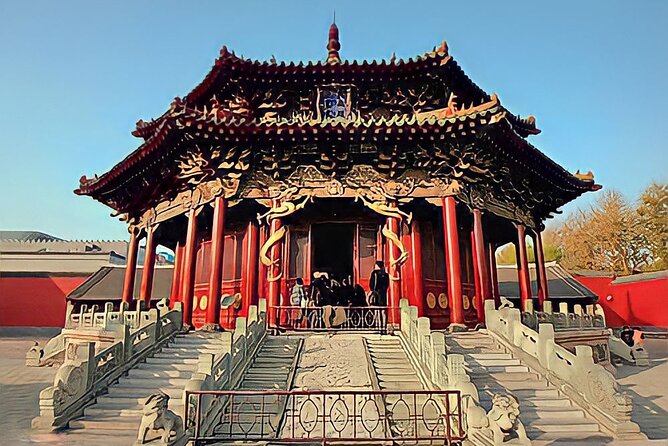
Day 2 is the most history-heavy part of the tour. It begins with Shenyang Imperial Palace, also called Gu Gong, a UNESCO World Heritage Site and former Qing imperial complex.
Allow about three hours here. Courtyards, ceremonial halls, pavilions, Dazheng Hall, and Phoenix Tower provide the visual drama. Dazheng Hall is linked with imperial court business, while Phoenix Tower is known for its golden roof. A guide gives the buildings a political and dynastic setting, which matters because the complex can otherwise seem like a sequence of attractive courtyards.
Shenyang Imperial Palace is smaller than Beijing’s Forbidden City, but that can work in your favor. You can focus on the early Qing period and the Manchu rulers who established their power before the court moved to Beijing. The architecture and layout help explain how imperial authority was presented through space, ceremony, and controlled access.
Next comes Zhaoling, reached through Beiling Park. The visit lasts about 90 minutes and combines open green space with a formal royal tomb. Zhaoling is the burial place of Emperor Huang Taiji and his queen. The path toward the tomb gives the visit a slower rhythm after the palace’s grand interiors.
I like this pairing because the palace shows power in use, while Zhaoling presents power in repose. Beiling Park also gives you room to breathe. The drawback is that the experience depends more on your interest in imperial burial customs and architecture than on dramatic individual objects.
Fuling Tomb follows for about an hour. It is the final resting place of Nurhachi, founder of the Qing Dynasty, and his empress. The Spirit Way, lined with stone statues, creates a strong approach to the tomb buildings.
Fuling lies on the quieter outskirts of Shenyang, so it feels more removed from the city than the palace. The visit is valuable for understanding the dynasty before its full imperial success. Still, you should expect a solemn historical site rather than a busy attraction packed with indoor displays.
The day ends at Shenyang Middle Street pedestrian mall for about 90 minutes. This is the tour’s most modern stop, with traditional tea shops, old-style architecture, local eateries, boutiques, and everyday shopping. It is a chance to see how Qing-era references sit beside ordinary city life.
The itinerary gives you a guide here, which should help with menus, shops, and small cultural details. Do not expect this stop to be as quiet or reflective as the tombs. It is best treated as a short urban walk and a chance to sample Shenyang’s daily rhythm.
Tieling brings language, calligraphy, tea, and music
Day 3 shifts away from imperial monuments and toward cultural exchange. You take a high-speed train from Shenyang to Tieling with an expert accompanying you, then receive help checking in at your hotel.
The first session at the Ireland China Institute lasts about 80 minutes. Native Chinese language instructors teach basic phrases using Pinyin, a useful Romanized system for pronunciation. You practice greetings, short conversations, and tones.
This is not a full language course. Its value is immediate and practical. You get a few tools for saying hello, asking simple questions, and making contact in a market or shop. The focus on tone is important because small changes in pitch can change the meaning of a Chinese syllable.
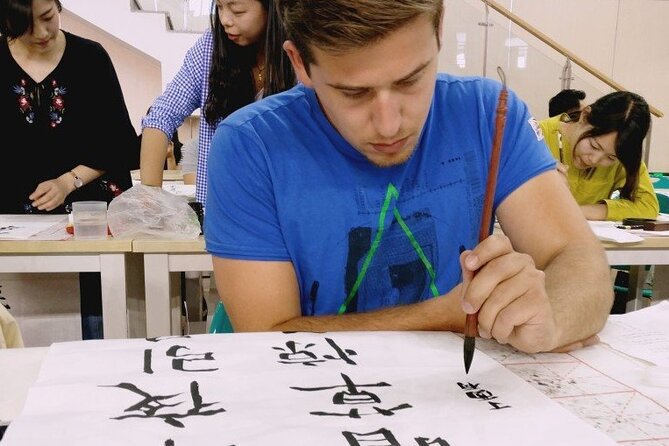
The same cultural session includes calligraphy instruction. You can expect to handle brush and ink under guidance and take away a more personal connection to Chinese writing than you would get from simply viewing characters in a museum. Calligraphy rewards patience, so do not treat it as a quick souvenir photo opportunity.
The next hour takes you into local shops and Chinese markets. You practice the phrases from the institute in real situations, such as asking a price or inquiring about produce. This is one of the strongest ideas in the program. A market is not just a place to buy something; it gives you a reason to use language with local people.
Communication may be limited, and the tour’s own response to earlier feedback acknowledged that English ability can vary. The Ireland China Institute is working on a practical English program across Liaoning Province, but you should still approach this part with patience and a sense of humor. Gestures, smiles, and a willingness to try will matter.
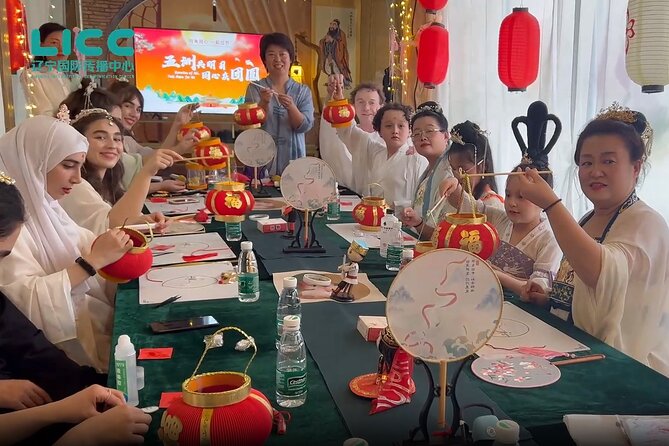
A 40-minute traditional music session follows. You hear instruments including the erhu, guzheng, and dizi. The erhu has a bowed, singing sound, while the guzheng is plucked and the dizi is a Chinese flute. The program pairs the performance with a glass of Irish Guinness, creating an unusual Irish-Chinese meeting point.
The final 40-minute session is a Chinese tea ceremony. A tea master demonstrates brewing and tasting, with a selection of traditional teas. This is a quiet end to a social day and offers a closer look at timing, serving manners, aroma, and attention to small details.
I would rate Day 3 as the tour’s most distinctive day. It does not simply show you Chinese culture from a distance. It gives you several modest ways to take part. At the same time, the activities are brief, so anyone seeking an advanced calligraphy course or lengthy musical performance may want to adjust expectations.
A full day of traditional Chinese medicine in Tieling
Day 4 is devoted almost entirely to Traditional Chinese Medicine. You begin with an initial assessment followed by a 70-minute moxibustion session.
Moxibustion uses dried mugwort, called moxa, applied near selected acupoints to create warmth. The stated aim is to support Qi flow and blood circulation. The setting is presented as attentive and personalized, with guides accompanying you throughout.
Next comes an hour of fire cupping. Warm cups create suction against the skin, and the treatment is intended to address muscle tension and support relaxation. Cupping can leave temporary marks, so ask the practitioner about that before beginning if you have plans for photographs or public swimming afterward.
The final hour is acupuncture. Fine needles are placed at specific acupoints, with the intended goal of encouraging relaxation and natural healing. The treatments are described in wellness terms, but you should not treat them as a substitute for medical care or assume they will resolve a particular illness.
This day will appeal to you if you are open to traditional therapies and want more than a brief demonstration. It also provides a slow, quiet counterpoint to the previous day’s language and market activities.
The trade-off is time. Three hours of treatment is a large portion of a six-day tour, and some people may find the sequence repetitive. Others will see it as the tour’s most memorable feature. A family who took the trip particularly enjoyed the holistic Chinese medicine experience, while children in the group also liked the language activities.
A completely different sort of day out:
- Beijing: Mutianyu Great Wall Daily Tour with Ticket & Lunch
★ 5.0 · 3,056 reviews - All-Inclusive Tour: Tiananmen Square, Forbidden City, Great Wall
★ 5.0 · 2,873 reviews - MuBus: Mutianyu Great Wall ENG/ESP/RUS Guided Bus Tour
★ 5.0 · 2,361 reviews - 4-Hour Small Group Tour to Forbidden City with Entry Tickets
★ 5.0 · 1,863 reviews
Hushan Great Wall and the North Korean border
Day 5 takes you by high-speed train from Tieling to Hushan, with help for hotel check-in in Hushan Town. The main visit is Hushan Great Wall, a three-hour outdoor experience.
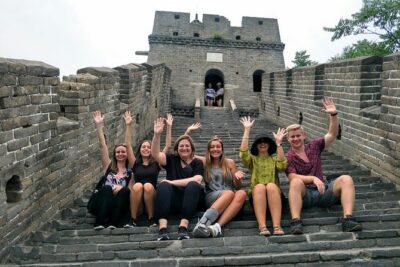
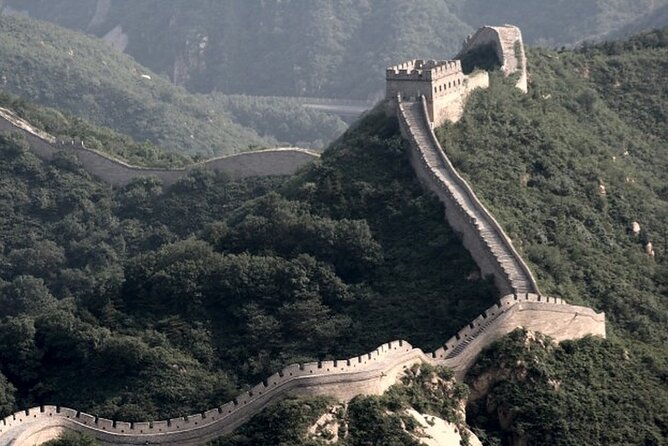
This section dates from the Ming Dynasty and offers a different feel from the better-known wall areas near Beijing. As you climb, you look across the Yalu River toward modern-day North Korea. That border setting gives the walk a political and geographic dimension that goes beyond old stonework.
The route involves stairs and uphill walking, so comfortable shoes are essential. The itinerary does not give a difficulty rating, but you should be ready for physical movement and changing weather. The reward is the view from the wall, where old defensive construction meets a present-day international border.
The Great Wall History Museum adds about 50 minutes indoors. Exhibits explain the wall’s defensive role and the specific importance of Hushan. This museum stop matters because the outdoor remains alone cannot explain why this section was built or how it fits into wider regional history.
You then visit the Yalu River Broken Bridge for about two hours. The damaged bridge is linked with the Korean War and offers views toward Dandong and Sinuiju. From the viewing platform, you can look across the river toward North Korea.
Hushan and the Broken Bridge complement each other. Hushan looks back to Ming defensive strategy, while the broken bridge brings you into twentieth-century conflict and the continuing reality of a divided border region. The combination is one of the tour’s strongest features.
Do keep your expectations grounded. This is not a broad North Korea tour, and the views across the river are a specific part of the experience rather than a promise of close access. The area is meaningful because of its context, not because it offers a long list of attractions.
Liaoyang’s Guangyou Temple, White Pagoda, and museum
The final day moves to Liaoyang and returns to religious and historical sights. Guangyou Temple receives about 90 minutes. It is described as one of the region’s oldest Buddhist temples, with quiet courtyards, carved wooden eaves, stone statues, and long religious traditions.
The temple provides a calm setting after the border area and rail journeys. Your guide helps explain the buildings and Buddhist elements, while the grounds offer time for a slower walk. As with many historic religious sites, respectful behavior and modest clothing are sensible.
Baita Park follows for another 90 minutes. Its centerpiece is the White Pagoda, a 13-story ancient structure. The itinerary includes an ascent for panoramic city views, combining old architecture with Liaoyang’s modern surroundings.
The pagoda is a strong visual finish because it lets you see the city from above after spending much of the tour inside courtyards, parks, and museums. Check the day’s conditions and your comfort with stairs, since the appeal depends partly on the climb.
Liaoyang Museum completes the program with about 90 minutes of indoor viewing. Its collection covers the Bronze Age through more recent periods and includes porcelains, bronze objects, statues, old coins, and early city photographs.
This is a useful final stop because it broadens the story beyond the Qing Dynasty. You see how Liaoyang fits into a much longer timeline, and the historic photographs help connect the old city with its modern form.
What the $2,556.34 price buys you
At $2,556.34 per person, this is not a budget sightseeing package. Its value depends on how much you want arranged for you.
The price is easier to justify if you place a high value on private touring, airport pickup, expert accompaniment, hotel assistance, included attraction tickets, and high-speed rail support. The tour is private, so only your group participates. That gives families and small groups more control over questions, language practice, and the pace of stops than a large coach tour.
Group discounts are offered, which may improve the per-person value for a family or larger party. The tour also includes cultural sessions that would be difficult to arrange independently, particularly the institute visits, tea ceremony, Chinese music with Guinness, and TCM treatments.
The key question is what is included beyond the listed visits. The supplied details confirm admission tickets at several major attractions and arranged rail and hotel support, but they do not spell out every meal, hotel category, or treatment cost in detail. Ask for a full inclusions list before booking. That is the best way to judge the price fairly.
Who will enjoy this six-day route?
This tour suits you if you want a structured introduction to Northeast China and prefer not to handle train tickets, hotel transfers, and local navigation alone. Families may appreciate the private format and the children’s language and calligraphy activities.
It is also a good match for Irish visitors interested in the Ireland-China connection. Pat and his team are specifically associated with the welcome and organization, and the institute’s cultural program gives the trip a personal theme rather than a purely commercial one.
History fans will find plenty to work with: the Qing imperial sites, Ming Great Wall, Korean War bridge, Buddhist temple, White Pagoda, and Liaoyang Museum. You should be comfortable with several changes of place and a full Day 2.
This is less suitable if you want a slow holiday based in one hotel, dislike wellness treatments, or prefer to explore independently. The program is tightly organized, and Day 4 may feel like too much traditional medicine if your main interest is architecture and history.
Practical details are favorable. Confirmation is provided at booking, mobile tickets are available, service animals are allowed, and the tour is near public transportation. Most people can participate, although the Hushan climb and the White Pagoda ascent require ordinary walking ability.
FAQ
Where does the tour begin?
The tour begins at Shenyang Taoxian International Airport, at JFPW+4J2, Ji Chang Lu, Hun Nan Qu, Shenyang, Liaoning, China. The stated start time is 8:30 a.m.
How long does the tour last?
The experience lasts approximately six days.
Is this a private tour?
Yes. Only your group participates in the activity.
Does the tour include high-speed train travel?
Yes. The itinerary includes a high-speed train from Shenyang to Tieling and another from Tieling to Hushan, with an expert accompanying you.
Do I need to provide passport details?
Yes. Passport information is required to reserve train tickets and hotel stays.
Is the tour suitable for visitors using China’s 144-hour visa-free policy?
The tour is designed for travelers using China’s 144-hour visa-free policy as well as visitors with traditional visas. You should confirm that your own nationality and route meet current entry rules.
What is the cancellation policy?
You can cancel up to 24 hours before the experience starts for a full refund. Cancellations or changes made less than 24 hours before the start time are not accepted for a refund.
Should you book this Northeast China tour?
Book it if you want a private, guided route with unusual cultural access, not just a checklist of famous monuments. The best reasons are the Hushan border views, the early Qing sites in Shenyang, the practical language session, and the chance to try Chinese tea, music, calligraphy, and traditional medicine in one trip.
Think carefully about the price and pace first. Ask for exact hotel and meal inclusions, confirm the current visa rules, and decide if three TCM treatments fit your interests. If the answer is yes, this tour offers a thoughtful way to see Liaoning through imperial history, everyday culture, border politics, and Irish-Chinese exchange.
Just added in China
- Zhujiajiao Water Village: Private Tour from Shanghai★ 4.9 · 43 reviews
- Zhujiajiao with Private Customized Shanghai City Highlights★ 5.0 · 14 reviews
- Zhujiajiao & Shanghai:Private Day Tour Water Town to Skyline★ 5.0 · 12 reviews
- Zhujiajiao Water Town Private Tour with Night River Cruise★ 5.0 · 9 reviews
- Zhujiajiao & Shanghai:Small Group Tour Water Town to Skyline★ 5.0 · 4 reviews
- Zhangjiajie: Highlights Tour with Glass Bridge & Cable Car★ 5.0 · 32 reviews
- Zhengzhou: Private Tour to Shaolin Temple & Longmen Grottoes★ 4.8 · 8 reviews
- Zhangjiajie National Forest Park: Private Tour and Transport★ 4.9 · 20 reviews
Tours, compared.
Forbidden City Tour(Group/Private)-Tickets Included
Read our review →
T-Square & Forbidden City Group or Private Tour
Read our review →
Mutianyu Great Wall Daily Tour with Ticket & Lunch
Read our review →
All-Inclusive Tour: Tiananmen Square, Forbidden City, Great Wall
Read our review →
MuBus: Mutianyu Great Wall ENG/ESP/RUS Guided Bus Tour
Read our review →
4-Hour Small Group Tour to Forbidden City with Entry Tickets
Read our review →